Categories
conflict management conflict resolution Racial Discrimination

How Would Cool Steve Handle This?

Welcome to From Insults To Respect.

Today, I present a brief story that asks the question, How would someone people respect handle the challenging situation of racial discrimination? The story is an abbreviated section from my novel, Fights In The Streets, Tears In The Sand. The story’s setting, 1965, Brooklyn’s lower middle class section of Brighton Beach. Jeff Star, one of the two major character’s of the novel and its narrator has begun his first day at Lincoln High, and he begins to hear about a classmate some students refer to as “Cool Steve.”

The Story
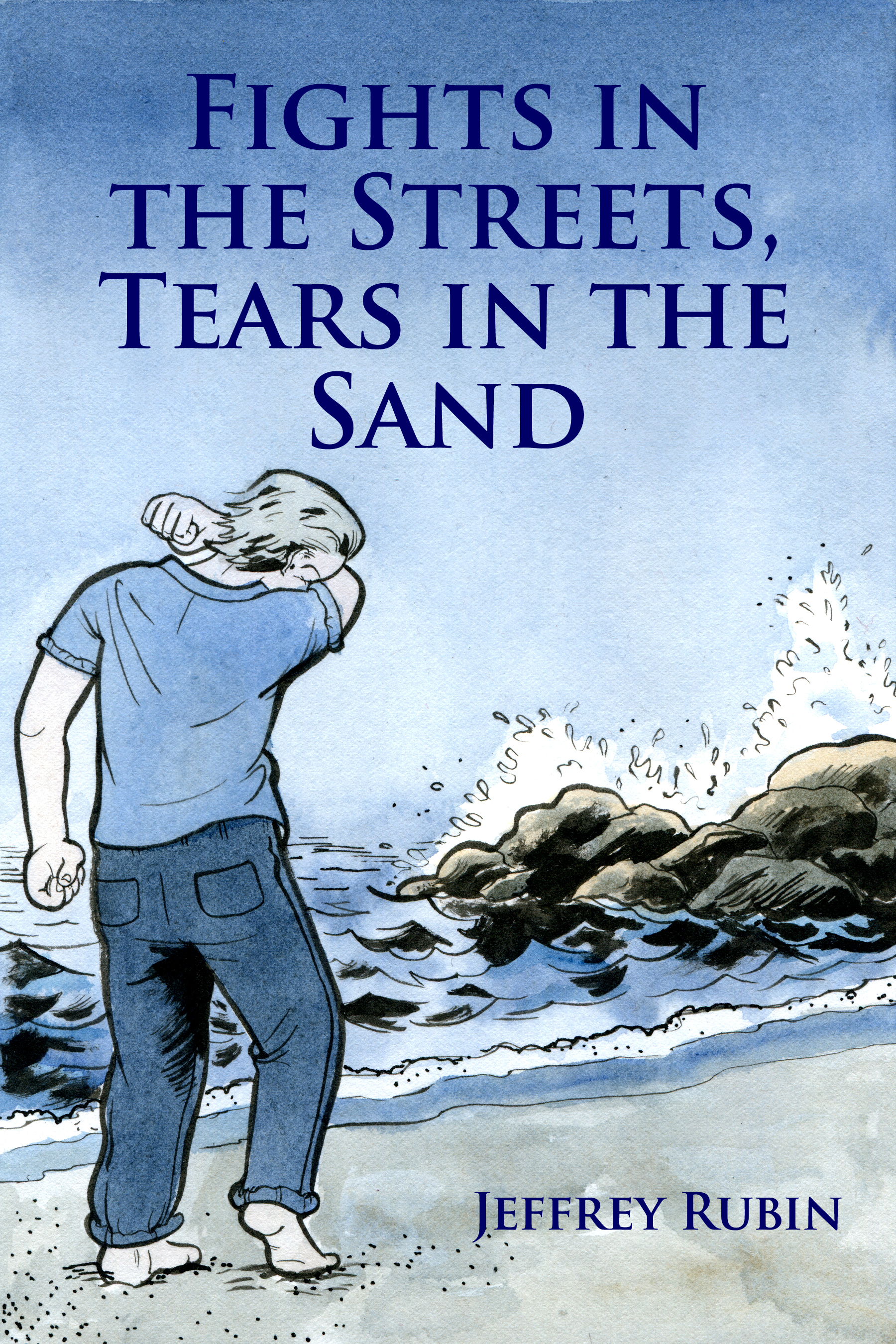
Fights in the Streets, Tears in the Sand

After English, I’m heading to Biology and some guy behind me says to someone next to him, “Hey, Cool Steve’s in my health class!”

     “Wow, Cool Steve! Really!?”

     “Yeah! He sat right next to me.”

     “Damn! Hey, tell him I say hi.”

     There’s an excitement that accompanies this dialogue that somehow has me going, hmmm.

     I go to Math and as I’m entering the room, I spot an old friend from Brighton Beach—Leroy Wilson. We recently had lost touch with each other because my family, when I was twelve, had moved from Brighton to Bensonhurst when my mom remarried. Leroy and I got together a few times after that, but after a bloody incident at a car repair shop that involved a close friend of mine, his mother wouldn’t let him have anything to do with me. I didn’t expect to run into Leroy at Lincoln. He and a few of the other kids my age who I knew from Brighton had always gone to either a Catholic school or a Yeshiva.

     It was Leroy who had taught me to play the guitar. Man, we were really driven back when we were twelve and thirteen with this dream of becoming the greatest rock ‘n’ rollers ever. And when we would get a song down just right it was a wild thrill beyond compare—lightning and sparks everywhere. So, when I first see Leroy, I smile. But then it hits me. Leroy is black. In Boody Junior High, if any white kid was to be nice to a black kid, he would have been taunted.

     How would the white kids at Lincoln react if they learn I have a black friend? Over ninety percent of the guys at Lincoln are white. I should be siding with whites, the more powerful group, the majority. Crap, he’s gonna blow my cover.

       “Jeff! How’s ya old self doin’?” cries Leroy as he spots me.

        I look up into Leroy’s eyes and then down at the wood classroom floor—my heart racing. Quickly, I move to an available seat that’s surrounded by seats other students are already sitting in. I avoid looking at Leroy, but I can feel him looking at me. All through class my eyes avoid his, but my heart grapples with his presence. When the period ends, I race out of class.

        One more class to get through before I can head home for the day. In the hall, with hundreds of students racing by, and a couple of guys bumping into me, I check my program card—Social Studies, Room 316. I have to go up a flight of stairs. I look around for a stairwell. There’s one, down the hall. How could I treat Leroy like that? Leroy’s dark confused eyes flash before me.

      “I’m Mr. Lofton,” announces a heavy-set, fortyish-aged teacher. “Welcome. Today we’re going to review some of the major news events of the summer. Then, later in the school year, we will be connecting our social studies lessons with these and other current events. I have some newspaper clippings here. As I read them, I want to get your reactions.

     “Crime at highest level ever,” cries Mr. Lofton. “Latest statistics indicate 13 percent increase. When I was a boy, we used to camp out in Central Park. Now you’d be crazy to go there at night.”

     I think about the newspaper story I read last week of Coney Island boys who were stabbed.

      “Ignoring Nazi pickets and bomb threats, the Reverend Dr. Martin Luther King moved into Washington’s ghettoes and told crowds of his admirers that economic freedom is the new cry of the civil rights movement. A dozen brown shirted American Nazis picketed with signs saying, ‘America for whites, Africa for blacks.’”

      Man, how I treated Leroy. Am I turning into a Nazi? Leroy’s dark confused eyes. An image of an exhilarating scene of us playing “Johnny B. Goode.” Am I turning into a jerk to be respected?

     After school, I walk to Rocco’s Pizzeria over on Brighton Beach Avenue. Rocco is shoveling a new pie out of his large steel oven. I take in deeply the familiar aroma of baking dough, oregano, cheese, and Rocco’s underarms.

    With a slice and Coke in hand, I discover none of the tables are empty. At one of them is this guy Brainy George Beck sitting by himself with his blond hair looking like it hadn’t been combed in months. I had noticed him earlier in the day in my gym class and he sat at my lunch table. “How come they call him Brainy George?” I had asked one of the guys in gym.

     “Da guy’s a freakin’ genius,” came the reply.

      With nowhere else to sit, I ask if he’d mind if I sit across from him. He looks up with these large thick glasses and nods his okay. “You were in gym today and at our lunch table,” he says as I sit down.

      “Yeah.”

       “I hate gym.”

        “You do?”

         “Can’t stand it—all the retards trying to prove they’re Mr. Atlas.”

         “Hmmmm.” Personally, gym is a whole lot better than the rest of the garbage we gotta take at school. “What junior high did you go to?” I ask.

         “Cunningham.”

         “That’s the same junior high as this kid some are calling Cool Steve. I guess ya don’t think much of him since he’s inta sports.”

          Oh, you mean Steve Marino? Steve’s different than the guys I’m talking about.”

          “Izzat so?”

           “Yeah. I respect Steve because, well, first of all, he’s not one of those idiots who picks on me because I can’t run as fast as the other guys. And I like the way he’s gutsy. He’s not afraid to stand up for what he believes in. And it’s the way he carries himself… the way he moves. I… I just have a lot of respect for Steve.”

          Hmmm. Well, being gutsy shouldn’t be too hard, I think to myself. Hell, I was gutsy enough to get in lots of fights in my old school. But I don’t quite know what to make of this stuff about the way Steve moves.

When I get home, I go into my bedroom, sit on my bed, pick up my guitar and start to slide my fingers across the strings. Then I find my fingers playing a little piece that my former black friend, Leroy had taught me. It begins with a sort of angry, rough part, but closes with a gentle refrain. As I play, I imagine Leroy playing along, just like the old days. We start to kick it up, jamming up a storm, reelin’ and rockin’ all night long! And then that image of his dark eyes returns to me—how they looked in class—confused, hurt. I wonder, How would this Cool Steve handle this?

*                                  *                                  *

Good Question. The search for the answer is a story for another day. For now, I’m asking my readers who have the courage to propose their answers.

My Best,
Jeff

———————————
Some people will enjoy reading this blog by beginning with the first post and then moving forward to the next more recent one; then to the next one; and so on. This permits readers to catch up on some ideas that were presented earlier and to move through all of the ideas in a systematic fashion to develop their emotional intelligence. To begin at the very first post you can click HERE.

Categories
conflict management conflict resolution

Improving Your Level Of Wisdom

Welcome to From Insults to Respect. As you might imagine, people who are viewed as wise tend to be more respected than people who are viewed as foolish. With that in mind, let’s take a look at a few suggestions for improving our wisdom.

Assessing Openness

Consider, if you will, an old joke–If you want people to respect you for your wisdom, just agree with everything they tell you.

As a joke, it works, but is it truly a wise approach for increasing your wisdom? In thinking about this, let’s take a look at some advice Thomas Jefferson once gave to his daughter.

“Much better…if our companion views a thing in a light different from what we do, to leave him in quiet possession of his view.  What is the use of rectifying him if the thing be unimportant; and if important let it pass for the present, and wait a softer moment and more conciliatory occasion of revising the subject together.”

Now, for some people, this makes perfect sense. However, others respect individuals who are forthright about their opinions, and personally enjoy a lively exchange even with someone who holds very different views from their own. For these folks, being with someone who either just agrees with everything they say, or just nods at whatever they say, is boring.

John Stuart Mill is a fine example of someone who respects a conversation with people holding different views, as we see in his 1859 book titled On Liberty. There he declares that if people express an opinion different than our own, even for holding an opinion we are very sure of,

let us thank them for it, open our minds to listen to them, and rejoice…in the case of any person whose judgment is really deserving of confidence, how has it become so? Because he has kept his mind open to criticism of his opinions and conduct. Because it has been his practice to listen to all that could be said against him; to profit by as much of it as was just, and expound to himself, and upon occasion to others, the fallacy of what was fallacious. Because he has felt, that the only way in which a human being can make some approach to knowing the whole of a subject, is by hearing what can be said about it by persons of every variety of opinion, and studying all modes in which it can be looked at by every character of mind.

Here we see a man who was very open to hearing an opinion very different from his own, and having discussions about what he thought was wrong. This, he believed, profit people, leading to a better understanding of the subject.

So, when deciding whether to acquiesce to the opinions of others, remaining silent, or taking up the challenge of presenting your alternative views, consider the wisdom of first assessing if the person you are interacting with has an “open minded” or “close minded” personality.

People who tend to be high in the trait of openness are more willing to embrace new things, fresh ideas, and novel experiences. When they hear someone who disagrees with them, they are interested to explore how that someone thinks about the subject. People who are close minded, in contrast, upon hearing someone disagreeing with them, close up like a turtle while experiencing defensiveness.

Therefore, when with people you don’t yet know whether or not they are open minded and you hear them express an opinion with which you disagree, you might want to first assess where they are on this open minded-close minded continuum. This can be easily done by you by first summarizing their opinion, showing an interest by asking a few clarifying questions, and then saying something like, “I heard a different opinion about this topic, and I’d like to get your reaction.” Then, after briefly describing the alternative view, see if the person indicates an openness to discuss this. If he or she starts to get defensive by saying something like, “That’s stupid,” and, “Only idiots think that way,” it may be wise to take the discussion no further.

Notice that with this approach, you don’t initially claim that the alternative position is correct, or that it is something you firmly believe, thus avoiding leading people you are talking with to feel you have attacked them for their belief.

If the person appears open to a friendly discussion that includes different views, then have at it, but avoid saying things like “that’s stupid.” Stick to reasoned arguments, make sure you give the other person plenty of time to respond, try to find some merit in at least some aspects of the view you generally disagree with, and aim to be humble. In this context, what do I mean by being humble? It is avoiding presenting your views in a tone that suggests you are absolutely right, and the other position is absolutely wrong. You want to present the image that you are open to considering all that is being said.

In Situations In Which You Will Be Repeatedly Interacting With People, Utilize The “Summarize And Delay Technique”

In many social situations, if you find that you don’t enjoy them, it is a simple matter to avoid them in the future. Not so in many workplace situations, or at school where attending is mandatory. Also, when invited to a social party, you may want to keep getting invited to future parties with these folks even if some of the attendees are not your cup of tea. This may be so because you enjoy most of the attendees, or your regular participation at attending provides valuable information about what is going on in the neighborhood.

In these repeated social interactions, you are likely to hear every now and then a topic raised, and some may say something about it with which you disagree. To increase how much respect those in attendance view your wisdom consider the following.

Just make a note of the topics that have come up for the first time, while avoiding taking a clear position on it. If someone asks you for your opinion, summarize the topic, and summarize what others have already said about it. Then say you want to give this some thought because you think the issues may be somewhat more complicated than what may appear at first to be the case. Then say that after you give this some deeper thought, you’ll be delighted to share what you have learned.

Then, over the next few days, search on the internet, or go to the library to find some well thought out views on each of the topics by some respected writers. Seek to find some great writers who have different views on the same topic.

When this research is complete to your satisfaction, write out what you want to say about the topic with an eye of balancing short term and long term goals, and how different situations might call for different approaches. Your opening paragraph is best framed as something you can say in a couple of minutes. Finally, have someone you respect critique what you wrote. By doing this, your comments at your social gathering will tend to be far wiser than if you just jump into expressing your opinion without utilizing this technique.

When you do provide your opinion, begin by noting that you have found that different respected authorities have come to very different conclusions on this topic. Be prepared to be able to summarize these different views, but your opening statement is best kept to the one or two minute paragraph that you crafted when you wrote out your entire position, because typically people don’t appreciate a long lecture. If people you are talking with are really interested in delving into the topic, they will make some reply, perhaps presenting an alternative view.

After giving others an ample opportunity to comment, you can then provide more of your opinion in a two or three minute segment. Then, once again, let others respond, and continue in this give and take manner. Present your own conclusions in a humble, tentative manner, while remaining open to hearing critiques of what you offer. Avoid, getting defensive, and if someone raises a good point that you have not yet considered, reply humbly with a statement such as, “I think there is some merit in what you have said.” Then summarize it, and say, “I’d like to give this some thought and then I’ll get back to you.”

Conclusion

Wisdom is a prized characteristic. Avoiding angering close minded people for no substantially good reason is one technique that can raise the estimate of your wisdom. Utilizing the “Summarize and Delay” technique will not only increase how others view your wisdom, it may also very well actually increase your wisdom. In your discussion, avoid coming off like you are trying to humiliate those with different views. Rather, empathize with them, and above all, be kind.

These suggested techniques may not turn you into a great sage, but I do humbly think they have the potential of substantially increasing your wisdom.

My Best,
Jeff

——————–
Some people will enjoy reading this blog by beginning with the first post and then moving forward to the next more recent one; then to the next one; and so on. This permits readers to catch up on some ideas that were presented earlier and to move through all of the ideas in a systematic fashion to develop their emotional intelligence. To begin at the very first post you can click HERE.

Categories
conflict conflict management conflict resolution interpersonal conflicts Listening skills Resolve conflicts in private

Resolve Conflicts In Private Whenever Possible

One day I was presenting to a high school class a lesson on mature ways to resolve conflicts when a student we will call Tony raised his hand. school conflictWhen I called on him, he said, “Dr. Rubin, how would you resolve this? This here Tina (he points to her) and I were dating, and now I decided to end it. I’m seeing another girl. But Tina, she keeps calling me even though I told her to stop.”

Tina’s face has now turned red and other students have started calling out their views about what was going on. Some shouted that Tony didn’t just tell Tina not to call, but he had done so by becoming verbally abusive toward her in an effort to get her to stop calling. Some felt that Tony had to be abusive or Tina wouldn’t stop calling, although she had continued to call him despite his abusiveness.

Part of me wanted to begin an intervention to resolve the conflict right there in the classroom in order to model some of the very skills I had been teaching. privateBut seeing the emotional reaction of Tina, and noticing the escalation of feelings that were being expressed by others in the classroom, I quickly explained to the students that it is usually best to work these types of conflicts out in private. I offered to meet Tony separately, and then Tina, and then, if they both agreed, I would meet with both of them together without the rest of the class watching on. I then asked the rest of the class why this might be the best way to work this out.

As the discussion continued, I mentioned that there are a few research studies that are related to this issue. angry-couple-arguingThey suggest that people are more likely to escalate an argument into a fight when spectators are around (see, for example, “Impression Management and the Escalation of Aggression and Violence,” R. B. Felson, Social Psychology Review, 1982). There are, of course, exceptions to this. For example, if two people agree to have a third party mediator help to resolve a conflict, the presence of the mediator tends to reduce subsequent aggression. courtroomAnd in a courtroom, the public has a right to observe the legal proceedings involving certain conflicts for a number of valid reasons. To protect everyone in this process, there are courtroom officials on hand that help to assure that disagreements don’t escalate to violence. Moreover, if the presiding judge sees audience members interfering with the legal process, he or she can order them removed by trained security personnel.

questionsAs my classroom discussion continued, it became clear to me that the topic raises four relevant questions worth thinking about:

  • At what point does it make sense to ask for a private meeting?
  • Where is the best place to have the meeting?
  • What is the best way to ask for the meeting?
  • Are there useful things to do to prepare for the meeting?

Although every situation is different, and each situation may require a different answer to these questions, in the remainder of this post I will offer some suggestions I think are worthwhile to consider.

At what point does it make sense to ask for a private meeting?

tensionIn my opinion, usually as soon as you recognize that some tension is beginning to surface, it’s time to ask for a private meeting. I say this because even if you think you can tolerate the tension, others around you may not. In many situations, in addition to the participants in the conflict beginning to feel uncomfortable with what is going on, others are also feeling roughed up. People may feel as if they are walking on egg shells in the presence of the antagonists.

workers-angry-fightingIn a business environment, this can create a hostile work environment for the other employees not directly involved in the conflict. Many supervisors are trained to intervene in such situations in order to put a stop to this, and for some, they hate this part of their job. Thus, they may just choose to get rid of one or both of the antagonists. Additionally, some supervisors may be less inclined to promote employees that can’t get along with one another.

schoolIn a school setting, it also usually makes sense for a student to seek to work out a conflict with another student as quickly as possible. As in the business setting, in addition to the two antagonists in the conflict being affected by the mounting stress, other students can start to feel uncomfortable. For example, one party in the conflict might say something to the other party, and when this is overheard by others, some may be torn between two friends. school tensionSometime one of the two parties may insult the other who is a relative of the insulted party. Before long, the whole school climate can be adversely affected.

It is also important for students to keep in mind that there may be a time when they will need a recommendation from a teacher or counselor for a job or college application, and the last thing that you want is for someone to write that you have difficulty getting along with peers.

Where should the meeting take place?

In my opinion, whenever possible, a face to face meeting is way preferable than a phone conversation, texting, social media platforms, or emails. The use of the eyes, facial expressions, and hand gestures, humanize the interaction far beyond what is achievable in less personal interactions.

Now, my next suggestion might sound contradictory because I earlier emphasized that the meeting is best held in private. coffee shopHowever, in my opinion, the ideal place is a semi-private place such as a coffee shop or fast food restaurant that is unlikely to have present anyone either party knows, and at a time when the place would be relatively quiet. In such places, you can find a seat that if you speak softly you are unlikely to be overheard. And even if you are overheard, it is very unlikely to really matter.

The value of having a few people around just out of earshot is that you and the other party will be less likely to get into a shouting match. Moreover, just knowing that someone in the semi-private place might end up calling 911 if things begin to look like they are turning dangerous can keep stress at levels that are more conducive for clear thinking.

phone conversationNow, I understand that for high school students, setting up a meeting in an ideal place might not be possible. Many students live far from a convenient meeting place. If there is no public transportation available, setting up a phone conversation might be your best option.

What is the best way to ask for the private meeting?

Rehearse in your mind what you are going to say at least ten times. I suggest using a soft, concerned voice. It seems to me that you would want to avoid any name calling or threats. Something like the following has worked for me:

For this example, let’s call the other person in the conflict, Jill. Eye-ContactLooking directly into Jill’s eyes, say, “I’m beginning to feel some tension between us, Jill.” Then pause, to see and hear how Jill reacts. Listen carefully, and look like you are listening carefully, by looking up to her eyes from time to time. summarizingWhen she appears to be finished, summarize what she has said without trying to defend yourself in any way. Then pause to see if she wants to add anything more or to correct something you said in your summary. Then say, “I think I understand, Jill. Listen, not only am I concerned about what feels to me like tension between us, but the others around us are going to start to feel pretty uncomfortable about it as well. That’s not good for them, and for a number of reasons it’s not good for either of us. So, I think it makes sense that we discuss this fully in private.” Then tell her where and when you want to meet.

Quiet ConversationThis can be done in a couple of minutes by calling Jill over to a relatively quiet area and speaking softly. If Jill refuses to meet with you, let her know that that is her choice. Then, just end by saying softly that you hope she thinks about the concern you raised and let her know that you hope she changes her mind about meeting to discuss this.

In my opinion, even if the other person chooses to not meet with you, bringing this issue to his or her attention plants a seed. It is very possible that you might begin to see some improvements shortly afterwards.

Are there useful things to do to prepare for the meeting?

writing-glasses1I suggest writing out a statement in advance describing the situation in your own words. If there is someone you respect that is not involved in any way with what is going on between you and the other party, consider showing that person what you have written. Then have a discussion about the situation with this respected person.

Before the meeting, remind yourself that you want to give the other party a chance to tell his or her side of the situation without interruption. listeningAbove all else, you want to give the impression that you are a good listener. This involves looking, from time to time, into the eyes of the other party and summarizing what he or she says.

Well, obviously there is far more to resolving these types of conflicts, but that’s all the time we have for today. I hope you give these ideas some thought.

——————————-

Some people will enjoy reading this blog by beginning with the first post and then moving forward to the next more recent one; then to the next one; and so on. This permits readers to catch up on some ideas that were presented earlier and to move through all of the ideas in a systematic fashion to develop their emotional and social intelligence. To begin at the very first post you can click HERE.

Categories
child discipline conflict management conflict resolution criticism interpersonal conflicts social and emotional skills learning student discipline student insubordination

On Slamming Insubordinate Student Down

slam 3By now, most of you have repeatedly seen the shaky video that shows a police officer grabbing an insubordinate sixteen-year-old female student, Shakara, who is sitting at her desk (see HERE). When the officer’s hand is very close to the student’s throat, she hits at his arm. The officer then flips her over and flings her to the front of the classroom.

slam 4The student reportedly refused to put away her cell phone and then refused to leave the class after repeatedly being ordered to do so. Subsequently, the police officer was fired for using inappropriate force and because his maneuver violated department policy and training.


The Media’s Criticism

Numerous media commentators expressed outrage at what had occurred, but none that I’m aware of provided a detailed description of what would have been a better way to handle such events. For example, a Washington Post story, penned by its editorial board, states:

slam 5There is no question the young girl involved in the incident was wrong in allegedly refusing the teacher’s request to stop using her phone, and in not leaving the classroom when asked. But there are methods short of slapping on handcuffs available to schools for dealing with disrespectful children. Not only does this girl now face criminal charges that could dog her for the rest of her life, but a classmate who recorded the incident on her cellphone was arrested as well. 

principal's officeThe principal’s office — not a police station — is where both should have ended up, and it is hard not to suspect that that would have been the outcome had the offending students been white. That underscores the need for school officials everywhere to take a hard look at their disciplinary systems for bias and put in place practices that make schools safe, and also inclusive, for all students.

Notice that the editorial advocates that this issue is best handled in the principal’s office. But what if the student is refusing to go there, as is apparently alleged in this case?

male-criticismIn an earlier post on this blog, I advocated that an essential feature of mature criticism is that it is provided with enough details so that the criticized person, if he or she wills, can improve the behavior, idea, or appearance. I have not found, even after an hour of scanning the various media reports and editorials about this disturbing incident that, in my opinion, adequately provides a description of what would be a better response than what actually occurred. So, in this post, I’ll try to model a more mature form of criticism.

An Example of Being Specific and Practical When Providing Criticism

The first step, in my opinion, is to clarify what happened because there are some conflicting reports. According to Shakara’s attorney, Todd Rutherford, she had obeyed orders to put her cellphone away, and the dispute arose because she did not put it away fast enough. He went on to say, “She wasn’t yelling. She wasn’t disrupting the class. She wasn’t a threat to anyone.”

Another female student in the class reported that her classmate had her cellphone in math class. “She just had it out. She wasn’t talking or anything.”

In contrast to these two reports, the Washington Post reported school officials alleged that Shakara refused to stop using her phone which can be viewed as disturbing the class. Other media outlets specifically used the word disturbing the class as a reason for the occurrence. For example, according to a report by WISTV.COM,

sheriff“The student was told she was under arrest for disturbing school and given instructions which she again refused,” Lott [Richland County Sheriff] said.

Just what was meant, specifically, by the phrase “disturbing the class” was not made clear. So, given these somewhat contrasting descriptions, I’ll first provide criticism that specifically lays out an alternative way to handle a situation in which the student is violating a specific school rule but is not disrupting the ongoing classroom lesson. Then we’ll turn to an alternative way to handle a situation in which the student is violating a specific school rule and is disturbing the ongoing classroom lesson.

cell phoneExample 1: In the event that the school had a policy that all cell phones are to be off and out of sight whenever a class is in session, as is true in my local school district, and a student is violating this rule without disturbing the class lesson, here is my suggestion for a response that would be, in my opinion, a distinct improvement over what apparently took place:

Teacher to Shakara: “There is a school rule that all phones are to be off and out of sight, Shakara. Please make sure your phone is shut off and place it out of sight.

Shakara, not complying, says, “The rule is unfair.”

Class Rules_thumbTeacher to Shakara: In a pleasant, authoritative (in contrast to an authoritarian) tone of voice, “If you believe a school rule is unfair, there are some things that you can do that won’t land you in trouble for being insubordinate. You can make an appointment with me and the principal, and if you would like, you can also bring to the meeting your parents and some other advocates with you, to make your case. There are groups of lawyers from the Legal Aid Society and perhaps the American Civil Liberties Union that might want to help you to change something you feel is unfair. If you are dissatisfied with what occurs at that meeting, you can work your way up the chain of command, setting up a meeting next with the district superintendent, and then, after that, to the Board of Education, and then into the civil court system. You have a perfect right to try to change rules like this, and I think it would be educational for you to consider doing this. However, if you want to try to change the rule by being insubordinate in class, as long as you are not disruptive, we’ll get on with the class. Afterwards, you will not be able to return to class until your parents are called, and you and they attend a meeting.  At that meeting, you will have an opportunity to explain your position. Then the school principal will decide what other consequences you will have to face for being insubordinate. Now, do you, or any other students in the class have any questions about this?”

After answering any questions, the teacher would then ask politely, “Shakara, I am now giving you your choice, either shut off your phone and put it out of sight, or face the insubordinate charge.”

If the student doesn’t comply, the teacher would then continue with the class lesson as long as the student does not disturb the rest of the curriculum’s lesson, and then, after the class has ended, she would report the insubordination to the principal.

I have timed how long this would take–approximately two minutes if the student or students don’t have any questions, and maybe another two or three minutes to answer a few questions. Compare that to the time that is now being spent by local officials because of this event.

Example 2: In the event that the student is acting in a way that is disturbing the curriculum lesson, the teacher would first use the above approach. Teacher-and-StudentIf the student decides to continue to disturb the class lesson, the teacher would sit by the student and say in a caring, concerned manner, “You are taking learning time away from your fellow students, Shakara. You now have an insubordination charge to deal with. You are making choices that are not fair to the other students in the class who want to be prepared to pass tests at the end of the year. Is everything ok? Why are you acting like this?”  The teacher would listen to the student. If she continues to remain uncooperative, the teacher would then say in a calm tone of voice, “I am now going to call an administrator to come to the class to help us out with this.”

When the administrator comes, he or she would say, “Let’s not take any more learning time away from your classmates, Shakara. I want you to come with me to the office, and we’ll try to work this out.”

If the student refuses to go with the administrator, the administrator would then call the school’s resource officer, and when he or she arrives, the administrator would tell the teacher to take the rest of the class to the library and to continue the lesson there. Shakara would be told to stay in the class until the rest of the class is gone.

If she was to try to leave with her class, the administrator and officer would gently block her from leaving, without putting any hands on her, just moving their bodies in between her and the door. Hopefully both would have had some training to do this. While doing this, Shakara would be informed that if she attempts to lay any hands on either the administrator or the officer while trying to leave, she will be risking an assault charge that can lead to her being arrested.

sheriff carsIf she does indeed choose to physically attack either school official, another set of officers would be called, and she would then be arrested. From my experience as someone who worked for thirty years in schools, at a juvenile correctional facility, and a child psychiatric center, in the presence of an administrator, the school officer, and two other police back-up officers, it is extremely unlikely that Shakara would have resisted arrest under this set of circumstances. If she does resist, she would be subjected to a physical arrest that follows standard police practice.

In the event that Shakara does not begin to physically attack those who are blocking her path to leave, once the other students have left the class, the administrator would sit beside her and ask softly, and in a  concerned, caring manner, “Are you ok?” He or she would listen, using reflective listening skills aimed at de-escalating the conflict. When the student has calmed down and shared her side of what happened, the administrator would say, “The rules of the school now require that we go to my office, and I’m to call your parents. Take your time. When you are ready to go with me to my office, we’ll do so.”

I have found that once the student’s peers are no longer present, face saving variables are dramatically reduced. The student quickly settles down and readily agrees to go to the office.

Conclusion

female-criticsmI am not trying to take the position that the approaches that I described as helpful alternatives are the only reasonable courses of action, or the best alternative. I encourage readers of this blog to make other suggestions. My larger point is that the details of my proposals well match the higher levels of mature criticism, in that they provide enough details so that those who are criticized can, in a practical manner, utilize the criticism if they choose to do so.

With that, I invite you to join us again real soon here at From Insults to Respect. Have a great week!

———————————-

Some people will enjoy reading this blog by beginning with the first post and then moving forward to the next more recent one; then to the next one; and so on.  This permits readers to catch up on some ideas that were presented earlier and to move through all of the ideas in a systematic fashion to develop their emotional and social intelligence.  To begin at the very first post you can click HERE.

Categories
Albert Einstein blame conflict management conflict resolution desire guilt John F. Kennedy responsibility

Einstein and the Nature of Blame, Guilt, Responsibility, and Respect

In our society, the idea of self-reliance is often viewed positively. And yet, it is our nature to benefit in numerous ways from others. As Albert Einstein beautifully articulated in a book titled, Living Philosophies: A Series of Intimate Credos:

Einstein in his later years

“From the standpoint of daily life…there is one thing we do know: that man is here for the sake of other men–above all for those upon whose smile and well-being our own happiness depends, and also for the countless unknown souls with whose fate we are connected by a bond of sympathy. Many times a day I realize how much my own outer and inner life is built upon the labors of my fellow-men, both living and dead, and how earnestly I must exert myself in order to give in return as much as I have received. My peace of mind is often troubled by the depressing sense that I have borrowed too heavily from the work of other men.” (p. 3)

Conflict-photoDespite all that we benefit from the lives of other human beings, there are times when we come into conflict with them. How we handle conflicts can have an enormous effect on how much respect we have for ourselves, and others have for us.

An important step toward learning how to better handle conflicts, is to come to understand more precisely than most people what a conflict is. This will lead to a deeper understanding of how conflicts are connected to blame, guilt, and responsibility, and how this understanding can be used in a practical manner. We’ll then return to the example of Einstein, looking at how he utilized the skills that were discussed today, and how this led to the high degree of respect that millions have long had for him.

What is a Conflict?

According to the DIG CONFLICT MODEL that we have been utilizing on this blog, From Insults to Respect, a conflict occurs when the following three conditions occur:

  1. Party A desires an act will occur. 
  2. Party A perceives that another party is likely to act in a manner that interferes with the desire.  
  3. Party A perceives that the other party would be guilty of doing something wrong if he or she carries out the interfering act.


Notice that each of the three conditions has a key word italicized—desire for the first condition, interference for the second, and guilt for the third.  If we take the first letter of each of these key words and put them together, they spell DIG; hence the DIG Conflict Model’s name.

Party A, in the above definition, indicates the individual who is theoretically engaged in a conflict and from whose perspective the conflict will first be described.

The word “DIG” provides us a way to remember a technique to quickly and succinctly describe a conflict. First, we describe the “desire,” then the “interference,” and then the “guilt” condition.

conflict triangle 2

The DIG model is also helpful because sometimes we can come up with an idea to make a change in just one of the easier to understand parts that then leads to the rest of the conflict becoming easier to manage. In earlier posts we looked at examples that illustrated using these ideas, and in one particular post we focussed particularly on ways to change the guilt condition (see here).

guilt7

Since I wrote that post, I received some feedback indicating that there is some confusion about the nature of blame, guilt, and responsibility. Thus, today I shall undertake an effort to reduce this confusion, and then relate this understanding to respect.

Blame, Guilt, and Responsibility

peanuts and blame

Why does Lucy, in this comic, go out of her way to get people she knows to absolve her of all blame regardless of what happens? Here’s my take on this.

Blame2The word, blame, has a variety of meanings. So, to avoid confusion, on this blog when we are discussing the DIG Conflict Model we’ll be sticking to one particular meaning, e.g., “When a person blames someone, that person has the belief that someone is guilty of doing something wrong and deserves some type of punishment.”

Punishment is typically not a pleasant experience to undergo. In the above comic, perhaps Lucy wants to avoid punishment by absolving herself from blame.

According to the DIG Conflict Model, when someone has a conflict with you, or you have a conflict with yourself, part of what is going on is that the person who has a conflict with you believes that if you carry out the interfering act you would be guilty of being wrong, and therefore you would deserve to be punished. If you can transform that guilt into something other than guilt, it would eliminate one of the essential conditions of a conflict and thus resolve it.

responsibility 4One way to transform guilt, is to take responsibility for what went wrong. When we do so, we have some of the same very strong feelings that go along with guilt, but rather than believing punishment is the proper response, another is offered; we admit that we played at least a part in what went wrong, and then make it clear that we will take steps to improve our actions in the future. The genuine feeling that comes with taking responsibility, leads us to do a search for improvements.

responsibility boatWhat are the benefits that come from resolving a conflict in this way? There are many, but on this blog we’re all about how to transform insults into respect, so let’s focus just on this issue.

The Benefits of Transforming Guilt into Responsibility, and then, into Respect

David Coleman is a Senior Research Fellow at the National Security Archive. His most recent book is The Fourteenth Day: JFK and the Aftermath of the Cuban Missile Crisis.

John F. Kennedy
John F. Kennedy

From his research, David found that President John F. Kennedy enjoyed very high public approval ratings compared with most modern presidents. Over the whole of his presidency, Kennedy averaged a 70.1 percent approval rating, comfortably the highest of any post-World War II president. By comparison, the average for all presidents between 1938 and 2012 is 54 percent.

On April 17th, 1961, Kennedy ordered what became known as the “Bay of Pigs Invasion”: 1,500 U.S.-trained Cubans, called “Brigade 2506”, landed on the island in an attempt to overthrow the country’s dictator, Fidel Castro. The plan failed within three days.

By April 19, 1961, the Cuban government had captured or killed the invading exiles, and Kennedy was forced to negotiate for the release of the 1,189 survivors. After twenty months, Cuba released the captured exiles in exchange for $53 million worth of food and medicine.

When the invasion had failed, many felt Kennedy was guilty of doing something terribly wrong, and more than a few insults were being hurled at him. However, when he went before the press, he took responsibility for the failure, and pledged to take several specific steps to make sure that what happened would never happen again. Immediately afterwards his approval rating spiked, going up to 83 percent, the highest level of his presidency.

Responsibility-LincolnFrom my own experience, I have learned that using a similar type of response can be very helpful. When I find that someone has a conflict with me because of something that I have done, I have often been able to turn those angry feelings that come along with a conflict into a respectful resolution by making it clear that I recognize my responsibility in what happened and I plan to take some action to improve.

Back to Einstein

Returning to Einstein, let us ask, what was it about this man who lived many years ago and somehow still captures the respectful imagination of so many of us? Surely, his awe-inspiring achievements in science is a major reason for this. But today, I would like to ask whether it has, as well, something to do with his profound sense of responsibility to his fellow human beings, a sense of responsibility that led him to set aside, for periods of time, his passionate interest in his research so that he might speak out against injustice, and to put forth his vision for a more peaceful world.

———————————
Some people will enjoy reading this blog by beginning with the first post and then moving forward to the next more recent one; then to the next one; and so on. This permits readers to catch up on some ideas that were presented earlier and to move through all of the ideas in a systematic fashion to develop their emotional intelligence. To begin at the very first post you can click HERE.

Categories
conflict management conflict resolution criticism guilt interpersonal conflicts likability The DIG Conflict Model

Comics, Conflicts and the Desire to be Liked

Habitual ways of acting often can’t be overcome by a single discussion. Thus, it helps to bring before our conscience some ideas a few times over the course of several months.  With that in mind, let’s review some of the ideas we have discussed earlier on this blog about conflict and the desire to be liked.  By utilizing a fresh new batch of comics I hope to demonstrate that we can have some fun as we go about this.

Letting Someone You Like Know You Like Them is a Key to Resolving Many a Conflict

peanuts being liked

As good old Charlie Brown makes clear, it is hugely important for him to be liked. This happens to be true for most of us.

As we discussed in an earlier post, this desire to be liked often becomes threatened when we find that we are embroiled in a conflict. To settle things down to a level at which reasonableness has a chance to prevail, if you happen to like the other party, you might find it helpful to mention this.

I remember one time long ago when I was a mere eighteen years old, I had planned to go to see a movie with a friend.  He arrived so late that we missed the show and I became angry.

Did I have a conflict with my friend? On this blog, when we look to see if there is a conflict in a situation, we use the phrase “DIG for the conflict” to help us to answer this question. The word DIG helps us to remember to look for a desire, something that interferes with the desire, and if someone feels someone is guilty of doing something wrong. In the situation I described, I desired to go see this movie and my friend interfered with this desire by arriving late. I felt he was guilty of being inconsiderate.  And so I did end up having a conflict with my friend for coming late.

When we use the DIG Conflict Model, we also use the word DIG to remind us to dig a little deeper when thinking about a conflict.  A tool that we use to dig deeper is to remember that people typically desire to be liked. With that in mind, can I describe a different type of conflict that occurred within me when my friend came late? Here’s one. I desired to be liked and when my friend came late I felt he interfered with this desire because it seemed to me that if he really liked me, he would have shown up on time.  I felt he was guilty of treating me disrespectfully.

Back then when I was eighteen, how did I react to my friend coming late? I started shouting and calling him names. A popular way for people to respond to the way I was acting is to shout louder and to try to return the insults with insults. But rather than throwing insults at me, this friend of mine quietly heard me out, and then he looked sadly down at the ground for a few seconds, then he looked up into my eyes, and said softly, “Jeff, your friendship means a lot to me. I like you a ton and a half. I’m real sorry I was late.”

My anger eased, and within a few minutes we were having our usual good time together.

Responding to Criticism Immaturely Can Leave You All Alone

peanuts and criticism

Here we see that Lucy interprets Charlie Brown’s question as criticism. She responds by shouting and displaying other signs of defensiveness such as wildly waving her fists all around. Charlie Brown soon hurries away.

Using the DIG Conflict Model, we might describe this situation as follows: As we know, Charlie Brown desires to be liked. Lucy’s response to his question perhaps interfered with this desire because he believes that when people like you they don’t speak to you in the tone of voice that Lucy used.  He might have also felt she was guilty of treating him disrespectfully. Perhaps Charlie Brown abruptly left in response to this conflict he had with Lucy.

In an earlier post titled “Responding to Criticism: Four Levels Of Maturity” we see that Lucy’s style of responding to criticism tends to decrease one’s likability. It also increases the chance that it will create unnecessary conflicts.

What would be a more mature response? In my earlier post, I described one of the most mature ways to respond to criticism as follows:

Illustration by Deanna Martinez4.  Level 4 individuals listen to the criticizer in a supportive, warm, friendly style, and then make it clear that they fully understand what was said.  Moreover, they put the criticizer at ease by making statements that indicate that the wise learn from criticism.  Some time is spent on showing that they are thinking about the criticism.  If, after thinking about the criticism the criticism is deemed to be correct, they make a statement frankly indicating, “I can see your ideas have merit and I intend to use them in the future.”  If they are not sure if they agree, they make a statement indicating that they are very interested in what was said, plan to think a little more about this over the next few days and then they will be ready to discuss this further.  If, after thinking about the criticism, the criticism is deemed to be incorrect, a statement is made designed to disagree without being disagreeable.  More specifically, a sense of humor, some listening in a caring way and a few smiles help to traverse rough terrain.  As the episode winds down, the criticizer is encouraged to feel comfortable communicating suggestions in the future.

What response could have Lucy made in response to Charlie Brown’s question that would have earned her a level closer to a 4 rating? It might be worth discussing this with a few friends. One answer might be something like this:

Lucy smiles and says, “That’s a reasonable question, Charlie Brown. Let me think about this for a few seconds.” She then pauses and rubs her chin, thus showing that she is taking his question seriously.  Then she might have said, “I just thought I’d see if I could make more money in the winter by raising my rates.” If Lucy did this without any defensiveness, I think it probably would have come off as more likable than the way she did act in the comic. And perhaps Charlie Brown’s desire to be liked would have become less threatened.

Even Mature People Find It Difficult to Deal With Too Much Criticism In Too Short A Period Of Time

blondie dinner date

Here Dagwood and Blondie Bumstead end up having a conflict with their neighbors.  That is, the Bumsteads had a desire to have a pleasant evening with their new neighbors, but the neighbors constant negative comments interfered with this desire. In the end, the Bumsteads perhaps felt their new neighbors were guilty of being too negative.

Jefferson Writing Declaration of Independence

A while back I provided a post titled “PROVIDING NEGATIVE CRITICISM: A LESSON FROM THOMAS JEFFERSON.” There I summarized Jefferson’s views about how to respond to people you are just beginning to get to know:

One of the main desires that people have is to be liked. If we criticize people before we establish that we like them, they are much more likely to feel that we will not like them. This dramatically increases the likelihood of heightened levels of defensiveness.  If, instead, we seek first to establish that we do esteem our new companions, while holding off any negative criticism until a close, friendly relationship has been established, perhaps this would be a wiser course of action. Even after establishing a close friendly relationship, perhaps it still makes sense to avoid giving too much criticism in too short a period of time.

Well, those are some ideas I wanted to review today. In sum, when you are in the midst of a conflict, if you happen to like the other party, it often makes sense to do something to let him or her know it. Even if you don’t particularly like or dislike the other party in a conflict, it is often better if you avoided acting in ways that might be interpreted as disliking him or her. The more mature levels of responding to criticism are less likely to lead others to feel you don’t like them and increases the chances that they will like you. When you are just beginning a new relationship, it is usually better to keep any negative criticism to a minimum until you establish that you genuinely like the other party, and even then, be careful to avoid too much negative criticism in too short a period of time.

I hope you had some fun while we went about reviewing these ideas. May the rest of your week be filled with delightful human interactions.

——————————-

Some people will enjoy reading this blog by beginning with the first post and then moving forward to the next more recent one; then to the next one; and so on. This permits readers to catch up on some ideas that were presented earlier and to move through all of the ideas in a systematic fashion to develop their emotional and social intelligence. To begin at the very first post you can click HERE.


Categories
Bob Dylan conflict management conflict resolution crying dig for the conflict Emotional pain respect tears

Bob Dylan On Tears

I have discussed the topic of crying and how it relates to how much respect a person might have for the crier in several earlier posts (see here and here). In those earlier posts we looked into the following questions: If I cry when criticized, does that mean I should view myself as acting like a baby? Is it right to view someone who cries as immature? In today’s post I’ll try to enrich some of these earlier issues by discussing Bob Dylan’s “Theme Time Radio Hour “show on the theme of tears (most of his shows are available on YouTube”.

Bob Dylan on Tears

Bob begins his show on tears as follows:

Well, welcome to Theme Time Radio Hour. In the background, some very sad music because this week, we’re gonna learn about sad clowns, crocodiles, and tear-stained make-up. We’re gonna look at a river of tears as we learn about crying. kleenexSo grab yourself some Kleenex, heck, you better grab the whole box. Not that songs about crying are necessarily sad. This one at least sounds happy. It’s by Question Mark and the Mysterians–“96 Tears.”

Here are some of the lyrics to the song:

question markToo many teardrops
For one heart to be crying
Too many teardrops
For one heart to carry on 

You`re way on top now since you left me
You’re always laughing way down at me
But watch out now, I`m gonna get there

We`ll be together for just a little while
And then I`m gonna put you way down here
And you`ll start crying ninety-six tears
Cry, cry, cry…

Hmmm, if this guy who is singing was a friend of mine actually going through a similar experience, how could I be helpful?

Are you listeningWell, just listening for awhile in a caring manner is almost always a good start. Rather than to be too quick to start offering advice or criticizing in any way, I might just softly summarize, every couple of minutes, what my friend has been saying, thus assuring him that I am accurately listening.  If my summary is off the mark in any way, my friend will clarify.

At some point, I might explore with my friend his desire to not be crying.  I understand that many people in our culture feel it is an immature act. You see this when someone does begin to cry in front of you and he or she quickly starts to apologize for crying. Is there some reason to change this attitude that crying is an act that only immature people do? Different people have different views about this.

Getting Back to the Dylan Show

AnitaAfter Bob opens his tear-soaked Theme Time Radio Hour show with “96 Tears,” which gave us an example of a man being bitter about his break-up with his lover, he plays a song by the lovely and talented Anita O’Day. In “And Her Tears Flowed Like Wine” Ms. O’Day provides us a woman’s perspective on what it’s like to be crying over how a lover mistreated her.

And her tears flowed like wine
Yes, her tears flowed like wine
She’s a real sad tomato
She’s a busted valentine
Knows her momma done told her
That the man is darn unkind

Next up on Bob’s show is a tune by the great blues singer, Bobby Charles, who reminds us that even “Big Boys Cry:”

Bobby CharlesI cried last night until I couldn’t
I’ll cry tonight, I know I shouldn’t
It hurts to know that I can’t reach her
I learned to lose, she was my teacher

Well I try to hide all the tears down deep inside
But even big boys cry 

I climb the walls, I chew my fingers
I run around but her love lingers
Her friends say she don’t talk about me
They say she’s doing fine without me

Well I try to hide all the tears down deep inside
But even big boys cry
Oh

Well I try to hide all the tears down deep inside
But even big boys cry

There are quite a variety of songs that Bob Dylan plays that remind us that crying is part of life for pretty much everyone. Bob introduces one of my favorites like this:

Thomas FullerThomas Fuller once said, “We’re born crying, live complaining, and die disappointed. Hank Williams knew what he was talking about. This song is about a very specific depression inspired by a troubled relationship with his wife, Audrey Sheppard. Here that Lonesome Whippoorwill. He sounds too blue to fly. I’m so lonesome I can cry.

What human being is unable to relate to these sad lyrics?

Hank WilliamsI’ve never seen a night so long
When time goes crawling by
The moon just went behind the clouds
To hide its face and cry

Did you ever see a robin weep
When leaves begin to die?
Like me, he’s lost the will to live
I’m so lonesome I could cry

 The silence of a falling star
Lights up a purple sky
And as I wonder where you are
I’m so lonesome I could cry

After a couple of more sad songs, Bob lightens things up a bit:

We still have plenty of tears to shed here on Theme Time Radio Hour’s crying edition.

He then plays a little of the audio track from the movie A League of Their Own. Tom Hanks, playing a manager of a women’s baseball team begins to shout criticism of one of his players.  We hear the player begin to cry. Incredulous, Tom asks, “Are you crying?”

league of our own“No,” comes the reply from player, but then we hear her weeping.

“Are you crying?” Tom asks again, but now he is yelling. “There’s no crying! There’s no crying in baseball! There’s no crying in baseball!!! No Crying!!!!!”

For those who didn’t see the movie, it might be hard to understand why this scene strikes so many of us as funny, while touching at the same time.  I guess you just have to see the movie to understand. I will say this, despite what Tom says in the movie, I have seen many men even in the major leagues crying after losing a big game. Often, they throw a towel over their head in an effort to hide their tears.

Oliver Wendell Holmes

As Bob’s tear-fest show begins to wind down, he provides us a quote from Oliver Wendell Homes-“Laughter and tears are meant to turn the wheels of the same machinery of sensibility. One is wind power, the other, water power.”

Then he he tells us that “poets have always used crying as an inspiration. Here’s an example by Dylan Thomas.”

 Clown In The Moon

Dylan Thomas
Dylan Thomas

My tears are like the quiet drift
Of petals from some magic rose;
And all my grief flows from the rift
Of unremembered skies and snows.

I think, that if I touched the earth,
It would crumble;
It is so sad and beautiful,
So tremulously like a dream.

Well that’s pretty much my blog post for today. I hope it has provided you some food for thought about this whole crying stuff. And with that, let’s end with the words that Bob uses as he ends his show on tears:

Woodrow WilsonWell, the old clock on the wall says it’s time to go. It’s a good thing because I’m out of Kleenex anyway. So I’m gonna hop in my car, head down the Robinson Freeway and get myself a beer I can cry into. In the meantime, remember the words of our former president, Woodrow Wilson: There is little for the great part of history except the bitter tears of pity and the hot tears of wrath.

———————
Some people will enjoy reading this blog by beginning with the first post and then moving forward to the next more recent one; then to the next one; and so on. This permits readers to catch up on some ideas that were presented earlier and to move through all of the ideas in a systematic fashion to develop their emotional intelligence. To begin at the very first post you can click HERE.


Categories
Bob Dylan conflict resolution fools insults Listening skills Name calling

Bob Dylan On Fools

Bob Dylan2Bob Dylan begins his Theme Time Radio Hour show about fools, with a beautiful instrumental version of “Why Do Fools Fall In Love.” After a few bars of this tune, it continues in the background as Bob begins to speak:

James Thurber
James Thurber

James Thurber once said, “You can fool too many of the people too much of the time,” and for the next hour we’re going to try to do just that. Welcome back to Theme Time Radio Hour. Today we’re going to talk about patsies, stooges, marks, jesters, jokers, buffoons, clowns, tricksters, harlequins, and the village idiots, because in honor of April first, it’s our fools’ program. Everybody plays the fool sometimes, and for the next hour we’re going to play the greatest records about our favorite halfwits, the fools.

Recently, I provided a post on this blog titled, “Bob Dylan on Madness,” as an entertaining way to practice some of the basic principles I regularly discuss. That post was so popular that I thought, Why not do a similar post utilizing Bob’s show on fools? After all, in addition to people at times seeking to insult themselves and others by saying such things as “You’re mad” or “You’re crazy,” they do likewise by saying such things as “You’re a fool” or “You’re a buffoon.” Are there more respectful, helpful ways to deal with situations that give rise to such name calling?  I think so.  Let’s see if we can have some fun thinking about this issue as we review Bob’s show on fools.

Chain of Fools

ArethaAfter Bob’s brief introduction, he dives right into Aretha Franklin’s emotionally charged song, “Chain of Fools.”

For five long years
I thought you were my man
But I found out
I’m just a link in your chain

You got me where you want me
I ain’t nothin’ but your fool
Ya treated me mean
Oh you treated me cruel

Chain, chain, chain
(Chain, chain, chain)
Chain of fools

Every chain, has got a weak link
I might be weak yeah
But I’ll give you strength

Oh, hey
Chain, chain, chain
(Chain, chain, chain)
Chain of fools

Here we find a woman calling herself a fool because she sees herself attached to a man who treats her cruel. I wonder how I would react to a woman telling me a similar story.  I guess I would not rush into giving her any advice, but rather, give her some time to be with her emotional experience while I listened in a caring, empathic manner.

listeningAs we discussed in an earlier post titled “To Listen, Or To Criticize,” we often jump too quickly into providing advice. If you would like your listening skills to be respected, it helps to summarize, every few minutes, what is being said in a caring manner, thus reassuring the person talking to you that you are indeed listening and accurately hearing what is going on.

After perhaps fifteen minutes or so of listening and summarizing, I would continue to listen, but I might begin to start asking, as gently as possible, a few clarifying questions.  digI often use the DIG Conflict Model to come up with my questions. The letters of the wordDIGwould remind me to ask about what she “desires” in this situation, what isinterfering” with her desire, and if she feels she is “guilty” of doing something wrong. I would gently encourage her to be as specific as she could be.  A statement like, I’m guilty of being a fool” is way too vague to be helpful in coming up with any practical plan. “I’m guilty of not going out to social events on Friday evenings so I can find a loving relationship with a man who would treat me with respect,” fits better with my image of being specific.

Aretha Franklin’s song continues with these words:

One of these mornings
The chain is gonna break
But up until the day
I’m gonna take all I can take, oh hey

Chain, chain, chain
(Chain, chain, chain)
Chain of fools

We see a glimmer of hope in these words. That weak link in the chain is not completely unbreakable. I think that at some point in my relationship with a woman dealing with this type of concern, I might ask what she thinks she might do if the chain would indeed break.  My overall goal at this point in the relationship would be to focus not so much on what is wrong with what is happening in her life, but what she could specifically do to improve her situation.

Further On In the Show

A little later in Bob’s show, he introduces another song:

Hank Snow
Hank Snow

Everyone plays the fool sometime. Hank Snow knew that. We talk about Hank an awful lot [on my show], and he was one of the biggest voices in country music from 1951 and 1955. He had a remarkable number of top ten hits. This is from the tail end of that streak, in 1955–“Now And Then There Is A Fool Such As I.”

Here are some of the lyrics:

Pardon me, if I’m sentimental
When we say goodbye.
Don’t be angry with me should I cry.
When you’re gone, yet I’ll dream
A little dream as years go by.

Now and then there’s a fool such as I.

And now you say that we are through.
I’m a fool, but I’ll love you dear
Until the day I die.
Now and then there’s a fool such as I.

Like the Aretha Franklin song, this Hank Snow song is about someone in love who is feeling like a fool. As it turns out, almost all of the songs Bob plays over the course of his hour show is about love and someone feeling like a fool. But they differ nevertheless. In the first two songs we find out about two people who are calling themselves fools, but the first one is about a woman who feels she’s a fool for staying connected with a man even though he treats her bad. The second song is about a man who feels foolish for continuing to love a woman even after she said they are through.

In other songs that Dylan plays during his show, a singer is trying to convince her parents that she’s no fool for loving a man that they think is less than ideal. Then there’s one about a man who is trying to convince a woman that she’s a fool for not loving him despite all that he has to offer.

One of the highlights of Bob’s show is a little audio clip of Humphrey Bogart, as Sam Spade, confronting Mary Astor as the femme fatale, Brigid, in the classic film noir, The Maltese Falcon.

Maltese FalconBrigid, desperately: You’ve been playing with me, just pretending to trap me like this. You didn’t care at all. You don’t love me.

Spade: I won’t play the sap for you.

Brigid: You know it’s not like that! You can’t say that!

Spade: You haven’t played straight with me for half hour at a stretch since I’ve known you.

Brigid: You know down deep in your heart that in spite of everything I’ve done, I love you.

Spade: I don’t care who loves who, I won’t play the sap for you. You killed Miles and you’re going over for it.

As you can see, even when used in the context of love difficulties, the word, “fool,” or its related terms, are used to refer to quite a variety of different circumstances.  

Frankie LymonAs we leave the love arena, we see that the term is used in even a wider set of circumstances. Thus, Bob tells us about the enormously talented singer, Frankie Lymon, who died way too early with a heroin syringe by his side. As another example, he tells us about a couple of football games:

Every field has its fools, and the biggest mistakes are made on the football field. For example, Roy Unsway Regales played for the University of California, and in the 1929 Rose Bowl Game, he got turned around and ran 65 yards in the wrong direction.

Jim, upon realizing his mistake.

That’s nothing compared to Jim Marshal who played for the Minnesota Vikings. On October 25, 1964 the Vikings were playing against the San Francisco 49ers. Marshal recovered a fumble and ran 66 yards in the wrong direction into his own end zone. He was so excited he threw down the ball in celebration. The ball landed out of bounds, resulting in a safety for the 49ers. Fortunately for him, the Vikings won the game anyway, 27 to 22, and I was there that day. Strange but true.

We All Sometimes Play the Fool

Throughout the show, Bob reminds us repeatedly that everyone plays the fool sometime.  He does it in a variety of ways. Thus, before playing the song, “Three Times a Fool,” Bob tells us “It wouldn’t be bad if you were just a fool once a year, but all of us are fools on more than one occasion.”

A  little later, he says:

We’re talking about fools of all stripes here on Theme Time Radio Hour. As Jean Brown once said, “Foolproof systems don’t take into account the ingenuity of fools.”

And still a little later, Bob gives us some quotes from Shakespeare and Twain on the subject of fools.

Shakespeare looking a little foolish in his outfit.

Shakespeare spoke quite often about fools. For example, in A Midsummers Night Dream he said, Lord, what fools these mortals be? Twelfth Night gave us the following line, Foolery, Sir, does walk about the orb like the sun. It shines everywhere. And From As You Like it, The more pity that fools may not speak wisely what wise men do foolishly.

Shakespeare, hell of a cat.

TwainAs Mark Twain says,”The first of April is the day we remember who we are the other 364 days of the year.

And so when people call us a fool, perhaps we may find that the sting of the comment is lessened if we keep in mind that no doubt these name callers have had their share of playing the fool on plenty of occasions.  And when, out of old habits, we find ourselves calling either ourselves, or someone else a fool, perhaps a little sympathy with the human condition is in order.

———————
Some people will enjoy reading this blog by beginning with the first post and then moving forward to the next more recent one; then to the next one; and so on. This permits readers to catch up on some ideas that were presented earlier and to move through all of the ideas in a systematic fashion to develop their emotional intelligence. To begin at the very first post you can click HERE.


Categories
Bob Dylan conflict resolution crazy criticism DSM insults madness meditation mental disorders Mental Illness Name calling negative criticism psychiatry psychopathology The Diagnostic and Statistical Manual of Mental Disorders

Bob Dylan on Madness

Bob Dylan2As some of you may know, Bob Dylan has a show called “Theme Time Radio Hour.” As the title suggests, each episode is centered on a theme. He begins his episode on madness as follows:

“Let me ask you a few questions, friends. Are you disinterested in work or family life? Do you suffer from sleep disruption? Have you had significant changes in appetite? Have you had paranoid thoughts? Thoughts of grandeur or invincibility? Any feelings of persistent anxiety or perhaps panic attacks? Are you hearing voices or seeing people who are not there? Do you have thoughts of dying? Do you exhibit strong or violent anger? Do you have the inability to pursue a normal life, normal activities or normal relationships? Well, I’m no doctor, but perhaps you’re mad as a hatter; crazy as a loon. Have you lost your morals? Are your bats in the belfry? Maybe you’re nutty as a fruitcake? Crazy as a coot? Taxed in the head? Bunkers? Bananas? Deranged? Are you crackers or daffy? Unhinged or loco? Not all there or all around the bend? Maybe you’re cuckoo or buggy or simply non compos mentis? Do you talk to yourself? Do you ever binge out on food? Do you swing suddenly from one mood to another? Do vague acquaintances treat you as though they know you far better than you would expect?

Allan Ginsberg
Allan Ginsberg

“Allan Ginsberg once said that he had seen the best minds of his generation destroyed by madness. Now for the next hour we’ll be providing the sound track. We’re going to look at madness, insanity, and craziness.”

Introducing his theme in this way may seem like quite a mouthful for Bob, but he manages to carry it off rather well.  There is deep, dungeon-like music in the background, and he varies his voice in a manner that is full of concern and dramatic interest.  Besides, if you think Bob’s description of his theme is lengthy, take a gander at the latest American Psychiatric Association’s description of a related topic.  In its book titled Diagnostic and Statistical Manual of Mental Disorders, 5th Edition, over 900 pages are consumed describing various “mental disorders.”

name callingThe theme of “madness” is relevant to this blog’s theme because when people seek to insult others, we commonly hear words like, “You’re mad,” “You’re crazy,” “You have a mental disorder,” and “You’re mentally ill.” Negative consequences often flow from such name calling. Individuals flinging these efforts to insult often become less respected by those who are their targets. Those who are their targets sometimes end up having less respect for themselves. From here, conflicts can escalate, leading to losing friends, problems at work, and even violence.

Dylan’s First Madness Song

Bob introduces the first song for his show on madness as follows:

“If craziness was a country, this would be the national anthem. Here’s Patsy Cline in a little number written by Willie Nelson–“Crazy.”

Patsy Cline
Patsy Cline

Patsy’s beautiful voice, accompanied by gentle piano riffs, drifts into its melancholy words–“I’m crazy, I’m crazy, for being so lonely. I’m crazy, I’m crazy for being so blue.”

The song goes on from here to weave the sad story of a woman calling herself crazy for loving a man whom she knows will soon be leaving her. She feels she’s crazy for worrying when he’ll leave, and crazy for trying, and crazy for crying, and crazy for loving this man.

Here we learn of just one type of experience that falls under the enormous umbrella of madness.

Connecting Madness With Genius

As the song phases out, Bob begins to tell us that according to Aristotle, “No excellent mind is without a tincture of madness,” a position with which Bob heartily agrees.  He declares that “There is a thin line between genius and madness.” Defending this, he introduces us to several individuals who had been declared mad by some, and yet achieved at impressive levels in many valued fields.  Thus, he tells us about the brilliant writer, Ernest Hemingway:

Earnest Hemingway
Earnest Hemingway

Ernest Hemingway, for example, was convinced that people were out to assassinate him. His wife, Mary, tricked him into a mental hospital by telling him it was to treat his high blood pressure.  He got shock therapy and maybe a dozen other treatments. It didn’t help. It left him more paranoid, delusional and depressed. He was afraid that his wife would put him away again, which many people believe is what led him to take his own life with a shotgun in July of ’61.” 

Bob then tells us about the great jazz musician, Charlie Mingus:

Charlie Mingus
Charlie Mingus

“Charlie Mingus spent some time away, although he later claimed he only had gone in to get papers declaring he was incompetent to get out of a contract with the gangster, Joey Gallo. Whatever the reason, he spent some time in Bellevue and was diagnosed as a paranoid schizophrenic.”

After this, Bob tells us the story of two more jazz greats–Bud Powell and Charlie Parker. Both at times were troubled by demons.

Then there was a comic writer:

Mad MagazineOne man that was no stranger to madness was Bill Gates. He was the editor of E. C. Comics. He had a series of horror comics in the ’50s, but then he was targeted by the government who said that his comics were ruining the morals of America’s young people. He was supposed to water down all of his books.  He had one humor comic he called “Mad.” He changed it to a magazine so it wouldn’t be subjected to the comics’ code of authority. It became a huge hit and generations of kids got their first lessons on comedy from the usual gang of idiots that he assembled.  He never sold advertising in the magazine while he was alive and there were no sacred cows.  Bill Gates, madman of free speech.” 

Bob soon moves on to the story of a hell of a fine baseball player:

Jimmy PiersallOne guy that was accused of cracking up was Jimmy Piersall. He became a professional baseball player at 18, signing with the Boston Red Sox in ’48.  On May 24, 1952, just before the game against the New York Yankees, he got into a fist fight with Yankee infielder, Billy Martin. After that, he scuffled with his teammate, Mickey McDermott. The final straw came when Jimmy Piersall spanked the four-year old son of his teammate, Burnt Stevens during a game in the Red Sox clubhouse. The four-year old had tried to tweek his nose and poured lemonade down his shirt. You can see Jimmy’s position–Boy, you need a spanking. There were a number of incidences like this and he was sent down to the minor leagues.  He got into a lot of trouble down in the minor leagues, and spent some time in the West Borough State Hospital. He was diagnosed with manic depression, but he still returned to baseball by the opening of the ’53 season. And get this, he finished ninth in the voting for the MVP award, and the next year he was the Sox’s regular center fielder.”

Feeling That We Are Crazy Is A Common Experience

crazy sayingIn addition to describing these individuals who were thought to be mad by some and yet achieved greatness in various valued arenas, Bob provides diverse examples of regular Joes and Jills who displayed behaviors that were viewed as crazy by either themselves or others. These examples touch a chord in the listener because they illustrate experiences that are pretty close to what we have all experienced at different points in our lives.

Thus, the show’s take away lesson, as I see it, is that if you catch yourself calling yourself names such as “crazy” note that many of the most talented people have had similar experiences.  Note, as well, that such criticism is too vague to be helpful. Learn to become more aware of these thoughts, to stand back and simply observe them passing through your mind–“Oh, there I go again calling myself mad.’  In time, you will come to a point at which you will formulate some more specific approach to make improvements in your life. jack_meditatingThe practice of meditation can help you to learn this skill.

If you are tempted to call someone else these types of names, remember that such names are way too vague, encompassing thousands of unusual and usual experiences.  For criticism to be truly helpful, it is usually best to craft a statement that avoids name calling and statements about what someone did wrong, and instead provides specific suggestions for what the target of the criticism can do to improve.  If you can not come up with such a statement right away, perhaps it would be best to delay the criticism until you have some time for your creative impulses to come up with something better than “You’re a crazy, mentally ill fool!”

Although these are my take away lessons for today’s post, let’s end with how the more poetic Bob Dylan ends his madness show:

Charles Bukowski“Time flies when you’re talking crazy, and we gotta get out of here.  But before we do I want to leave you with the words of the man who is the voice of the barroom, poet of the gutter, and Shakespeare of the alleyway. Here’s a poem by Charles Bukowski called “Some People.”

some people never go crazy.
me, sometimes I’ll lie down behind the couch
for 3 or 4 days.
they’ll find me there.
it’s Cherub, they’ll say, and
they pour wine down my throat
rub my chest
sprinkle me with oils.
then, I’ll rise with a roar,
rant, rage –
curse them and the universe
as I send them scattering over the
lawn.
I’ll feel much better,
sit down to toast and eggs,
hum a little tune,
suddenly become as lovable as a
pink
overfed whale.
some people never go crazy.
what truly horrible lives
they must lead.”

——————————-

Some people will enjoy reading this blog by beginning with the first post and then moving forward to the next more recent one; then to the next one; and so on.  This permits readers to catch up on some ideas that were presented earlier and to move through all of the ideas in a systematic fashion to develop their emotional intelligence.  To begin at the very first post you can click HERE.


Categories
anger conflict management conflict resolution criticism insults interpersonal conflicts negative criticism respect Responding to Criticism Uninvited criticism Unsolicited criticism

A Conversation About Unsolicited Criticism

A while back, I published on this blog a post titled, “Unsolicited Criticism: Good or Bad?” Regular readers may recall that it begins as follows:

Illustration by Aviva Maltin

“Judy, it’s so nice to see you,” I say as she comes into my office and sits down on my couch.

“I’ve been reading your blog again, Dr Rubin.  It’s filled with a bunch of hogwash.”

“Hmmm, it sounds like there are some ideas in it that you don’t care for.”

“I read last night two of your blog posts–Is Criticism Bad and Criticism and Wisdom.  What a bunch of nonsense!”

“I’m very interested in your point of view, Judy.  Please tell me more specifically about what you disagree with in those posts.”

John Stewart Mill
John Stewart Mill

“Well, you talk about this John Stuart Mill.  According to him, if people criticize us, even for holding an opinion we are very sure of, we should thank them for it, open our minds to listen to them, and rejoice.  That’s ridiculous!  If you don’t have something nice to say to somebody you should keep your stupid mouth shut!  And, as far as I’m concerned, unless I give someone permission to criticize me, that person has no right to inflict it upon me!”

brilliant2The rest of that post provides my response to Judy. As brilliant as that response is, it is my considered opinion that my readers and I benefit from hearing a variety of views on these types of issues. And so, with that in mind, I went about seeking these views by introducing the post to the Facebook groups that I belong to. Thus, I wrote for each group the following:

Some say that unless you are invited to provide criticism, you should keep your mouth shut. How wise is that?

Then I provided the link to my post.  It led to quite a few excellent insightful discussions. My favorite happened to appear on the wonderful group, The Brain Cafe. To our good fortune, several of its participants graciously granted permission to use their comments for the current post. These permissions do not mean they are providing a blanket endorsement of this blog or its writers. And, with that, let’s take a look at the discussion that had taken place.

The Brain Cafe Discussion

brian cafe image

Brad Esau, prior to reading my blog post wrote: Uninvited “advice” makes me go thermo nuclear. Uninvited criticism is courting death. Perhaps I should read this.

I, Jeffrey Rubin, replied: Please do read it, Brad Esau, and then let me know what you think.

academicBarry Kort: I suppose the context matters. As a retired academic, I hang out in Internet venues where my fellow academics schmooze with each other and with interested lay people who are arm-chair aficionados of the subjects on the table. In academia, we have a scholarly culture such that we routinely peer-review each other’s work in a collegial and congenial manner. I view this culture as being characterized by an informal tacit social contract that defines a scholarly culture.

There is, on the other hand, the unscientific (or non-scientific) political culture which has its own inscrutable ground rules which admit of some rather dicey and sleazy practices.

What is the lay person to do in these Social Networks? Clearly we find a mix of behavior that spans the spectrum.

I don’t mind conscientious scholarly criticism of the sort one would expect in academia. I’m not fond of the kind of snarky or mean-spirited dismissals that one finds in our ofttimes toxic political culture….

CanadaBrad Esau: This seems to be a cultural thing. I’ve noticed Americans (I’m Canadian) seem to have this notion that they have the “right” to speak out about anything at any time. This is much different than most cultures.

I happen to believe a) I – or anyone – absolutely has the right to deny anyone’s “right” to offer “criticism” or “input” and b) through much, much, much hard won experience, I learned that most people’s “criticism” was largely invalid and of poor construct. In other words, they had no idea what they were talking about.

I am very, very open to critique – if it’s from someone whose expertise or experience I trust and they’ve *earned* my trust. Otherwise, I have no time to waste on most people’s hot air.

So while I think your approach is valid for within American culture, it should be limited to that.

E. C.: Well said Brad! (also a “fellow” Canadian). Love your courage for taking this on Jeffrey. And Brad, you make me THINK

Brad Esau: Thanks, E. C. After growing up in polite Canada and spending a decade and a half around Asians (Japanese, Taiwanese and Chinese) where this kind of “right” to openly criticize is unthinkable, I still find this jarring. Most of my online exchanges are with our friends south of the 49th. Just could never get used to their unrestrained forwardness.

And thank you for the compliment.

criticism1Barry Kort: What stood out for me in that vignette was that Judy was enacting a practice that she abhorred when the roles were reversed. About the only scenario where that’s kosher is in scripted psychodrama as a theatrical performance.

Brad Esau: Thinking on this further, I think unsolicited criticism is warranted in cases where intervention is needed. Somebody is clearly going about things in ways that will harm their future or… their chances at their goals, and then I think it’s quite correct to voice some well founded constructive criticism….

The thing with most people, they’re not nearly as “smart” or “wise” or “expert” as they believe themselves to be and most of their “criticism” or “advice” is nothing more than egotistical bluster and hot air.

criticism5After some time had passed, Brad added: I now just sort of have this iron clad rule for when anyone – and I mean anyone – offers “advice” or “criticism” I ask for or dig into their credentials and poke into what their motivation might be. 98% of people don’t pass those simple tests.

Of course the trick then is to learn to check one’s own premises and to see if whatever criticism or feedback they might have had to offer was warranted.

There are so many variables at work here!

I could fill a city with people crippled by the criticism they received all their lives from their mothers. Hell, maybe a whole continent. I’d have to say raising motherly criticism is invalid.

Judges are different – you purposely go there to be judged. The topic here is *unsolicited* criticism and how to deal with it.

Dilbert on constructive criticismE. C.: No one wants or needs to hear “bad things” about themselves. That is not constructive criticism. What is helpful is solicited advice on how I can improve on something. That is entirely different, and it requires the “advice giver” to have to actively listen to what it is I am asking and what information I am giving as far as what I need advice or help with.

cultureLyra Alves: I agree that it is highly determined by our cultural background, but we surely can work our way out of having it as “taboo” and adapt to it. I find criticism, from whatever source it comes, from people who know me or not, who have something interesting to say or not, an incredible gift for my personal growth. I trust much more people who are straight forward than those who are over-polite. I also tend to feel that often those who resist to criticism or those who only accept it if it comes from certain “certified” sources may have self-confidence issues, some hidden insecurities to be sorted out. Every chance we receive some criticism is a chance we have to review various concepts we have about ourselves, about what is the best or not. I think it is always a valuable chance to expand our view on the world and increase our ability to empathize.

Susan Clemens: I have a Facebook rule: Your wall; your opinion.
Other than that, constructive criticism can be offered if you have a relationship with the person, if the person is otherwise at risk of injury, or if you are approaching a business from the customer perspective.
“Pat them-poke them-pat them” works best. I have a few friends who welcome criticism and others who can’t stand it. I try to respect them and vice versa.

criticism4Brad Esau <irony>

I’ve recently posted a piece critical of America and Americans along with my own well founded views.


Going by the universal angry responses and denial I’ve gotten so far, it seems like the people who enjoy criticizing the most and defend their “right” to do so, are most uncomfortable with criticism of themselves.

</irony>

Jeffrey Rubin: Brad Esau, I’ve noticed the same thing–that many people who hate to be criticized are among the quickest to criticize, and often are the ones who are the nastiest criticizers as well.

criticism6E. C.: I wonder, am I the only one who kind of “bristles” at the word “Criticism?” I am all for constructive feedback but for some reason framing it as “criticism” feels far less helpful and like others have said does become more about the person giving it than about the person needing it. Jeffrey Rubin – do you see a difference? If so, why or why not?

Jeffrey Rubin: Hi E. C. I see the difference that you are trying to make, and it is an important and worthwhile distinction to make. I don’t see that that difference has to be made by using the word “feedback” for one and “criticism” for the other. However, if I am in a conversation just with you, I wouldn’t object to an understanding that we would use the words to mean whatever you would like.

That said, people have a variety of conceptions of these two words (criticism and feedback) and therefore typically it is a good idea to use more than just those words to explain what we mean. Defining our terms beforehand is a good strategy.

bad moodFor future reference, to me and Daniel Webster, criticism is an evaluation. If you have evaluated something, then you have formulated a criticism of it; and if you tell someone your evaluation, you are providing the person criticism or a critique of something. It can be done in a way so that it is designed to be helpful to someone. Sometimes it is expressed in a manner that is designed to punish someone, or to just hurt someone for a variety of reasons, e.g., because of jealousy or because the person is stressed and irritable.

Concluding Comment

criticsm2Well, I hope you enjoyed this discussion as much as I did. I hate to end it here, for there is so much more to say, but rest assured that there will be more on this emotionally packed conversation in coming weeks.  Until then, here’s hoping that kindness accompanies all of the criticisms that come our way.

——————————-

Some people will enjoy reading this blog by beginning with the first post and then moving forward to the next more recent one; then to the next one; and so on.  This permits readers to catch up on some ideas that were presented earlier and to move through all of the ideas in a systematic fashion to develop their emotional intelligence.  To begin at the very first post you can click HERE.
