Categories
conflict resolution

On Israel’s Right to Exist

Welcome to From Insults to Respect.

Recently, I happened to be at a social gathering, and I ran into a guy I hadn’t seen in a few years. When we had last met, I said something that he took to be criticism of Israel, and he angrily rebuked me, making furious statements that Israel has a right to exist.

I don’t remember exactly what I said that set him off, but it in no way was it meant to argue against Israel in some general way. Probably I had read something in the news about one of its leaders having said something that I found objectionable, and I had mentioned it to him. In any case, what amazed me, is this. When I recently met him, I happened to ask him if he was still a huge supporter of Israel, and he had a total conniption, crying out that Israel had committed genocide against the Palestinians and that the country is an apartheid state. The change in his attitude toward Israel astounded me.

Afterwards, I did some research and discovered his attitude change extends far beyond just him. A Pew Research Center survey, for example, found that as of March of this year, 60 percent of Americans now hold an unfavorable view of Israel, compared with 42 percent in 2022.
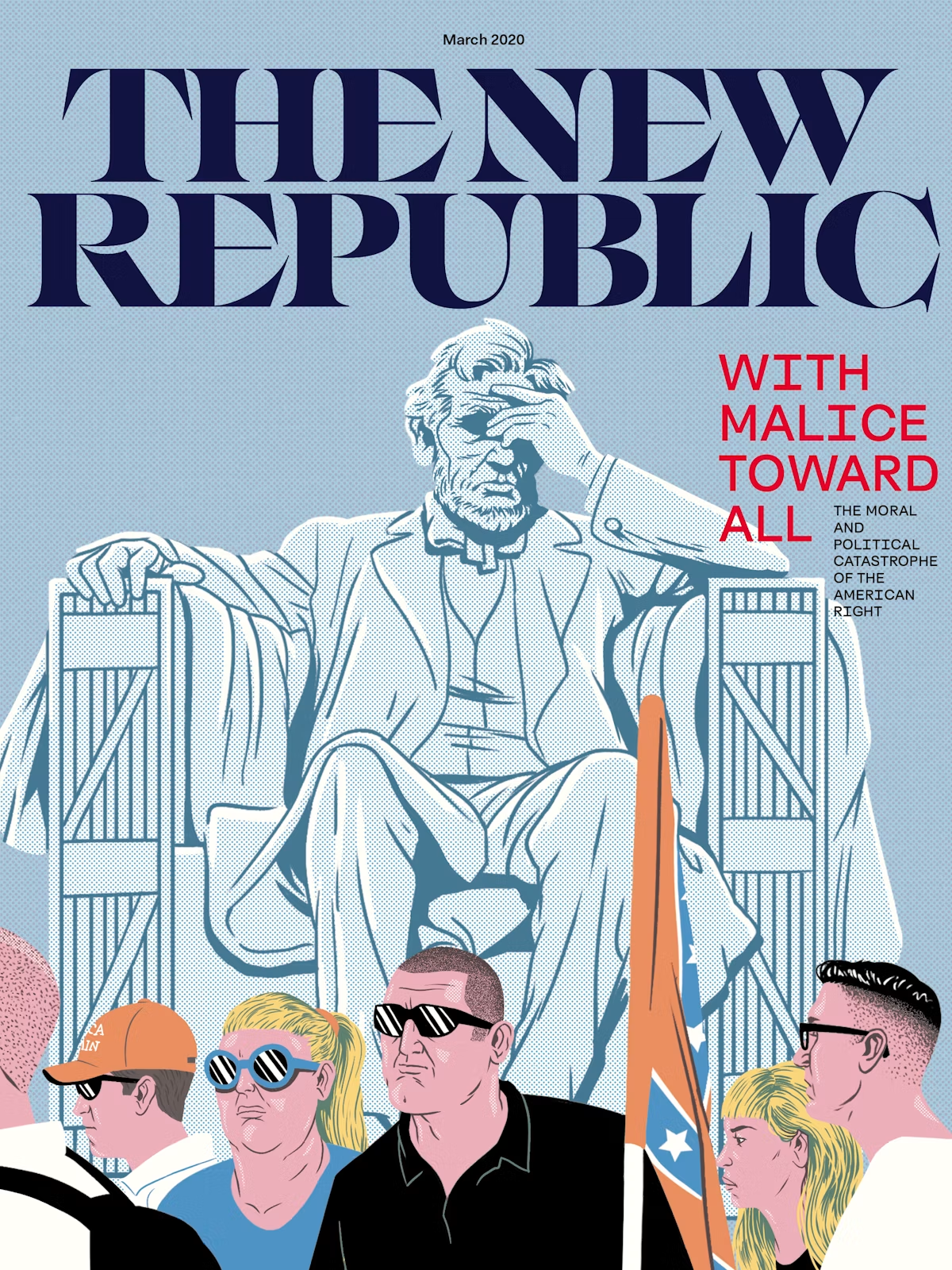
I then did some research regarding the notion that Israel has “a right to exist.” I quickly came upon an article in the New Republic by John Patrick Leary titled: “Israel’s ‘Right to Exist’ Is a Rhetorical Trap: No country has a right to exist, so what do people really mean when they say Israel does?”

Early in the article, it says Dani Dayan, the Israeli consul general in New York, wrote, “The day Palestinians accept Israel’s right to exist as the legitimate homeland of the Jewish people, a real peace process will begin.” It goes on to say,

Just last month, the House of Representatives passed a resolution that “denying Israel’s right to exist is a form of antisemitism.” The phrase and its long history compels us to ask: What does it mean for a nation to “exist,” and who judges its right to do so?

The article goes on to mention that the 1967 U.N. Joint Resolution 242 affirms every Middle Eastern nation’s “right to live in peace within secure and recognized boundaries free from threats or acts of force.”

The article concludes,

Israel has no right to exist because no nation does; only people do. Israelis exist; so do Palestinians. They all have a right to exist but only because they are human beings. And there is no justice in securing your own right to exist by denying it to others.

Relevant to this issue, just before the creation of Israel, the Jews that were rounded up from Nazi concentration camps were held in another camp while discussions about what to do with them was being ironed out. At that time, a survey was conducted asking those in the camp what they wanted to happen to them. Approximately 70 percent wanted to be sent to live with relatives in various countries like the U.S.. Canada, Great Britain, and Argentina. The idea of sending them to a section in the Middle East which was surrounded by people who didn’t want them was not at all appealing to them, especially after what happened to them in regions controlled by Nazis. A minority were religiously Zionist–those who believe in the establishment and development of the state of Israel. In 1948, due to, not Jews, but the powerful political influences of many Christians, the United Nations partitioned Palestine into a Jewish region and a region for people who viewed themselves as Palestinians. Ever since, violence has regularly sprung up between Israel and the surrounding Mideast countries. The stated issue is Israel has been defending against entities that have been violently opposed to the existence of the Jewish state.

Certainly, there are people in this region that are indeed against Israel’s existence, and many Palestinians are bitterly angry that they were forced to leave land that is now part of Israel, land that had been their home for many years. No doubt, if the Israelis were now forced to leave the land that has become their home for about eighty years, they, too, would be bitterly angry. However, I would like to make the argument that the loss of land of people who had grown attached to it is not really the central reason for the violence in this region.

A Theory Of The Real Reason For Violence
In The Middle East

This theory argues that the real central violent conflict in the Middle East region is due to the desert geographical conditions of large sections of the region which cannot be escaped by the inhabitants.

Why do I support this theory? First of all, if you check any history book specializing on this region, you will find that violence has been recurring there for well over a thousand years, and certainly began well before the partitioning of the land by the United Nations.

Also note that in the land where Israelis and Palestinians are living, there are regions where we see land beside the beautiful Mediterranean Sea. There, many people are thriving. Their jobs support seafood harvesting, international trade, and tourists arriving on ships. There are a few other regions where the inhabitants do very well, such as where the religious sites are. There, tourists flock, and by engaging in the restaurant, tour guide, and hotel industries, many in the region make out very well. There are also regions where the land is relatively fertile, and life on farms can be rather fulfilling. Regions in which universities and other educational institutions that have sprung up tend to be laid out on fairly attractive grounds. Earning a living by supporting these facilities tends to lead to a reasonably comfortable way of life.

In stark contrast to these regions, very nearby we find land that approaches desert conditions, with stony, rocky grounds, very scarce water supplies, and a few sparsely growing green shrubs here and there. The rest of the area is dominated by the Negev desert and the Judean desert. More than half of the region’s total land area is desert.

Where the Palestinians live, the terrain of the Gaza Strip is flat or rolling with dunes near the coast. It is intersected by the Wadi Ghazza (Gaza River), which is only replenished with water during the rainy season in the winter, running dry for the rest of the year.

The other area where most Palestinians live is the West Bank, which is mostly rugged dissected upland, with some vegetation in the west, but somewhat barren in the east. In springtime, the khamsini, a dry, warm easterly wind, often blows from the extensive deserts of Jordan, Syria, and Saudi Arabia. This continues for a period of roughly fifty days. The khamsini carries fine desert sand that lends the sultry air an ominous yellow hue during the day. The desert sand falls to the ground as a result of short rain showers. The fine sand is a health hazard for people suffering from bronchitis, and is detrimental to vegetation, motors, and machinery.

The water situation in Palestine (the West Bank and Gaza Strip) is dire and it affects the quality of life, health and economic situation of every Palestinian. In some rural areas the water supply is far below the amount recommended by the World Health Organization (WHO). Where most of the Israelis live, the water situation is somewhat better, but it is far more expensive to keep it flowing than what most Americans and Europeans have to deal with. Currently, those who are living in this Middle East region have every reason to believe they are stuck there–with armed guards stationed at their borders.

Now, in considering this theory, I note that I grew up in Brooklyn’s Brighton Beach community which, at the time, was made up largely of Jewish folks. Separating this community from an adjacent community is Ocean Parkway. On one side of the parkway sits a Jewish temple, while a few feet down from it, on the other side of the parkway sits a Catholic Church. Members of both religious groups never engaged in any organized violence against one another, and one of my best friends belonged to the church. Why the lack of violence? In this theory, it is because we did not live in the midst of desert conditions, there was plenty of drinking water, there was plenty of fruits and vegetables available in our grocery stores, and if we wanted to move to another neighborhood within the 50 U.S. States, there were no armed guards preventing us from doing so.

Strong additional evidence for my theory comes from further knowledge of Brooklyn, New York. There we find a vibrant neighborhood officially known as Bay Ridge, but it has been given the nickname “Little Palestine.” Thousands of Arab-Americans live there. They have their share of rally’s advocating for the freeing of Palestine, but they are peaceful. Another neighborhood, Bensonhurst, is an easy walk from Bay Ridge. Thousands of Jews live there, and yet there are no rockets being fired from Bay Ridge into Bensonhurst. Nor do we find any of the Arab-Americans flinging rocks at anyone.

In another Brooklyn neighborhood, a yeshiva (a Jewish school) sits across the street from a mosque without any incidents of violence between the members of these two institutions and their community members. And if you go on line and do a Google search to verify what I am saying, you will find not a single hit indicating an incident of violence between Jews and Arab-Americans in Brooklyn.

Why such peaceful cohabitation? Viewed in light of my theory, the reason is that Jews and Arab-Americans have in Brooklyn plenty of running water with the massive Hudson River flowing year round. Then there are the numerous tree-lined streets and green, wooded Prospect Park with rowers enjoying its lovely lake.

It is now over seventy years since the United Nations General Assembly declared its majority recommendation that Palestine be partitioned into separate Jewish and Arab regions, and both sides have been violently fighting over this ever since. It is not that there is something inherently evil about Palestinian or Jewish people. When Jews were seeking to establish the Israel lands as theirs, a  group of them organized a terrorist organization. Palestinians have found that sections of their population are willing to carry out terrorists acts. Why can’t this be settled peacefully? If my theory is correct, it doesn’t matter if you are Palestinian, Jewish, Christian or anything else. When any people find themselves living on lands that are too hard to thrive, and they are stuck living there, some of them will act violently to seek a better life. Blaming such groups, viewing them as being entirely evil serves nothing but to further hate and distractions.

According to the theory I am proposing, if folks truly want to create peace for the people in this region, there must be the creation of a plan that would allow them to migrate to regions where water is plentiful, the soil is richly fertile, and no armed guards are preventing them from integrating with other surrounding communities.

———————————
Some people will enjoy reading this blog by beginning with the first post and then moving forward to the next more recent one; then to the next one; and so on. This permits readers to catch up on some ideas that were presented earlier and to move through all of the ideas in a systematic fashion to develop their emotional intelligence. To begin at the very first post you can click HERE.

Categories
anger conflict resolution criticism Unfriending over politics

Unfriending Over Politics

Welcome to From Insults to Respect.

Please consider the following quote by Mathias Risse of Harvard University:

“Surely, political debate about what America should be, and which kind of economic system it should have, must count among the most basic themes in democratic discourse.”

Add to this, if you will, that the very first amendment declares that U.S citizens have, as a basic right, freedom of speech.

There is something so basic about the value of free exchanges of views that we hardly ever question it. If we are moved to question it, there are research studies that document that such exchanges are the mechanism by which better solutions are found and better decisions are made. Providing readers here with a formal review of the literature discussing these studies is too lengthy a process for our current purposes. It will suffice for today, I think, if I merely encourage you to imagine yourself seeking justice for yourself in a court of law that provides only the prosecutor getting to make the case against you, without your having any opportunity to present your side. Such an image, it seems to me, provides more than enough intuitive understanding that hearing both sides of an issue is crucial for increasing the chance of arriving at just decisions.

Something Appears To Have Changed

Since Donald Trump has been reelected to the U.S. presidency, I have been hearing more and more from friends, family members, and neighbors about an increase in the number of people who are being unfriended because they have expressed their contrary political views. Thus, opportunities for lively exchanges of different views that had been a regular part of our democracy appear to have diminished.

When I use the term, “unfriending,” I am not referring to how the term is used on Facebook. Rather than referring to this type of internet relationships, I am referring to the ending of what I view as real life, actual in-person relationships. Here are a couple of examples: One guy I know, told me about two of his cousins with whom he has always been close since they were children. A few months after Trump’s reelection, he and his cousins had a conversation expressing different political views. Ever since, these two family members have been refusing to talk to him. When he has made his usual seasonal calls to wish them happy holiday and to catch up with family doings, they now hang up on him. Another person has told me about how, after a brief discussion with a neighbor regarding Trump’s healthcare policy, this neighbor has now begun to turn a cold shoulder to her whenever they pass one another.

In an effort to avoid unfriending, but also leading to a diminishing of exchanges between people with different views, I’ve been seeing more and more folks only willing to discuss political issues when they are among others they know are in agreement with them. These talks are enjoyed for the support that one gets from likeminded folks. If they are with people with whom they disagree regarding their positions, they avoid the discomfort of hearing contrary opinions by insisting they will not engage in discussing political topics.

If we add to this, the current media programming situation in which people can tune into shows that solely express opinions that completely agree with them, we can see why more and more in our society have been losing out on the value that comes from hearing a variety of opinions.

Can We Improve This Situation?

It can be argued that the reason for the changed situation is because Trump has been modeling insulting, disrespectful behavior. Among the insults that I have heard Trump use are “fat pigs” and “disgusting animals.” I observed him on national TV calling Senator Lindsey Graham “a stiff,” Governor Rick Perry “stupid,” and numerous other political opponents, idiots.” He has denigrated federal judges who ruled against his efforts as well as the chairman of the Federal Reserve for not lowering interest rates.

However, whenever Mr. Trump insults his opponents, many voters are apt to defend him by saying he isn’t doing anything much different than all the other politicians. Meanwhile, I’ve heard Trump, when criticized for his insulting style, defend himself by declaring that no one has been more maligned than he. And he can certainly point to instances in which he has indeed been maligned.

That said, permit me to suggest that in an effort to change the current situation in which our fellow citizens are less likely to share their differing political concerns, we leave this maligning issue behind. I just don’t think it likely to  lead to anything productive. Instead, I would like you to consider some suggestions I have personally found helpful.

When a political issue comes up, I say I think the topic is very interesting. Then I encourage the person who first brought up the topic to express his or her opinion. I then give the person an opportunity to fully express it, without my throwing out any insults, or displaying behavior that could in anyway be viewed as disrespectful. I listen without expressing anger and will only interrupt to briefly ask for some clarification of what was said. People value being listened to, and I seek to provide this value.

When the person has clearly finished, I thank the person, summarize what was said, and add that what was said was very helpful to me. I then again thank the person. Then I say, “I’ve heard a different position and I would love to describe it and then get your reaction to it.” I have found that when expressed this way, most will let me proceed. As I describe the different opinion, I use no insults or any tone of voice that might suggest I am maligning the position the other party had expressed. I then ask respectfully for the reaction of the person who had been listening to me, and again I respectfully listen. If I see the person responds angrily, I don’t express return anger. When the person completes the reply, I again summarize what was said using a soft friendly voice and leave the exchange at that. If the person had responded civilly, I would be open to further expand the discussion. Otherwise, I leave the discussion with the hope that in due time both of us will further think about what was said.

This respectful exchange typically works very well for me, and I continue our relationship on friendly terms.

In situations in which people say they don’t want to discuss political issues, I gently encourage them to at least give me a try. I explain that I realize political discussions can get heated and lead to bad feelings, but, with me, they will find me listening respectfully and discuss the issues civilly. I also explain the value that comes from hearing diverse political views. If this leads to an agreement to go ahead with such a discussion, and the person with whom I am having a discussion starts to get heated, I encourage that we return to a civil style. If that doesn’t work, I let the person finish the point that is being made, without my returning the anger, and then suggest we take some time to calm down.

Well, there are my thoughts and suggestions for dealing with this type of situation. I surely encourage readers to express their views regarding this, even if they are contrary to my own.

My Best,
Jeff

———————————
Some people will enjoy reading this blog by beginning with the first post and then moving forward to the next more recent one; then to the next one; and so on. This permits readers to catch up on some ideas that were presented earlier and to move through all of the ideas in a systematic fashion to develop their emotional intelligence. To begin at the very first post you can click HERE.

Categories
American Indigenous People conflict resolution Indians Israel-Palistinian conflict Native Americans Palestinians

Native Americans vs Palestinians

Welcome to From Insults to Respect. 

Today we’re going to take a few minutes to compare a Palestinian conflict to one that Native Americans had been engaged in. Doing so, will suggest a path toward peace for the very violence-prone Middle East region.

The Comparison

The conflict Palestinians are engaged in can be briefly described by using the mnemonic DIG. These letters serve to remind us to dig to identify what party A in the conflict desires, what is interfering with that desire, and what that party believes the other party in the conflict is guilty of doing wrong. (see my “DIG for the Conflict” post for a more complete description of the DIG model.) In the conflict involving the Palestinians, they desire to regain land they lost when the United Nations members voted to create a partition that separated some of the land in the region. Some went to the Palestinians, and some went to what became the country of Israel. Interfering with the Palestinians’ desire is Israel and its supporters refusing to comply with their desire. The Palestinians generally believe Israel and its supporters are guilty of unjustly taking land rightfully belonging to them. For the past eighty years, many Palestinians have engaged in violence in an effort to regain the land taken from them. A similar conflict had befallen the America Natives (often referred to as American Indigenous People or American Indians).

For several hundred years, American Natives freely resided in the lands we now call the United States (U.S.). When the European settlers came to the U.S., they sought to gain ownership of various parcels of this land. The different authorities that existed over the course of several hundred years organized military forces that supported the settlers. The Native Americans fell into conflict with these settlers, desiring to regain the land they lost to the settlers. Interfering with this desire were military forces supporting the settlers. The Natives believed the military forces were guilty of wrongfully backing the settlers. For several hundred years, many Natives engaged in violence against the settlers in an effort to regain the land taken from them.

Significantly, unlike the Palestinians, for approximately one hundred years the Native Americans have no longer engaged in violence against the settlers. What can account for this?

Why Native Americans No Longer Engage In Violence Against American Citizens?

When I asked a friend this question, he theorized the Natives have simply been subdued by the sheer might of the American military. I am not convinced of this because the Palestinians have not been subdued despite being acutely aware that the same U.S. military that has supposedly subdued the Native Americans is currently supporting Israel. It seems to me a far more plausible reason Native Americans have ceased to continue the violence is that they successfully negotiated an agreement that established Native American reservations.

It might be thought that the Palestinians were given a reservation–the current partitioned Palestinian lands. However, the conditions for the Palestinians to reside in those lands are dramatically different than what is provided to Native Americans. That is, the Palestinian land is guarded by Israeli military forces. Palestinians are basically imprisoned in this land. In contrast, there are no military forces on the Native American reservation borders. There is nothing preventing Native Americans from leaving their reservations and to return there at will. Without any need for a passport or any other paperwork, Native Americans are free to go anywhere within the U.S. and by 1924 they have been declared U.S. citizens. Moreover, they can just as easily obtain a visa to visit other countries as other U.S. citizens.

Now, I’m not suggesting that the negotiated agreement concerning reservations has led to an ideal set of conditions for all Native Americans. There remain additional conflicts to be sure. For example, although 75 percent of Native Americans are living better than where the poverty line has been set by economists, understandably there is a desire to further reduce poverty. I’m only saying that the reservation agreement has led to a toning down of aggressive feelings sufficiently so alternative non-violent negotiations have been substituted. To further that end, the U.S. government has a Bureau of Indian Affairs. Past presidential administrations have provided hundreds of millions of dollars to hear and address the concerns of our Native neighbors.

Might this agreement permitting Native Americans to have control of the reservation lands along with being able to freely integrate with the rest of the United States if they so choose, be the reason why Native Americans have ceased their violent ways? We get convincing evidence for this when we take a look at a section of Brooklyn referred to as “Little Palestine.”

Peace Between Jewish and Palestinian Brooklyn Neighborhoods

In Brooklyn, New York, there is a vibrant neighborhood officially known as Bay Ridge. In the last few generations it has been given the nickname “Little Palestine” because thousands of people had somehow escaped there from the Palestinian region and have become American citizens. Another neighborhood, Bensonhurst, is an easy walk from Bay Ridge. Thousands of Jews live there, and yet there are no rockets being fired from Bay Ridge into Bensonhurst.

In another Brooklyn neighborhood, a yeshiva (a Jewish school) sits across the street from a mosque without any incidents of violence between the members of these two religious institutions. And if you go online and do a Google search to verify what I am saying, you will find not a single hit indicating an incident of violence between Brooklyn Jews and the Brooklyn Palestinians.

Why such peaceful cohabitation? Viewed in light of my theory, the land that the Brooklyn Palestinians are living on is, in essential ways, similar to Native American reservations.

Like those living on Native American reservations, Palestinians living in Brooklyn’s neighborhood can choose to continue living there, or they could freely move to any of the fifty U.S. states. If they desire, they can freely move back to their old Brooklyn neighborhood. They can obtain visas to visit other countries. In my view, this freedom takes enough of an edge off of any disagreements to eliminate violence.

So, if the members of the United Nations were to fully understand this, it would provide them the answer to what is required for bringing peace to those currently living on Palestinian lands within the Middle East. It would direct their attention to the task of identifying regions that can be purchased for Palestinian reservations. Permitting the Palestinians who freely chose to move to these purchased lands and to freely live under the same conditions existing for those living on Native American reservations will bring the violence to a final end.

Is This Plan Realistic?

Is the idea that the United Nations might come up with a successful plan to purchase such reservations realistic? I think it is.

Please note that the world population of Jews, Muslims, and Christians combined is over four billion people. All of them have some religious interest in promoting peace in the region we are discussing. If they think about the cost of war and preparations for war that has been spent during the centuries of violent interactions, and then think of the cost to continue the conflict forever, this will lead to the funds that could be raised to bring this Native American reservation type plan to life.

If I am right, once the new reservation lands have been purchased and have become available for settlements, even those who would choose to remain on Palestinian lands would discover that just knowing they are not trapped there, all of the other issues currently being bitterly fought over would be able to be peacefully negotiated. Likely, neither side would be fully delighted with the final agreement, but the heat that now leads to continuing violence would be replaced by visions of possible improved economic conditions, and a better future for their children.

———————————
Some people will enjoy reading this blog by beginning with the first post and then moving forward to the next more recent one; then to the next one; and so on. This permits readers to catch up on some ideas that were presented earlier and to move through all of the ideas in a systematic fashion to develop their emotional intelligence. To begin at the very first post you can click HERE.

Categories
conflict resolution criticism racism

Cool Steve Deals With Racism

Dr. Jeff Rubin

Welcome to From Insults to Respect. Here’s a story that just might deepen your thoughts about racism.

Cool Steve Deals With Racism

Monday morning.  Lincoln feels more familiar now.  Here and there I see someone I know.

            After lunch, my black friend, Leroy and I are talking about our rock band rehearsal next Thursday night while heading to math class. I spot Steve Marino and Brainy George down the hall.  We’re heading toward them.  I know that Steve and George live in an all-white neighborhood.  How would they react to being introduced to Leroy?

            When Leroy and I reach Steve and George, I nod and try to hurry by, but Steve says, “Wait a minute, Jeff.  I wanna talk to you about playing stickball after school.”

            My heart freezes.  I think, I’ll just keep walking and say quickly, I gotta run.

            But then, what I was doing just feels wrong.  I stop.  My heart—pounding, my forehead—hot—I say, “Hey, this guy over here, he’s… he’s a friend a mine—Leroy Wilson.”

            “Leroy, huh,” says Steve, smiling.  “Hey, you from Coney Island?”

            “No, I ain’t.  I live in Brighton.  Most of the cats in my family, though, live ovuh dere.”

            “Coney Island,’ says George, “a lot of niggers live over there.”

              “What did you say,” yells Leroy? The anger in his voice captures the attention of the hallway traffic.  Students are stopping to see what’s going on.

            Just then, the late bell rings. “Leroy,” says Steve, “I’ll talk to George about his choice of words after school.” Steve then gives Leroy a respectful bow of his head.  Then we quickly head toward our classes.

            On our way, Leroy says, “You know dat Brainy George cat is a real ass.”

*                                  *                                  *

When I spot Steve in the hallway after math, I hustle after him.  “Steve, after school I’m gonna get your friend, George, good.”

            “Get?  Get?  Watcha mean get?”

            “You heard him.  What he said to Leroy, man…”

            “Listen, Jeff, I’ve known George for a couple of years now and I’ve seen quite a few kids rough him up because he can have a big mouth.  And ya know what?  All it does is make him more stubborn. Jeff, I’m with you on wanting George to knock off the insults.  Maybe we could come up with something that actually has a chance of working with him.  I’ll see him in health class eighth period and I’ll tell him we both wanna talk to him after school.  We’ll go to Rocco’s and whyncha keep it friendly until the pizza comes, capeesh?  Then tell him straight how ya feel, without threats.  When you’re through, let him answer you completely.  No matter what he says, don’t interrupt.  When he’s through, you’ll be dying to reply to what he said, but don’t.  Let me go.  We’re old friends.  Some stuff he ough’da hear… well, he’ll be able to take it better if… if it comes from me.  Capeesh?”

            “We still gonna play stickball?”

            “Yeah.  Right after pizza, we’ll go.”

*                                  *                                  *

Later that afternoon, George, Steve and I all walk over to Rocco’s and order a pizza.

            When it comes, I say, “George, ya use the word nigger to piss my friend Leroy off?

            “Hey!  If we start calling those people black, pretty soon they’ll start thinking that they’re as good as us.”

            “George,” says Steve, “why is everything to you in terms of who’s better than the next guy?”

            George doesn’t answer, but his face is turning red.

            Steve pauses a few seconds.  I pick at my pizza trying to restrain myself.  After a few more calming seconds, Steve continues.  “I’ve known you for a couple years now, George, and I know you feel bad about not being too hot in gym and sports and stuff like that.  You looking to put people down to convince yourself that being poor in sports isn’t as bad as being black or… or… or whatever?”

            “Hey!  First of all I don’t give a shit about sports,” George screams.  “And what about you, Steve?! You do the same thing as me, Steve!  You do the same thing!  You’re always saying you want to be the best baseball player around and you’re always comparing yourself to other people!  Just yesterday, I heard you say to Cliff that you think you’re better than Jeff in stickball!  That’s the same thing, Steve!  That’s the same thing!”

            Steve pauses here, looking confused.  Then a smile forms on his lips.  “No.  No, it isn’t,” Steve replies.  I notice he has put his hand on George’s shoulder, and his voice is soft and calming.  “You’re right that I wanna be the best baseball player around, but I know that even if I become the best, that still doesn’t make me better than anyone else as a human being.  Mickey Mantle and Willie Mays are the best players around, but that doesn’t make them any better people than you or me.  It’s okay to strive to be the best at something.  That’s a person’s special contribution.  Cliff’s great at writing about sports; you’re a genius at school stuff; I’m good at baseball; and Jeff’s a good stickball player, maybe not as good as me, but pretty good.”  Steve turns to me and smiles.

            “Finish up with George,” I say, “and we’ll straighten out the stickball issue over the next few games.”

            “All right,” says Steve, still smiling.  “George, first of all, you know I like you, don’t ya?”

            “Yeah.  I guess so.”

            “There’s no guessing here, George.  I don’t have to hang out with you.  I don’t have to be talking to you now.  I do it because I like you.  That’s gotta be pretty obvious to someone with your intelligence.  No?”

            “Yeah.”

            “Good.  Now, correct me if I’m wrong.  No matter how special our talents are, it still don’t make us better or worse than the next guy as a person.  You can see that, can’t ya?”

            I think to myself, maybe in some basic way we are all equal—but people do respect some people more than others.

            George glares at us.  He then roughly shakes hot pepper on his pizza and too much comes spilling out.  “SHIT!” he hollers as he slams the shaker on the table.  He shoves his slice away, crosses his arms in front of his chest, and angles his chair away from us.  We sit silently, listening to the juke box playing “Downtown,” and watching the other patrons passing the time.  Now George is rubbing his head, messing up his already messy hair.  Slowly, a quiet sadness comes over him.  I see a glimmer in his eyes.  He turns to Steve.  “It’s not that I’m bad in sports,” he says, his voice much softer now.  “I couldn’t care less about sports.  It’s just… well, all through elementary school there were these black guys who would gang up on me.  I know white people have roughed me up also.  And probably whites have beat up far more blacks than the other way around.  It’s in the paper all the time how whites are stringing up blacks, especially in the South.  But, when you’ve been beaten up as much as me by blacks, it’s hard to forget just like that.”

            Everyone remains quiet for a few moments.  I notice every now and then Steve looks softly into George’s eyes.  After a while George says, “I guess Leroy… well… he never did anything wrong to me so… well, I guess I should at least give him a chance.”

*                                  *                                  *

A couple of days later, Leroy and I run into George out by the side entrance of Lincoln.  George turns red, stutters for a minute and then says, “Listen, Leroy, I… I… well, I’m sorry about the way I acted the first time we met.”

            “Sorry,” says Leroy.  “Sorry.  Man, git the hell away from me.”

            “Leroy, listen to George for a minute, will ya,” I say.


“Leroy,” says George.  “When I was in junior high there were these… well these black kids, and they taunted me day in and day out.  And a few times they beat me up and some of my white friends.  And… well… I wasn’t alone about getting to hate them.  After awhile, the white kids I knew started to say stuff about black people, without bothering to say the stuff just about the kids who picked on us, and… I guess we began in some strange way to think we were better than blacks.  That’s wrong, and I’m… well, I’m sorry.”

            Leroy places his hands on the tight black curls of his closely cropped hair.  He clears his throat by going, “Ahmmm. Ahmmm.”  He crosses his arms in front of his chest and takes a tough looking stance.  Then he puts his arms down to his side.  Finally, in his deep rich voice he says, with his hands moving in front of him: “Ya know, it’s funny… it’s funny about dis business of so many cats tryin’ ta think dey’re better dan everyone else.  Ya know, when I go ta Coney Island, some of da black cats ovuh dere mess wit’ me just because dey know I have white friends.  Dey start squawking, ‘Boy, you a whitey’ or ‘You a Oreo!’  Dey think dey’re better den me ‘cause dey have just black friends.  Dere’s times when I hated all of ‘em because of it.  At uda times, I hated all whites fuh makin’ black people hate me.  T’ tell ya da truth, George, I guess… well, I guess I have no call holden’ a grudge wit’ you, not wit’ me sorta doin’ da same thing lots of times.”

——————————-

Some people will enjoy reading this blog by beginning with the first post and then moving forward to the next more recent one; then to the next one; and so on. This permits readers to catch up on some ideas that were presented earlier and to move through all of the ideas in a systematic fashion to develop their emotional and social intelligence. To begin at the very first post you can click HERE.


Categories
conflict management conflict resolution respect

Cool Steve Confronts Poverty

Dr. Jeffrey Rubin

Welcome to From Insults To Respect.

When thirteen-year old Cool Steve’s parents no longer can afford the rent where they had been living, they move to a less expensive, run down apartment. Steve has to start a new junior high school even though it’s the middle of a school year. Let’s see if we can learn something when we see how Steve handles his first day there.

*           *.         *

At lunchtime, Steve’s teacher informs him, “Young man, because this is your first day here, when you get down to the lunchroom, you’re to report to the vice principal, Mr. Lantern. He’ll assign you a place to sit. You can’t miss him; he’s the large, bald gentleman down in the lunchroom.”

    You must be the new member of our team,” says Mr. Lantern, amidst the noisy sounds of the lunchroom. He glances at a clipboard. “Steve Marino?”

     “Yes,  Mr Lantern.”

     “Welcome to Cunningham. Follow me.”

    They walk past rows of long rectangular lunch tables until Mr. Lantern, pointing to an empty spot, says, “Why don’t you have a seat right here? This is where the students in your homeroom sit.”

     “Okay,” says Steve, nervous but attempting an air of nonchalance.

     As Steve begins to sit down, this very pretty girl who is sitting just to the right of where he has been assigned leaps up wildly screaming. “I can’t believe this!”

     Steve looks around for some answer to this crazed girl’s actions.

    “I can’t believe this!” she screams. “The incredible power!”

     Steve sees that she’s talking to him while intensely staring at him.

     “You have a very old soul,” she continues, “an ancient soul of some mighty leader. I’ve never sensed such power! This is incredible!” Then she touches Steve’s arm and her shining, green feline eyes drift up as if leading her to another dimension and she swoons, “Ohhhhhhhh!”

     Steve, shaking his head, sits down, looking bewildered.

     “Don’t mind her,” says this broad, dark haired guy sitting opposite to the girl. “You’ll get used to Mysterious Jane.”

     “Mysterious Jane?” Steve asks.

      “Yeah,” says the guy, “we call Mysterious Jane, Mysterious Jane, because she’s strange. Anyways, I’m Ron DeFilipo. 

       After Steve introduces himself, he looks over the situation. Directly to Steve’s right sits Mysterious Jane, with her long glimmering black hair, lovely green eyes, strikingly beautiful facial features, and, even as a thirteen-year-old, her curves are hard to ignore.

    Ron points to a guy on his left. “This here is Jerry Miller, the best athlete in eighth grade.” Jerry, thick dark brown hair, swarthy, and wearing a silver chain around his neck with a distinctive Star of David hanging from it.

     Steve gives Jerry a respectful salute.

     Jerry returns the gesture with a nod.

     “You see those kids over there?” says Ron to Steve, referring to the table two feet away. “They’re the SP kids, the biggest wimps at school.”

       We had SP students, those in the “Special Progress Program” for super smart kids in my last school, Steve thinks to himself.

    At the SP table this blond-haired, blue-eyed kid who, upon hearing Ron calling SP kids wimps, turns to Ron and yells, “We aren’t wimps, you are!”

     Both glare at each other.

     “Personally,” says Steve, “I like some of the kids that got school smarts. I like to have a couple of them for my friends ‘cause I’m not all that great with school stuff, capeesh? They help me to understand some stuff.”

     “I don’t need no help from any wimpy SP kids,” says Ron.

     “We wouldn’t give you any,” the SP kid bitterly responds.

     “Ya wanna be friends with those jerks, ga’ head,” says Ron.

     “I’m not saying you have to be a school wizard to be my friend,” says Steve. “I like to know kids with different kinds of talents.”

     “So you’re a new kid here,” says another kid sitting at the SP table.

     “Yeah. Today’s my first day.”

     “Well, I’m Cliff, Cliff Schweitzer, and this blond guy sitting across from me who is always arguing with Ron; well, the guys call him Brainy George.”

     “Your real name is ‘Brainy George’?” Steve asks smiling.

     “Na. George Beck.”

     Steve looks him over. His fine blond hair is sloppily combed mostly to the right, but some haphazardly falls over to the left. Thick glasses magnify his pale blue eyes.

    Steve turns to look at Cliff. Even though he’s in the SP program like George, Cliff hardly looks like an intellectual. Dark and athletic looking, Cliff is quite a contrast to his buddy, Brainy George.

     “Just because these guys are in the SP program, you don’t like them, Ron?”  Steve asks.

     “Aaa, they’re a bunch of losers,” Ron responds.

     “What did he say?!” asks a student who is sitting to Cliff’s left.

     “Shutup Abromowitz!” Ron hollers.

      “I don’t like this kind of talk, Ron,” hollers Jerry Miller, his gold star of David glimmering reddish blue like an igniting flame.

      Mr. Lantern points to Steve’s section of the lunchroom.

      “That means it’s time for us to get in the lunch line,” says Mysterious Jane to Steve touching his arm and smiling into his eyes.  

As Steve begins to get up, he feels an intense anxiety pang. Great, he says to himself. Now I gotta get on this lousy lunch line and use this damn free lunch pass I got at the welfare agency.

*                                  *                                  *

The aroma of chicken soup, peanut butter sandwiches, and fried fish cakes drifts into Steve’s nostrils. He picks out a peanut butter sandwich, a container of milk, and some ice cream. Then he shows the cashier his free lunch pass. Ron DeFelipo, standing right behind Steve, starts to laugh and says to Mysterious Jane, “Look at this! This is the guy with all the power! He can’t even afford to buy himself lunch! What a joke!”

       When Steve hears this, it feels like a knife has been stuck in his gut. His face becomes hot, he pleads with himself not to have tears well up in his eyes, and he looks down avoiding everyone’s eyes.

       Jane looks at Steve, turns to Ron, shoves him, and says, “You have no brains.”

       “Don’t ya get it?” says Ron. “He’s got all this power and…”

       “Lay off. It’s hard enough,” says Brainy George, who’s standing nearby.

       When Steve gets back to his table, his appetite’s gone. There’s a sour feeling in the pit of his stomach. After a few moments he accepts that he isn’t going to get any food down, so he pushes his tray away.

       A few minutes later, Ron turns to Steve and says, “Can you believe this? This ugly midget George says he can take me.”

      Now Cliff, who has been quietly reading the Daily News sports page while eating, decides to put in his two cents. “If it’s important to you to be a good fighter, Ron, why don’t you join a wrestling team or karate club? Or learn to box. There’s a boxing club not too far from here where the former world heavyweight champ, Floyd Patterson, trained when he was growing up. Join one of those things. You’ll find that, compared to people who train regularly, your skills are awful. With training you can develop them and test them respectfully against other people who are also skilled.”

       “I don’t need no training,” says Ron. “I can take anyone around here.”

       “Anyone?” Jerry Miller asks.

       “Well, maybe not you, Jerry,” Ron comes back, “but pretty much anyone.”

       “Look,” says Cliff, “all I’m trying to say is, no matter how good you get at fighting, it’s not going to prove who’s a man and who isn’t. Patterson was the champ. Sonny Liston beat him and now he’s the best fighter around. He can take all of us. Does that mean he’s the only man around and the rest of us are wimps? And what happens when someone finally takes Liston? Does that mean that one day Liston’s a man and the day he loses suddenly he becomes a wimp?”

       Steve once again begins to wrestle with his food and this time he gets some of it down, though it tastes like sawdust.

                                             *              *.         *

Well, that’s my story for today. I hope it provokes some thoughtful reactions about how poverty isn’t just a shortage of money; it includes embarrassing experiences and opportunities to be cruelly looked down upon.

My Best,
Jeff

Categories
conflict management conflict resolution Racial Discrimination

How Would Cool Steve Handle This?

Welcome to From Insults To Respect.

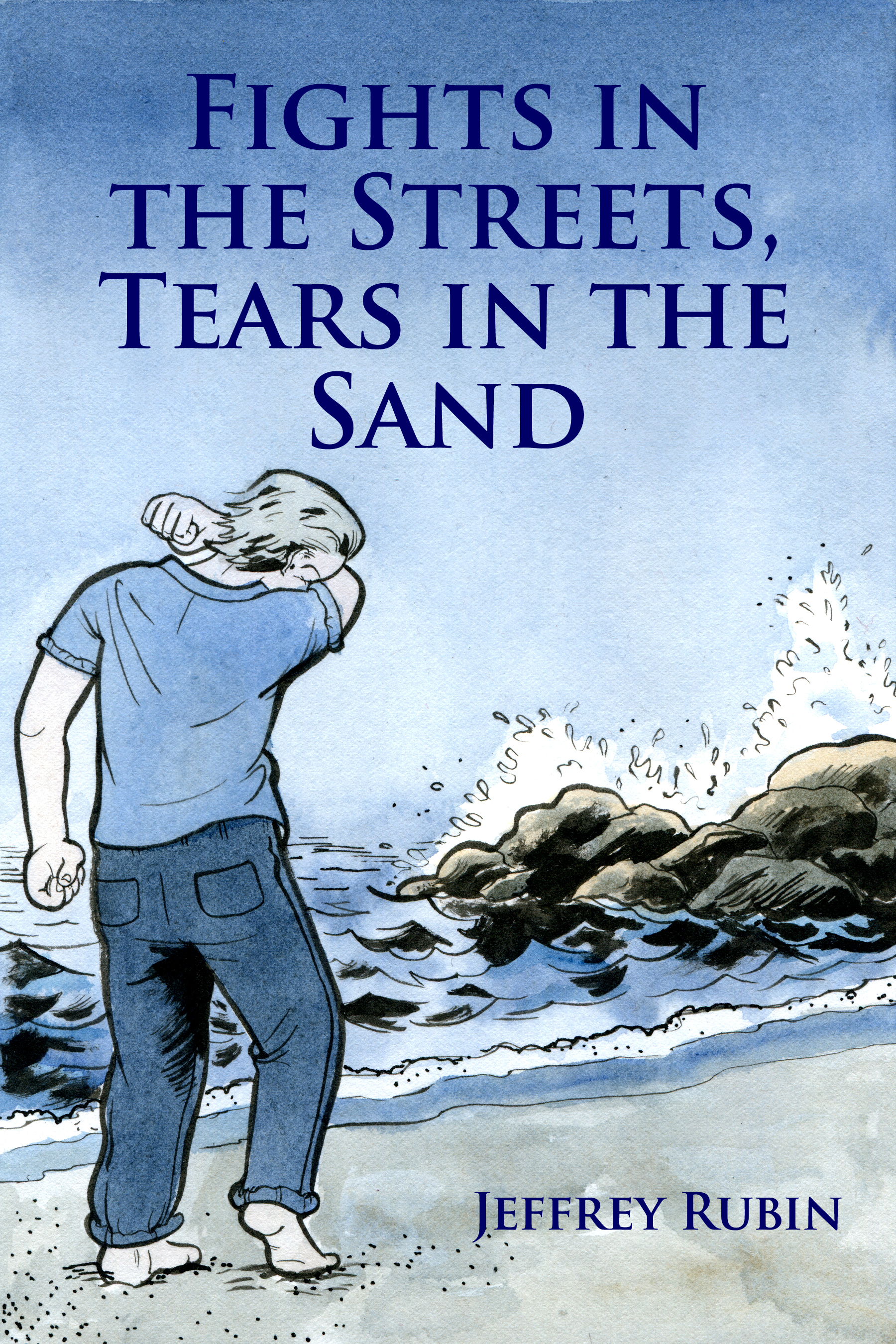
Today, I present a brief story that asks the question, How would someone people respect handle the challenging situation of racial discrimination? The story is an abbreviated section from my novel, Fights In The Streets, Tears In The Sand. The story’s setting, 1965, Brooklyn’s lower middle class section of Brighton Beach. Jeff Star, one of the two major character’s of the novel and its narrator has begun his first day at Lincoln High, and he begins to hear about a classmate some students refer to as “Cool Steve.”

The Story

Fights in the Streets, Tears in the Sand

After English, I’m heading to Biology and some guy behind me says to someone next to him, “Hey, Cool Steve’s in my health class!”

     “Wow, Cool Steve! Really!?”

     “Yeah! He sat right next to me.”

     “Damn! Hey, tell him I say hi.”

     There’s an excitement that accompanies this dialogue that somehow has me going, hmmm.

     I go to Math and as I’m entering the room, I spot an old friend from Brighton Beach—Leroy Wilson. We recently had lost touch with each other because my family, when I was twelve, had moved from Brighton to Bensonhurst when my mom remarried. Leroy and I got together a few times after that, but after a bloody incident at a car repair shop that involved a close friend of mine, his mother wouldn’t let him have anything to do with me. I didn’t expect to run into Leroy at Lincoln. He and a few of the other kids my age who I knew from Brighton had always gone to either a Catholic school or a Yeshiva.

     It was Leroy who had taught me to play the guitar. Man, we were really driven back when we were twelve and thirteen with this dream of becoming the greatest rock ‘n’ rollers ever. And when we would get a song down just right it was a wild thrill beyond compare—lightning and sparks everywhere. So, when I first see Leroy, I smile. But then it hits me. Leroy is black. In Boody Junior High, if any white kid was to be nice to a black kid, he would have been taunted.

     How would the white kids at Lincoln react if they learn I have a black friend? Over ninety percent of the guys at Lincoln are white. I should be siding with whites, the more powerful group, the majority. Crap, he’s gonna blow my cover.

       “Jeff! How’s ya old self doin’?” cries Leroy as he spots me.

        I look up into Leroy’s eyes and then down at the wood classroom floor—my heart racing. Quickly, I move to an available seat that’s surrounded by seats other students are already sitting in. I avoid looking at Leroy, but I can feel him looking at me. All through class my eyes avoid his, but my heart grapples with his presence. When the period ends, I race out of class.

        One more class to get through before I can head home for the day. In the hall, with hundreds of students racing by, and a couple of guys bumping into me, I check my program card—Social Studies, Room 316. I have to go up a flight of stairs. I look around for a stairwell. There’s one, down the hall. How could I treat Leroy like that? Leroy’s dark confused eyes flash before me.

      “I’m Mr. Lofton,” announces a heavy-set, fortyish-aged teacher. “Welcome. Today we’re going to review some of the major news events of the summer. Then, later in the school year, we will be connecting our social studies lessons with these and other current events. I have some newspaper clippings here. As I read them, I want to get your reactions.

     “Crime at highest level ever,” cries Mr. Lofton. “Latest statistics indicate 13 percent increase. When I was a boy, we used to camp out in Central Park. Now you’d be crazy to go there at night.”

     I think about the newspaper story I read last week of Coney Island boys who were stabbed.

      “Ignoring Nazi pickets and bomb threats, the Reverend Dr. Martin Luther King moved into Washington’s ghettoes and told crowds of his admirers that economic freedom is the new cry of the civil rights movement. A dozen brown shirted American Nazis picketed with signs saying, ‘America for whites, Africa for blacks.’”

      Man, how I treated Leroy. Am I turning into a Nazi? Leroy’s dark confused eyes. An image of an exhilarating scene of us playing “Johnny B. Goode.” Am I turning into a jerk to be respected?

     After school, I walk to Rocco’s Pizzeria over on Brighton Beach Avenue. Rocco is shoveling a new pie out of his large steel oven. I take in deeply the familiar aroma of baking dough, oregano, cheese, and Rocco’s underarms.

    With a slice and Coke in hand, I discover none of the tables are empty. At one of them is this guy Brainy George Beck sitting by himself with his blond hair looking like it hadn’t been combed in months. I had noticed him earlier in the day in my gym class and he sat at my lunch table. “How come they call him Brainy George?” I had asked one of the guys in gym.

     “Da guy’s a freakin’ genius,” came the reply.

      With nowhere else to sit, I ask if he’d mind if I sit across from him. He looks up with these large thick glasses and nods his okay. “You were in gym today and at our lunch table,” he says as I sit down.

      “Yeah.”

       “I hate gym.”

        “You do?”

         “Can’t stand it—all the retards trying to prove they’re Mr. Atlas.”

         “Hmmmm.” Personally, gym is a whole lot better than the rest of the garbage we gotta take at school. “What junior high did you go to?” I ask.

         “Cunningham.”

         “That’s the same junior high as this kid some are calling Cool Steve. I guess ya don’t think much of him since he’s inta sports.”

          Oh, you mean Steve Marino? Steve’s different than the guys I’m talking about.”

          “Izzat so?”

           “Yeah. I respect Steve because, well, first of all, he’s not one of those idiots who picks on me because I can’t run as fast as the other guys. And I like the way he’s gutsy. He’s not afraid to stand up for what he believes in. And it’s the way he carries himself… the way he moves. I… I just have a lot of respect for Steve.”

          Hmmm. Well, being gutsy shouldn’t be too hard, I think to myself. Hell, I was gutsy enough to get in lots of fights in my old school. But I don’t quite know what to make of this stuff about the way Steve moves.

When I get home, I go into my bedroom, sit on my bed, pick up my guitar and start to slide my fingers across the strings. Then I find my fingers playing a little piece that my former black friend, Leroy had taught me. It begins with a sort of angry, rough part, but closes with a gentle refrain. As I play, I imagine Leroy playing along, just like the old days. We start to kick it up, jamming up a storm, reelin’ and rockin’ all night long! And then that image of his dark eyes returns to me—how they looked in class—confused, hurt. I wonder, How would this Cool Steve handle this?

*                                  *                                  *

Good Question. The search for the answer is a story for another day. For now, I’m asking my readers who have the courage to propose their answers.

My Best,
Jeff

———————————
Some people will enjoy reading this blog by beginning with the first post and then moving forward to the next more recent one; then to the next one; and so on. This permits readers to catch up on some ideas that were presented earlier and to move through all of the ideas in a systematic fashion to develop their emotional intelligence. To begin at the very first post you can click HERE.

Categories
conflict resolution criticism free social intelligence and emotional intelligence curriculum Freedom

Criticism and the Desire to Maintain Freedom

Welcome to From Insults to Respect. In my last blog post, we discussed how criticism often leads to an angry conflict related to the desire to be liked. We now turn to another reason why criticism often leads to a conflict — the desire to maintain freedom.

No photo description available.Back in 1966, psychologist Jack W. Brehm published a remarkable book entitled, A Theory of Psychological Reactance. In a nutshell, it states that people become motivationally aroused by a threat to or elimination of a behavioral freedom. This motivational state is what is called psychological reactance.

Psychological reactance impels the individual to restore the freedom that was threatened or taken away. There may be two manifestations of the occurrence of reactance: actual attempts to restore freedom and increased perceived attractiveness of the lost or threatened option.

Dr. Brehm argued that people tend to ask themselves, “If he does this to me, what can’t he do?” That is, when one freedom is threatened or taken away, many freedoms logically could be in danger, and they presumably will be perceived as threatened unless there is an explicit and convincingly stated limit.

Dr. Brehm has provided the following example:

Two or three years ago when services at the Library of Congress were reduced because of the budget squeeze, users of the library screamed bloody murder. My guess is that while some users may have been inconvenienced, the real strength of their response came from the implied threat to all their uses of the library. After all, if certain services could be reduced, then what was to prevent those services from being eliminated altogether or other services from being reduced or eliminated?[1]

Now let’s apply this theory of reactance to the frequent observation that criticism often leads to defensiveness.

In this comic strip, we see Lucy is mighty upset because her mother criticized her for being bad and then paired this with a punishment — cancelling her birthday party. This pairing of criticism and punishment is so common when kids are growing up that it may be the reason why many folks have a difficult time dealing with criticism even when it is unlikely to lead in a particular situation to punishment.

The association of punishment and criticism perhaps has become so ingrained from early childhood, that without even realizing it, many become defensive and resist criticism.

We see, in this comic, Lucy trying to resist her mother’s punishment, and when Linus criticizes Lucy’s response to her mother, Lucy cries out that she would rather die than go along with it.

The threat to both desires, being liked and doing whatever the hell we like, apparently are major reasons why criticism is so hard to bear. The tough feelings that come about has led to a philosophy of many folks that they should discourage anyone from providing criticism to them by their righteous defensiveness.

John Stuart Mill published a brilliant book back in 1859, titled On Liberty, and it is still revered by millions. He presents a very different philosophy. According to Mr. Mill, if people criticize us, even for holding an opinion we are very sure of, “let us thank them for it, open our minds to listen to them, and rejoice…”  Mr. Mill does not just declare that this is so; rather, he spends many pages explaining the reasons for his position. He points to many people who were quite certain of a position and after hearing counterarguments came to realize they had been mistaken. Many people, for example, once believed with complete certainty that the Earth is flat but came to change their minds when they met up with people who criticized their belief using sound evidence.

Although it would distract us for too long to review all of Mr. Mill’s examples and arguments, I would like you to consider carefully one of his finest paragraphs.

John Stewart Mill

“In the case of any person whose judgment is really deserving of confidence, how has it become so? Because he has kept his mind open to criticism of his opinions and conduct. Because it has been his practice to listen to all that could be said against him; to profit by as much of it as was just, and expound to himself, and upon occasion to others, the fallacy of what was fallacious. Because he has felt, that the only way in which a human being can make some approach to knowing the whole of a subject, is by hearing what can be said about it by persons of every variety of opinion, and studying all modes in which it can be looked at by every character of mind. No wise man ever acquired his wisdom in any mode but this; nor is it the nature of human intellect to become wise in any other manner. The steady habit of correcting and completing his own opinion by collating it with those of others, so far from causing doubt and hesitation in carrying it into practice, is the only stable foundation for a just reliance on it: for, being cognizant of all that can, at least obviously, be said against him, and having taken up his position against all gainsayers knowing that he has sought for objections and difficulties, instead of avoiding them, and has shut out no light which can be thrown upon the subject from any quarter—fie has a right to think his judgment better than that of any person, or any multitude, who have not gone through a similar process.”

In my view, some people, when they criticize us, sometimes do provide us with information and ideas that we had not been previously aware of. And even when some people criticize us and provide us with information and ideas that strike us as false, we are still likely to be better off in the end. The very process we go through of putting some ideas together so that we can articulate why we hold their information and ideas as false has a way of organizing and deepening our understanding in a helpful manner.

For me, personally, having been quite defensive in my earlier years, taking up this aspect of Mill’s philosophy has led to far more pleasant exchanges. In fact, I often find it fun. And I like that it moves me more to an authoritative approach in contrast to an authoritarian approach. There are times when I do get a hit of angst, but it is received with confidence that I can use the angst to deepen my search to find a better response.

What would a response to criticism look like that is consistent with this type of philosophy? Here’s my take on this.

The person being criticized listens to the criticizer in a supportive, warm, friendly style, and then makes it clear that he or she fully understands what was said by summarizing it. The person, moreover, puts the criticizer at ease by  indicating the wise learn from criticism. Some time is spent on showing that he or she is thinking about the criticism. If, after processing, the criticism is deemed to be correct, a statement is frankly made indicating, “I can see your ideas have merit and I intend to use them in the future.” If, after processing, the criticism is deemed to be incorrect, a statement is made designed to disagree without being disagreeable. More specifically, a sense of humor, some empathic listening, and a few smiles help to traverse rough terrain. As the episode winds down, the criticizer is encouraged to feel comfortable communicating suggestions in the future.

As it happens, I have found that people who respond to criticism in this way are more liked and respected than those who instead become defensive. Moreover, over the years of my teaching conflict resolution and counseling folks, I have found that most people can easily learn to respond to criticism in this more positive manner even if they had spent years responding defensively.

The training needed to make that change is simple and free. Over a two month period, once a week reserve fifteen minutes at a convenient time to imagine someone has criticized you. Write how you think you might respond. Not just the words you might say, but how you might feel, and also how defensive your words might be perceived. Then, reread the description of the type of response I described above in italics. Then, three times, out loud, provide a response to the criticism that is consistent with that description. After two months, make an appointment with a friend or family member to help you out. Show the helper the italicized response description, and then have the helper make up some criticism of you, and have her or him use it in a role-play in which you are criticized, and you respond. Use your phone camera to record it. Then, while watching the video recording, ask your helper to criticize how well your response matches the italicized paragraph. Do this exercise one more time about a week later, and you will be amazed at how easy you will be able to handle criticism in the future.

[1] J. W. Brehm [1989], “Psychological Reactance: Theory and Applications,” in Advances in Consumer Research, Volume 16, eds. Thomas K. Srull, Provo, UT : Association for Consumer Research, Pages: 72-75

———————————
Some people will enjoy reading this blog by beginning with the first post and then moving forward to the next more recent one; then to the next one; and so on. This permits readers to catch up on some ideas that were presented earlier and to move through all of the ideas in a systematic fashion to develop their emotional intelligence. To begin at the very first post you can click HERE.

Categories
conflict resolution criticism

Criticism and the Desire to be Liked

Welcome to From Insults to Respect.

When someone provides criticism anger often ensues.

The above comic offers us a fine example. Why is Sally getting so angry over her brother’s comment? Could it have to do with the desire to be liked and loved?

For many of us, not being liked or loved is the worst thing imaginable. When you’re around someone who likes you, oftentimes that makes life more pleasant.

People don’t only desire to be liked, they also desire that people like their clothes, their appearance, and their acts as well.

There is within natural selection theory a hypothesis about why people feel so strongly about being liked. This hypothesis states that people have an inborn fear of not being liked because in some ancient cultures someone not liked would be banished from the tribe, and those banished would be less likely to survive in the harsh environs of the day than those who were not banished. It is also possible that people are more likely to help others who are liked, and this too provides an increase chance of survival.

The anxiety of not being loved as much as you desire, when coupled with the fear that accompanies the image of being all on your own can be so uncomfortable that it leads individuals to do some creative acts to ward off these feelings.

For me the following poem by Emily Dickinson beautifully captures what may be going on inside of us when we feel the sense of not being loved:

Emily Dickinson

There is a pain — so utter —
It swallows substance up —
Then covers the Abyss with Trance —
So Memory can step
Around — across — upon it —
As one within a Swoon —
Goes safely — where an open eye —
Would drop Him— Bone by Bone.

Here Dickinson talks about a pain so utter it swallows substance up and then covers the abyss with trance. The experience of being unloved and all alone is like this. Any act that reminds an individual of these feelings can provoke defensiveness.

Many people don’t like it when they are criticized and begin to take some action to discourage it. In our Peanuts comic, Sally feels her brother is wrong for not liking her swirls, and perhaps attached to those feelings is fear of not being liked. Why else would she act so strongly about her brother’s comment?

By more deeply understanding why people can react so strongly to criticism, we can see better how to deal with them. For example, if Charlie Brown indeed likes his sister, he would be wise to consider if there is any value to letting her know this more often than he has been doing. A comment from time to time such as, “You know Sally, you’re my sister and I love you a whole bunch,” could be very helpful to fulfill her desire to be liked.

Another approach Charlie Brown could try is to begin to teach Sally that he can still like her even if he doesn’t think what she did on some occasion was great. We can love the person even when we don’t love the act the person has carried out. If Charlie Brown would help Sally to fulfill her desire to be liked on a regular basis by using these techniques, the recurring conflict that involves her desire to be liked may come up less frequently when he criticizes her. He would have to try it out to test this hypothesis, but it at least gives Charlie Brown a plan that has the potential to improve his current situation.

Being aware of the connection between the desire to be liked and criticism also helps us to be aware that sometimes it is better not to criticize someone in front of others. Notice what happens after Charlie Brown criticizes Sally’s swirls and then Sally interprets Snoopy as having also criticized them.

Sally becomes even more upset. When you become threatened because you think that one person doesn’t like you, it becomes even more painful when others gang up on you.

The words Sally uses when she hollers at Snoopy are interesting— “And who asked you?” It suggests that Sally feels that if she did not ask Snoopy for his opinion, he has no right to be giving his opinion. Sally’s view is quite common.

Why aren’t unsolicited negative criticisms welcomed? For many, it hurt because it brings up the feeling of “not being liked.” When we come to realize this, we may pause before giving an opinion, which is a type of criticism, and ask ourselves if it is worth the risk of starting a conflict about being liked.

Now there are occasions when the risk makes sense. Let’s say I’m dating Alison, and it is pretty clear she likes me and that I like her. But there is one thing Alison does that is making me feel like I want to end our relationship—when she criticizes me, she uses a very nasty tone that involves shouting and glares. She hasn’t asked me for my opinion, but I feel that it’s worth a shot to confront her with this because both of us could benefit from solving this problem.

Knowing that when people are criticized it often brings up this recurring “liking” conflict, I could present my comments to her carefully. I can seek to find a time when we are all alone and she appears to be open and relaxed. At that time, I could say, “Alison, I sure like you a lot. I’m very physically attracted to you, you’re smart, and most of the time you treat me in a very caring way that I really love. I am having difficulty with this one problem though. There are times I do something that you don’t like, and when you confront me, you do it in a tone that’s beginning to get to me.”

Notice how I began my comments by reassuring her that I like her and by giving her a few specific examples of what I like about her. This helps to fulfill her desire to be liked. Once this desire is fulfilled to some degree, it can potentially decrease the intensity of the conflict as we attempt to solve the problem.

It’s interesting that some people, even when they realize that providing criticism at a given point in time is not the best thing to be doing, have a hard time refraining. Sometimes we have to work on making changes over a period of time.

Seeing ourselves make mistakes while we are trying to make a change may lead to our criticizing ourselves. Most of us desire to like ourselves. To feel the blues deeply while knowing that mistakes are part of the learning process is a different bluesy feeling than the feeling we get when we think a mistake means we are inherently, unchangeably not likable. The “learning” bluesy feeling is more hopeful. Learning to be kind to yourself when you make a mistake is an important step in learning to be kind to others when you see them make mistakes.

———————————
Some people will enjoy reading this blog by beginning with the first post and then moving forward to the next more recent one; then to the next one; and so on. This permits readers to catch up on some ideas that were presented earlier and to move through all of the ideas in a systematic fashion to develop their emotional intelligence. To begin at the very first post you can click HERE.

Categories
conflict resolution Dealing with insults Mental Health mental health concern model Mental Illness

A Kinder Approach to Mental Health

Welcome to From Insults to Respect. Today, we take a look at the question, Can psychologists come up with a kinder, more respectful, healthier approach for dealing with the types of concerns people seek mental health services?

The current approach, often referred to as the “medical model” or the “mental disorder model,” is promoted by the American Psychiatric Association (APA), the World Health Organization (WHO) and the pharmaceutical industry. Mental health service providers, to be reimbursed for their services by third party payers, are required to select from a variety of the “disorders” listed in the APA and WHO mental disorder manuals and then place its code on the service user’s third party form. To access mental health service in an affordable manner, most service users rely on a third party payer, such as a government universal health plan or a private health insurance program.

We begin to wrestle with this question about an alternative model with some concerns about the current medical model.

Concerns about the Medical Model

Here’s a quote from my favorite psychologist and philosopher, William James:

William James

“Individuality outruns all classification, yet we insist on classifying everyone we meet under some general head. As these heads usually suggest prejudicial associations to some hearer or other, the life of philosophy largely consists of resentments at the classing, and complaints of being misunderstood.”

The various “mental disorders,” falls under the head of “diseases” in the WHO’s International Classification of Diseases. Not everyone feels at home with this. Here is one service user expressing her discomfort:

“By the time I was entering my second decade of service use, the medical model, which I had initially found reassuring, seemed increasingly unsatisfactory, without the capacity to encompass the complexity of my interior or exterior life and give it positive value. As a result, I began to actively explore frameworks that better met my needs.”

Note that she was looking for a framework that would give her complex life positive value. We shall return to this issue shortly. But first, I think it would be helpful if I share my own concerns about the medical model.

My Experience: My original exposure to the pathologizing medical model occurred when I took a course in Abnormal Psychology as an undergraduate at Brooklyn College. Shortly afterwards, I found that my classmates began to use the new terms that they learned in the course as insults whenever someone did something they didn’t like. One person was called a narcissist, another–a manic depressive, another–psychotic, and on and on.

This insulting behavior didn’t sit well with me. As an undergraduate I had, at various times, the typical troubling emotional experiences of teenagers that could easily be framed as various mental disorders. The stigmatizing mental disorder labels being used as insults could readily be applied to me.

Then, as a PhD graduate student, I was required to take a course titled, “Descriptive Psychopathology.” There I learned that because of a vote, mental health professionals had first declared that being what they termed “homosexuality” was a mental disorder, but recently they voted to no longer view it as a disorder. Although I’m not gay and happily married to a wonderful woman, I was glad to hear this, for I had since met some gay folks and felt the psychopathologizing of them didn’t seem right. I also thought that classifying people as having a disease based on a vote, rather than on some objective evidence of an infection, tumor, organ blockage, or tissue tear also wasn’t quite right.

Then I began to read books by William James. He had advocated that mental health service providers should not take their terminology too seriously, referring to it as superficial medical talk. This viewpoint of James began as early as 1896. In his Lowell Lectures on Exceptional Mental States (which were reconstructed by Eugene Taylor in 1984 from James’s notes), the good professor stated that experiences that are commonly viewed as unhealthy or morbid are really “an essential part of every character” and give life “a truer sense of values.” He went on from there to note that,

medical writers represent the line of mental health as a very narrow crack, which one must tread with bated breath, between foul friends on the one side and gulfs of despair on the other…. There is no purely objective standard of sound health. Any peculiarity that is of use to a man is a point of soundness in him, and what makes a man sound for one function may make him unsound for another…. The trouble is that such writers use the descriptive names of symptoms merely as an artifice for giving objective authority to their personal dislikes. The medical terms become mere appreciative clubs to knock a man down with…. The only sort of being, in fact, who can remain as the typical normal man, after all the individuals with degenerative symptoms have been rejected, must be a perfect nullity. Who shall absolutely say that the morbid has no revelations about the meaning of life? That the healthy minded view so-called is all?

Upon graduating and serving in various roles as a psychologist, I learned about the various shortcomings of the pathologizing approach:

  1. It is stigmatizing to mental health service users.
  2. It privileges the clinician’s perspective over that of the mental health service user.
  3. It has serious reliability and validity problems.
  4. By focusing on what’s wrong with the individual it tends to miss their strengths, the complex relational context they find themselves in, and malfunctioning social structures.
  5. By framing these concerns as mental disorders it misses the fact that the greatest advances of human being has been borne out of strife. There are numerous examples that suggest the possibility that these challenging experiences often serve an adaptive function. In framing these concerns as opportunities to expand possibilities, rather than suppress “symptoms,” we could increase self-efficacy and resilience.
  6. By pathologizing psychological concerns, it promotes the use of psychiatric drugs that in many situations worsen outcomes.

Regarding this last shortcoming, I became aware that the pharmaceutical industry has had a huge financial interest in promoting the idea that psychological concerns are real “illnesses” that require drug treatments just like physical illnesses. Cosgrove, and her team of researchers have made a compelling case that this can be seen by how the industry has been exerting a great deal of influence on psychiatric research and practice, resulting in publications and news reports that exaggerate claims of its drug treatments’ effectiveness while minimizing harms. For example, the “Clinical Practice Guidelines (CPG)” for mental health services provides the “standard of care” for health care providers. The confidence in the benefits of these drug treatments, if it were free of industry influence, would be more convincing but Cosgrove’s team found,

“Ninety percent of the authors of 3 major guidelines in psychiatry had financial ties to companies that manufacture drugs which were explicitly or implicitly identified in the guidelines as recommended therapies for the respective mental illnesses. None of the financial associations of the authors were disclosed in the CPG”.

Now, I know millions of people like taking drugs, whether they be prescribed by doctors or not. So, any alternative to the medical model that interferes with this desire is going to meet with a tsunami of resistance. So, the medical model as an option to service users is likely to continue. The best we might hope for, is that third party payers that now require a mental disorder “diagnosis” also cover services under a more kinder, respectful framework.

A Proposed Alternative

For people who have come to believe the medical model is too stigmatizing, and drugging problems away is not for them, what might a more acceptable alternative look like? One idea comes from a recent study by Schroder, et al. (2023).

“We describe the historical development of popular messages about depression and draw from the fields of evolutionary psychiatry and social cognition to describe the alternative framework that depression is a “signal” that serves a purpose. We then present data from a pre-registered, online randomized-controlled study in which participants with self-reported depression histories viewed a series of videos that explained depression as a “disease like any other” with known biopsychosocial risk factors (BPS condition), or as a signal that serves an adaptive function (Signal condition) …. The Signal condition led to less self-stigma, greater offset efficacy, and more adaptive beliefs about depression.

As we have discussed above, the medical model conceptualization of the types of concerns that is classified under the disease heading often fails to motivate active coping beyond taking a pill. Moreover, it fails to honor the labeled person’s perspective. The above study suggests that framing these concerns as a potentially healthy functional signal can lead to less self-stigma, and perhaps greater self-efficacy in making healthy life-style improvements.

Dr. Jeff Rubin

Consistent with this suggestion, in several of my earlier posts, I provide numerous examples of people who found various experiences typically labeled as “mental disorders” as helpful. For example, Joshua Wolf Shenk in his biography of Abraham Lincoln, makes the case that his depression fueled his greatness. Similarly, the music legend, Joni Mitchell, upon discussing her frequent bouts of depression observed,

Joni Mitchell

“Depression can be the sand that makes the pearl. Most of my best work came out of it. If you get rid of the demons and the disturbing things, then the angels fly off, too. There is the possibility, in that mire, of an epiphany.”

In a paper I published in the Journal of Humanistic Psychology, I describe in detail one proposed alternative that is consistent with this way of thinking. This alternative involves creating a manual for a classification system that replaces the disease overarching concept of mental disorders with mental health concerns that potentially serve an adaptive function. Those seeking mental health services would be given a choice to have their concerns addressed utilizing the pathologizing approach or the mental health concern approach. Both types of services would be equally covered by third party payers. I argued that, in contrast to the pathologizing approach, this alternative would increase the self-efficacy of individuals struggling with these concerns. Additionally, it would be kinder, more respectful, improve outcomes, provide a new choice, stimulate fresh perspectives, and open new avenues of research.

The first chapter of the manual would explain that the mental health concern approach begins from the perspective of the person seeking services. It does not classify anyone. Instead, each person is viewed as a unique individual. What is classified is the concern expressed to a mental health service provider. Then, the manual would clearly define its main overarching construct:

“A mental health concern occurs when a person seeking mental health services expresses to a mental health service provider a concern about any of these topics: behavior, emotion, mood, addictions, meaning of life, death, dying, managing chronic pain, work, relationships, education, eating, cognition, sleep, and challenging life situations.”

This is an observable event that occurs at a specific time and place, and therefore avoids the reliability and validity problems of the vague definitions provided in both the APA and WHO mental disorder manuals.

Two types of data sources would be utilized to identify the list of concerns that would appear in this alternative manual. The first would come from a large sample of mental health service providers that ask them to list the various concerns that they have been asked to address in their practice in the past year without couching them in psychopathological language and to stick as closely as possible to the language used by those seeking their services. The second source would come from another survey that would ask the membership of mental health service user organizations to list the various concerns that led them to seek mental health services. They, too, would be asked to avoid psychopathological terminology.

Some have argued that there is no need to have any classification system. According to this argument, a “psychological formula” approach consisting of a few paragraphs describing the case without pathological labels is sufficient to replace the medical model. But note that the vast majority of current third-party payer systems do use the mental disorder codes. The codes are used in the following manner. Third party payer systems utilize forms that must be filled out whenever someone seeks mental health services under their plan. These forms typically have a little box that reads, “Diagnosis.” In that box, mental health professionals must fill in a short code that corresponds to some specific “mental disorder.”

Utilizing just the psychological formulation approach, which involves the creation of several paragraphs as an alternative to these codes, would be far too cumbersome. The concern approach, like the medical model approach, provides a short descriptive phrase coupled with a code and is therefore far more workable.

With the concern proposal, all that third-party payer institutions would need to do differently to add value for their customers is to slightly change that little “Diagnosis” box. Instead of just reading “Diagnosis,” that box would add two simple words, so it would read, “Diagnosis or Concern.” Then, when mental health professionals fill in the box, they would be given the choice to either write in the letters “D” and the code number that corresponds to the so-called diagnosis, or they would write the letters “C” and the code number that corresponds to the specific concern. imgMental health consumers would be given the choice to go to pathologizing mental health service providers or those using the concern approach. This is all the change that would be required to increase value for a significant number of mental health service users. The cost and effort for third party payers to make both the pathologizing and concern approaches available would be minimal.

Moreover, a short word or phrase that could replace terms like “major depressive disorder” or “attention deficit hyperactivity disorder” is necessary for other practical means of communication. For example, if I want to write a title for a research article, it would not be practical to insert several of the formulation paragraphs into the title. The psychological formulation approach would be far more widely used if it had some practical way of providing some standard short terms for conceptualizing an individual’s mental health concerns arranged in a valid scientific classification manual.

Some may argue that the mental health concern approach is not practical because if everyone could go to a mental health professional merely to have their concerns addressed, then the system would soon be overloaded with clients, and third-party payers’ costs would soar. Because third party payers made up of insurance companies and national health services only cover people with more serious conditions known as mental disorders, so the argument goes, this limits the number of people who can get to see a mental health professional. However, how do mental health service professionals honestly determine if a person has a serious enough condition to warrant “treatment?”

The process with the pathologizing approach is suppose to be as follows. When someone who expresses a concern (which is referred to as a “symptom”) to the mental health professional, the professional is to decide if the symptom arises to the vague level of “clinical significance.” Only if it does is the symptom considered serious enough to warrant a “mental disorder diagnosis.”

I have been a PhD level psychologist for over forty years. Not once have I heard of an occasion in which an individual who made an appointment for mental health services and then showed up for it, leave the appointment without a mental disorder diagnosis. This intuitively makes perfect sense because mental health professionals are in the business of increasing the number of their clients. Given that they have over 300 vaguely described “mental disorders” to choose from, and the only way they will get paid for their services is to declare that the person seeking services has a “clinically significant” disturbance, who can doubt that no one is turned away.

The professional status of the service provider leads the public to think something more serious has been established when a diagnosis is declared. Although it is true that some expressed concerns are more serious than others, a mental disorder diagnosis is not indicative of this.

So, the alternative “Mental Health Concern” approach more honestly describes what is actually going on in easy to understand language. It is one proposal for a more kinder, respectful, and healthier way for people to have their expressed concerns addressed by a mental health provider and covered by third party payers. Criticism of this approach and suggestions for some other alternatives are highly encouraged.

My Best,
Jeff
———————————
Some people will enjoy reading this blog by beginning with the first post and then moving forward to the next more recent one; then to the next one; and so on. This permits readers to catch up on some ideas that were presented earlier and to move through all of the ideas in a systematic fashion to develop their emotional intelligence. To begin at the very first post you can click HERE.
Categories
conflict resolution religion William James

William James’s Personal Relationship With Religion

Welcome to From Insults to Respect. Let’s start off this post with a brief tale that illustrates some of the strong feelings that come about when religion is discussed:

 A rabbi and atheist are heatedly arguing over whether or not god truly exists. After a whole hour of this, finally the rabbi cries out in a rage, “How can you be so absolutely certain that there is no god!?”

“Hey,” cries the atheist, “a person has to believe in something!”

Neither of these two characters in this tale respects the position of the other. It illustrates my experience of regularly meeting people who insult others with whom they disagree on religious matters.

Isaac Bashevis Singer

At times, I sympathize with some of these expressed feelings. I remember reading a short story by Isaac Bashevis Singer titled “Yentl the Yeshiva Boy.” It tells us about a girl named Yentl who wants to enter a school to learn about a subject that greatly interests her, but according to the leaders of her Jewish community she is excluded solely because she is a woman. That seems unfair to me.

Then I learned about Malala Yousafzai and two other young female students who, on 9 October 2012, were shot by people who, based on their religious convictions, believed girls should not go to school. And more recently, in 2022, I read of a religiously motivated man stabbing novelist Salman Rushdie because Rushdie had written a story that included what some viewed as an irreverent depiction of Muhammad.

Salman Rushdie

When I learn about these types of stories, I do get an instant negative reaction about religion. But my mind quickly turns to the fact that the people I personally know do not condone violence against anyone because of their religious or non-religious convictions.

Paperback Varieties of Religious Experience: A Study in Human Nature BookIn thinking deeply about these issues, my mind always drifts to the ideas of William James, the esteemed Harvard professor of psychology and philosophy, and author of The Varieties of Religious Experience.

William James on Religion

James lived from 1842 to 1910, and throughout his lifetime faced some extremely challenging ideas about this topic. To begin with, his father, was a deeply religious person. Though James frequently expressed a great admiration for his dad, he, himself, had just the slightest connection to religious feelings. He expressed this connection in a letter to James Henry Leuba on April 17, 1904:

My personal position is simple. I have no living sense of commerce with a God. I envy those who have, for I know the addition of such a sense would help me immensely. The divine, for my active life, is limited to abstract concepts, which, as ideals, interest, and determine me, but do so faintly, in comparison, with what a feeling of God might affect, if I had one. It is largely a question of intensity, but differences of intensity may make one whole center of energy shift. Now, although I am so devoid of religious feelings in the director and stronger sense, yet there is something in me, which makes response when I hear utterances made from that lead by others. I recognize the deeper voice. Something tells me, “thither lies truth”– and I am sure it is not all theistic habits and prejudice of infancy. Those are Christian; and I have grown so out of Christianity that entanglement therewith on the part of a mystical utterance has to be abstracted from and overcome, before I can listen. Call this, if you like, my mystical germ. It is a very common germ. It creates the rank and file of believers. As it withstands in my case, so will withstand in most cases, all purely atheistic criticism, but interpretive criticism (not of the mere “hysteria” and “nerves” order) it can energetically combine with. Your criticism seems to amount to a pure non possumus [inability]: “Mystical deliverances must be infallible revelations in every particular, or nothing. Therefore, they are nothing, for anyone else their owner.” Why may they not be something, although not everything?

Your only consistent position, it strikes me, would be a dogmatic atheistic naturalism; and, without any mystical germs in us, that, I believe, is where we all should unhesitatingly be today.

Once allow the mystical germ to influence our beliefs, and I believe that we are in my position. Of course, the “subliminal” theory is an inessential hypothesis, and the question of pluralism or monism is equally inessential.

I am letting loose a deluge on you!… but I had to restate my position more clearly. Yours truly,

Wm. James

Meanwhile, many of the experts in his field believed those who were religious were suffering from a pathological condition. In his book, “The Varieties of Religious Experience: A Study In Human Nature,” he responded by calling this pathologizing “medical materialism” and critiquing its view as follows.

Medical materialism seems indeed a good appellation for the too simple-minded system of thought which we are considering. Medical materialism finishes up Saint Paul by calling his vision on the road to Damascus a discharging lesion of the occipital cortex, he being an epileptic. It snuffs out Saint Teresa as an hysteric, Saint Francis of Assisi as an hereditary degenerate. George Fox’s discontent with the shams of his age, and his pining for spiritual veracity, it treats as a symptom of a disordered colon. Carlyle’s organ-tones of misery it accounts for by a gastro-duodenal catarrh. All such mental overtensions, it says, are, when you come to the bottom of the matter, mere affairs of diathesis (auto-intoxications most probably), due to the perverted action of various glands which physiology will yet discover.

James goes on from here to point out that it is true, of course, that psychology has found that there are definite psycho-physical connections that “hold good”. Psychology, therefore, assumes as a convenient hypothesis that the dependence of mental states on bodily conditions must be thoroughgoing and complete. If we adopt the assumption, then of course what medical materialism insists on must be true in a general way, if not every detail…. But now, I ask you, how can such an existential account of facts of mental history decide in one way or another on their spiritual significance? According to the general postulate of psychology just referred to, there is not a single one of our states of mind, high or low, healthy or morbid, that has not some organic process as its condition. Scientific theories are organically conditioned just as much as religious emotions are; and if we only knew the facts intimately enough, we should doubtless see “the liver” determining the dicta of the sturdy atheist as decisively as it does those of the Methodist under conviction anxious about his soul. When it alters one way the blood that percolates it, we get the Methodist, when in another way, we get the atheist form of mind. So of all our raptures and our drynesses, our longings and pantings, our questions and beliefs. They are equally organically founded, be they religious or of non-religious content.

James points out that in the natural sciences and industrial arts it never occurs to anyone to refute opinions by putting down their authors’ neurological constitutions. Value is determined by “judgments based on our own immediate feelings primarily; and secondarily on what we can ascertain of their experiential relations to our moral needs and to the rest of what we hold as true.” All states of mind are related in extremely complex ways to neural functions.The significance of each state of mind must be tested, not by its neurological origins, but by the value of its fruits. When the term “pathological” is applied to an experience, it wrongly implies a neutral science classification.

At another point in his career, James, wrote an an essay in response to philosopher Thomas Huxley and other great champions of the scientific method who were criticizing religious beliefs. James titled his essay, “The Will to Believe.”  There he wrote that it was designed to be a “justification of faith, a defense of our right to adopt a believing attitude in religious matters, in spite of the fact that our merely logical intellect may not have been coerced.” It goes on to say,

Our nonintellectual nature does influence our convictions. Once we recognize this, we have a duty “to ask whether it be simply reprehensible and pathological, or whether, on the contrary, we must treat it as a normal element in making up our minds.

Discussion

Jeff Rubin, PhD

It is perfectly natural that folks vary in the degree that some aspect of life interests them, When I was growing up, I never once felt a call to become an accountant. Some people chose voluntarily to enter into that career, and love it. Some people have no motivation to learn to play a musical instrument. I was motivated to learn the piano and guitar, but just devoted myself to playing several times per week for 15 to 30 minutes. Others devote enough time to playing so they achieve a professional level. They go on from there to play in a band for two or more hours nightly and love it.

William James’s father valued his religious sentiment, invited similar interested folks to his home for long evenings of discussions about religious experiences. As we have seen, for Professor James, his religious feelings were of a far less intensity. “The divine, for my active life, is limited to abstract concepts, which, as ideals, interest, and determine me, but do so faintly, in comparison, with what a feeling of God might affect, if I had one.”

My own religious feelings are much more in line with Professor James’s than his father’s. Nevertheless, I don’t disrespect those folks who are more or less religious than I.

Some religious folks, I have found, are kind and pleasant, while others express their religious faith in ways that I feel is unfair or even horribly violent. Similarly, I have found that there are atheists who are kind and decent folks, while others do as awful actions as the very worst religious folks. In the end, like James, I judge a person not by their degree of religiosity, but by the fruit that comes from a person’s full range of beliefs.

——————————-

Some people will enjoy reading this blog by beginning with the first post and then moving forward to the next more recent one; then to the next one; and so on. This permits readers to catch up on some ideas that were presented earlier and to move through all of the ideas in a systematic fashion to develop their emotional and social intelligence. To begin at the very first post you can click HERE.