Categories
conflict management conflict resolution Racial Discrimination

How Would Cool Steve Handle This?

Welcome to From Insults To Respect.

Today, I present a brief story that asks the question, How would someone people respect handle the challenging situation of racial discrimination? The story is an abbreviated section from my novel, Fights In The Streets, Tears In The Sand. The story’s setting, 1965, Brooklyn’s lower middle class section of Brighton Beach. Jeff Star, one of the two major character’s of the novel and its narrator has begun his first day at Lincoln High, and he begins to hear about a classmate some students refer to as “Cool Steve.”

The Story
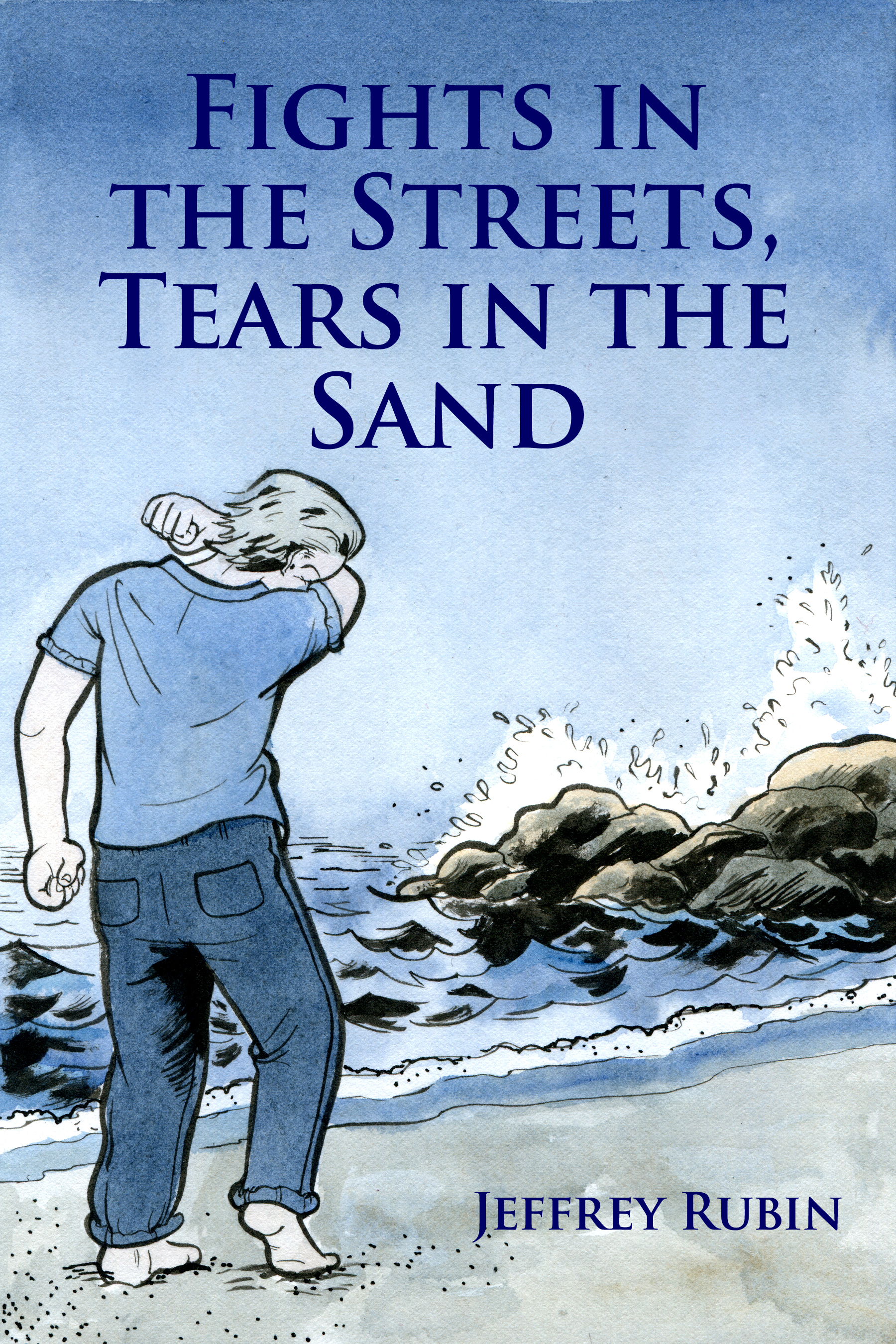
Fights in the Streets, Tears in the Sand

After English, I’m heading to Biology and some guy behind me says to someone next to him, “Hey, Cool Steve’s in my health class!”

     “Wow, Cool Steve! Really!?”

     “Yeah! He sat right next to me.”

     “Damn! Hey, tell him I say hi.”

     There’s an excitement that accompanies this dialogue that somehow has me going, hmmm.

     I go to Math and as I’m entering the room, I spot an old friend from Brighton Beach—Leroy Wilson. We recently had lost touch with each other because my family, when I was twelve, had moved from Brighton to Bensonhurst when my mom remarried. Leroy and I got together a few times after that, but after a bloody incident at a car repair shop that involved a close friend of mine, his mother wouldn’t let him have anything to do with me. I didn’t expect to run into Leroy at Lincoln. He and a few of the other kids my age who I knew from Brighton had always gone to either a Catholic school or a Yeshiva.

     It was Leroy who had taught me to play the guitar. Man, we were really driven back when we were twelve and thirteen with this dream of becoming the greatest rock ‘n’ rollers ever. And when we would get a song down just right it was a wild thrill beyond compare—lightning and sparks everywhere. So, when I first see Leroy, I smile. But then it hits me. Leroy is black. In Boody Junior High, if any white kid was to be nice to a black kid, he would have been taunted.

     How would the white kids at Lincoln react if they learn I have a black friend? Over ninety percent of the guys at Lincoln are white. I should be siding with whites, the more powerful group, the majority. Crap, he’s gonna blow my cover.

       “Jeff! How’s ya old self doin’?” cries Leroy as he spots me.

        I look up into Leroy’s eyes and then down at the wood classroom floor—my heart racing. Quickly, I move to an available seat that’s surrounded by seats other students are already sitting in. I avoid looking at Leroy, but I can feel him looking at me. All through class my eyes avoid his, but my heart grapples with his presence. When the period ends, I race out of class.

        One more class to get through before I can head home for the day. In the hall, with hundreds of students racing by, and a couple of guys bumping into me, I check my program card—Social Studies, Room 316. I have to go up a flight of stairs. I look around for a stairwell. There’s one, down the hall. How could I treat Leroy like that? Leroy’s dark confused eyes flash before me.

      “I’m Mr. Lofton,” announces a heavy-set, fortyish-aged teacher. “Welcome. Today we’re going to review some of the major news events of the summer. Then, later in the school year, we will be connecting our social studies lessons with these and other current events. I have some newspaper clippings here. As I read them, I want to get your reactions.

     “Crime at highest level ever,” cries Mr. Lofton. “Latest statistics indicate 13 percent increase. When I was a boy, we used to camp out in Central Park. Now you’d be crazy to go there at night.”

     I think about the newspaper story I read last week of Coney Island boys who were stabbed.

      “Ignoring Nazi pickets and bomb threats, the Reverend Dr. Martin Luther King moved into Washington’s ghettoes and told crowds of his admirers that economic freedom is the new cry of the civil rights movement. A dozen brown shirted American Nazis picketed with signs saying, ‘America for whites, Africa for blacks.’”

      Man, how I treated Leroy. Am I turning into a Nazi? Leroy’s dark confused eyes. An image of an exhilarating scene of us playing “Johnny B. Goode.” Am I turning into a jerk to be respected?

     After school, I walk to Rocco’s Pizzeria over on Brighton Beach Avenue. Rocco is shoveling a new pie out of his large steel oven. I take in deeply the familiar aroma of baking dough, oregano, cheese, and Rocco’s underarms.

    With a slice and Coke in hand, I discover none of the tables are empty. At one of them is this guy Brainy George Beck sitting by himself with his blond hair looking like it hadn’t been combed in months. I had noticed him earlier in the day in my gym class and he sat at my lunch table. “How come they call him Brainy George?” I had asked one of the guys in gym.

     “Da guy’s a freakin’ genius,” came the reply.

      With nowhere else to sit, I ask if he’d mind if I sit across from him. He looks up with these large thick glasses and nods his okay. “You were in gym today and at our lunch table,” he says as I sit down.

      “Yeah.”

       “I hate gym.”

        “You do?”

         “Can’t stand it—all the retards trying to prove they’re Mr. Atlas.”

         “Hmmmm.” Personally, gym is a whole lot better than the rest of the garbage we gotta take at school. “What junior high did you go to?” I ask.

         “Cunningham.”

         “That’s the same junior high as this kid some are calling Cool Steve. I guess ya don’t think much of him since he’s inta sports.”

          Oh, you mean Steve Marino? Steve’s different than the guys I’m talking about.”

          “Izzat so?”

           “Yeah. I respect Steve because, well, first of all, he’s not one of those idiots who picks on me because I can’t run as fast as the other guys. And I like the way he’s gutsy. He’s not afraid to stand up for what he believes in. And it’s the way he carries himself… the way he moves. I… I just have a lot of respect for Steve.”

          Hmmm. Well, being gutsy shouldn’t be too hard, I think to myself. Hell, I was gutsy enough to get in lots of fights in my old school. But I don’t quite know what to make of this stuff about the way Steve moves.

When I get home, I go into my bedroom, sit on my bed, pick up my guitar and start to slide my fingers across the strings. Then I find my fingers playing a little piece that my former black friend, Leroy had taught me. It begins with a sort of angry, rough part, but closes with a gentle refrain. As I play, I imagine Leroy playing along, just like the old days. We start to kick it up, jamming up a storm, reelin’ and rockin’ all night long! And then that image of his dark eyes returns to me—how they looked in class—confused, hurt. I wonder, How would this Cool Steve handle this?

*                                  *                                  *

Good Question. The search for the answer is a story for another day. For now, I’m asking my readers who have the courage to propose their answers.

My Best,
Jeff

———————————
Some people will enjoy reading this blog by beginning with the first post and then moving forward to the next more recent one; then to the next one; and so on. This permits readers to catch up on some ideas that were presented earlier and to move through all of the ideas in a systematic fashion to develop their emotional intelligence. To begin at the very first post you can click HERE.

Categories
conflict resolution insults teasing

The Art and Abuse of Insults

offended5Many of my posts leave some feeling like I insulted them.  In one post, for example, I took the position that when it comes to responding to criticism there are four levels of maturity (see HERE).  Some people who respond to criticism in a way that matches the description of the immature levels let me know that they felt I had insulted them. In another post (see HERE), I took the position that psychiatrists do not really diagnose people with mental disorders; instead, they merely convert the expressed concerns of people into psychiatric jargon.  Here again, I heard from people who complained that I had insulted them.

offend7And so, when I published last week’s post titled “Insults By Jews As Works Of Art,” the negative reaction of some people had not surprised me.  What was a surprise is that the discussion that came out of these reactions proved to clarify and deepen my own understanding of the nature of insults.  In the hope that this may do the same for my readers, let’s take a look at what transpired.  Names and a few minor details have been changed to protect privacy issues.

The Exchange

Offended1Matt said that my “Insults By Jews As Works Of Art” post is inappropriate, and he suggested to the person who moderates one of the groups that we belong to that I be removed immediately.

I replied:

“In my opinion, the topic of insults is very appropriate.  Everywhere we look, whether at schools, the workplace, family gatherings or watching TV, insults occur, and sometimes this is just playful stuff, but too often it escalates a conflict, a fight breaks out, and occasionally someone needs medical attention.  On other occasions, the insults cross the line into bullying, people become depressed and some become suicidal.

offended2“With regards to Matt suggesting that I be removed from this group because of my recent post on insults, hmmm, maybe a curse would here be an appropriate response, something like:

“Matt, may you wake up tomorrow and find you’re stuck in a country where freedom to express opposing views is banned.

“I hope this is recognized as an attempt at a humorous quip.  I have no ill will toward Matt, although I do disagree with him on this issue. 

offended3“Rather than suggesting that I be removed from the group, I think it would have been much more helpful if he, and others who disagreed with what I had written, rewrote the sentence that is viewed as most objectionable so that it would be at least a little less objectionable.  Alternatively, or additionally, writing a brand new sentence that could be inserted into some specific place in the post would be far more helpful than a one-sentence criticism stating the post was not appropriate.  It is not too late to do this, and I encourage group members to do so.”

offended6One group member seeking to defend me, wrote:

“Your post was interesting as a sociological examination of a prominent ethnic group, its stereotypes, and its communal self-concept.”

Another wrote,

“This made my day Jeffrey, and made me laugh – thank you! Made me have a think about my roots as well!”

A couple of people disagreed with the idea that I should be removed from the group:

“What I like about it [your post] is that it is not vulgar.  Just benign insults that are insults.  It is like the Egyptian insult, “May you live in interesting times.” When these are translated to English, they kinda lose their meaning.  Most of the Jewish insults feel like they were translated from Yiddish; they have that flow.

“It can show students and adults that insults can be sophisticated and not vulgar, and with any luck, aren’t even recognized as insults until later.”

Jew and catholicA person that we will here call Nick wrote in part,

“I do believe you had good intentions behind your piece and would have not published it if you knew so many people would have taken it negatively. In other words, while I do not agree with you all the time I am not for banning you from this group. However, I do say all of this praying that you do understand why what you did is offensive and you are apologetic rather than trying to defend.”

I replied to Nick in part as follows:

offended4“Just to clarify, I believe my intentions were good, and I certainly did not intend to offend anyone.  However, I well knew that it would indeed offend some.  Since it is Black History Month, I’ll point out that Martin Luther King, whenever he wrote his speeches, had good intentions, did not seek to offend, but well knew his speeches were going to offend.  Mark Twain had his books banned, George Barnard Shaw was hated in many circles, and Salman Rushdie had people calling for his murder.

“There are two Yiddish sayings that might capture a little of what I’m trying to communicate.  The first is, ‘If you want people to respect you for your wisdom, just agree with everything they tell you.’ The second states that ‘A Rabbi that has not been thrown out of a congregation because of offending them is no Rabbi.’

“If you write opinion pieces, some will agree with you, some will disagree but appreciate hearing a different view of an issue, and some become offended.  That goes with the territory. Living up to a principle that one should never express an opinion that has any chance to offend means never expressing an opinion.

art1“Moreover, when in my last post I referred to some insults as works of art, what I meant to convey is this, true works of art are not just meant to be merely decorative.  Rather, they are meant to stir up, prod, challenge the thinking, and deepen the thinking of society.  I think great comedy is part of art, and I think Jews, Italians, Blacks, Methodists, and all other groups of people have some comedians who artfully express this form of art.  I happen to be Jewish, therefore, I know far more about Jewish humor than that of other groups, so I used that as an example.”

 Another person wrote:

teasing 3“Keep in mind that ALL humor is aggressive and hurtful in some way.  There is not one “belly-laugh” joke that does not attempt to hurt or belittle someone or something. No, puns don’t count – you don’t laugh, you groan.  I do not intend to live in a world without laughter, and we laugh when someone or something hurts!!!”

To this, another group member wrote that he felt this statement overgeneralized.  Among my friends, when we insult one another in a playful way, I think most of the time no one is getting hurt, and much laughter comes from this.  But there is an edge to many comedians who are seeking something beyond pure laughter.

Jon wrote,

“The Jewish cultural DNA is at least one part philosopher, one part cynic and one part humorist, among much else, of course.”

teasing 1Jon did find my title offensive, and proposed, as an alternative, “The Art and Abuse of Insults and Teasing – A Cultural and Historical Perspective.”  He pointed out that “This would highlight the universality, celebrate the creativity in humor, and hit us square between the eyes with the destructive power as we slide along that slippery slope.”

Nice.  Although I decided not to change the title, I do agree his was conceptually distinctly better than mine.  I had already published the post under the original title and to change it a week later could be confusing.  And I wondered if Jon’s title may come across as a bit too academic for the larger audience that the post seeks to interest and to do justice to the title would require a much longer piece that my post tended to be.  I did take part of Jon’s suggested title for this post.  Moreover, in order to demonstrate a little more of the universality of humor in the form of insults I now offer some non-Jewish examples.

Last week I mentioned that Rodney Dangerfield, a Jew, was a master at insulting himself.  Here’s Abraham Lincoln, a non-Jew, offering humor in a similar manner.Lincoln

Last week’s post pointed out that Don Rickles, a Jew, was a master at insulting people who were insulting him.  Here’s Winston Churchill, a non-Jew, at the same game:

Churchill

I, for one, don’t like this Churchill comeback. It strikes me as mean. Yet I know someone who brought it to my attention and he thought it was very funny. It is strange how two people can have such different reactions to such comments.

Here are a couple other insults demonstrating that the art is indeed universal:

offended7

Mark Twain

pope

Sally wrote:

teasing 4“It [my post] conflates deliberate personal insults, deliberate wishes of harm to another, consensual teasing, and comedic performance, and ties it up with an anti-Semitic bow.”

I replied:

teasing 2“Sally, I love your turn of phrase.  At the same time, I disagree with you that I conflated deliberate wishes of harm to another from consensual teasing. I made in my last post a distinct point of separating that issue as we move toward the end of the post.  Nevertheless, I will think about using in any future writings on this issue the part of your sentence that points to the need to avoiding conflating deliberate personal insults, deliberate wishes of harm to another, consensual teasing, and comedic performance.  This is very well said, makes the point I had wished to make clearer, and I thank you for this feedback.

“I didn’t mean to write in a way that suggested anything that could be interpreted as anti-Semitic.”

 Well, those are some thoughts from the feedback.  I hope that we can keep the dialogue going, particularly because there is urgency in our communities to address in helpful ways the very issues that we have been discussing.

———————

Some people will enjoy reading this blog by beginning with the first post and then moving forward to the next more recent one; then to the next one; and so on.  This permits readers to catch up on some ideas that were presented earlier and to move through all of the ideas in a systematic fashion to develop their emotional intelligence.  To begin at the very first post you can click HERE.

Categories
African American anger assertiveness Bullied bullying conflict management conflict resolution criticism emotional intelligence emotional maturity free social intelligence and emotional intelligence curriculum insults interpersonal conflicts Jr. Martin Luther King N-word Name calling psychological maturity respect social intelligence taunting wisdom

On Responding to the N-word

Leonard Pitts, Jr.
Leonard Pitts, Jr.

Leonard Pitts, Jr. is a columnist, author of three novels and winner of numerous awards including the 2004 Pulitzer Prize for commentary.  When I heard that he was speaking at Flagler College, having enjoyed reading his insightful column for many years, I eagerly went to see him.

Mr. Pitts’s formal presentation was well received.  Then, he began to take questions from the audience. His responses to each were like a laser in that his answers were precisely on point–that is, until I asked my question.

My Question

When I first stepped up to the mike, I explained that I had worked with teenagers for many years, and sometimes a white student would seek to insult a black student by calling him the N-word.

Often the response was a physical fight that would lead to a school suspension.

Before returning to school, in some cases both students were asked to meet with me.  I saw each separately at first and usually I’d discuss Martin Luther King, Jr. For the black students, at some point in our discussion I would ask, “Do you understand that Martin Luther King, Jr. was all about non-violence when dealing with injustice?”

“Sure, I know that, man!” was a common reply.

Then I would say something like, “When you were called the N-word, you started to physically attack the guy who called you that.  That’s a violent approach to the injustice you had faced.  If it happens again, can you think of some other way to deal with this, some way that would respect Martin Luther King, Jr.’s memory?”

I would then typically get the following type reply: “If Martin Luther King, Jr. lived in my neighborhood, he’d have realized that if anyone called him that, the only way to respond is to bloody the guy up good!”

Having had experiences like this, I asked Mr. Pitts, “As a respected black man, how would you respond to someone who called you the N-word, and how would you advise black people to respond in the event that someone called them the N-word?”

Mr. Pitts’s Response

As I had said before, prior to my question, Mr. Pitts’s answers to questions that were being presented to him were right on point.  Now, his reply wandered off to related issues, never directly answering my question.

hip hopHe spoke, for example, of how he objected to hip-hop’s embrace of the word.  He related it to how many women in the women’s movement have now embraced the phrase, “She’s my bitch,” as a form of flattery, despite the fact that historically it was used in an unkind manner by sexist men seeking to put down women.  And he spoke eloquently about why he personally found the N-word so offensive.  I didn’t write down his exact words, but it seemed to closely match the words he used in some of his earlier newspaper columns.  For example, in a column published on November 30th, 2013, he wrote:

The N-word is unique. It was present at the act of mass kidnap that created “black America,” it drove the ship to get here, signed the contracts at flesh auctions on Southern ports as mother was torn from child, love from love and self from self. It had a front row center seat for the acts of blood, rape, castration, exclusion and psychological destruction by which the created people was kept down and in its place. The whole weight of our history dictates that word cannot be used except as an expression of contempt for African Americans.

Now, I do want to avoid a too simplistic presentation of Mr. Pitts’s position on the N-word.  He does believe that the word can be rightly used in certain situations.  For example, in a column titled, Don’t Censor Mark Twain’s N word” he defended how it is used in The Adventures of Huckleberry Finn:

huck finn It is, perhaps, the seminal moment in American literature.

Young Huck Finn, trying to get right with God and save his soul from a forever of fire, sits there with the freshly written note in hand. “Miss Watson,” it says, “your runaway nigger Jim is down here two mile below Pikesville and Mr. Phelps has got him and he will give him up for the reward if you send.”

Read more here: http://www.miamiherald.com/2011/01/09/2007730/dont-censor-mark-twains-n-word.html#storylink=cpy

Huck knows it is a sin to steal and he is whipped by guilt for the role he has played in helping the slave Jim steal himself from a poor old woman who never did Huck any harm. But see, Jim has become Huck’s friend, has sacrificed for him, worried about him, laughed and sung with him, depended upon him. So what, really, is the right thing to do?

“I was a-trembling,” says Huck, “because I’d got to decide, forever, betwixt two things and I knowed it. I studied a minute, sort of holding my breath, and then says to myself:

‘All right, then, I’ll go to hell’ — and tore it up.”

Mr. Pitts wrote this column in response to a publisher who had decided to put out a new edition of this classic story that replaced all 219 occurrences of the N-word with words such as “runaway slave.”  Although Mr. Pitts acknowledges the publisher means well, he states that, “…it is troubling to think the state of reading comprehension in this country has become this wretched, that we have tweeted, PlayStationed and Fox Newsed so much of our intellectual capacity away that not only can our children not divine the nuances of a masterpiece, but that we will now protect them from having to even try.”

I liked what Mr. Pitts had said in reply to my question but as I left the auditorium, I wondered why he appeared to avoid answering my question more directly.  And I wondered what he would say about the approach that I have been recommending for responding to insults (see for example, “Insulting Criticism: What Can We Do About It?”).

My Alternative to Violence When Responding to the N-word

Although I have given a number of different types of examples of people responding maturely to insults in past posts, I have never described specifically what my approach would look like in the type of a situation we have been discussing today.  I, of course, recognize that since I am not an African-American, I lack much legitimacy in offering my opinion on this topic.  Nevertheless, just to spur a deeper discussion, very tentatively I am tossing out one alternative to violence.

In the scenario presented below, this is the first time Fred is calling Leroy the N-word.  In my view, Leroy’s response would be very different if Fred has begun to repeatedly taunt him.  Concerns about how to handle taunting are addressed in my post titled “The Art of Playful Teasing”.

black and whiteLeroy, an African-American teenager is called the N-word by Fred, a white teenager.  Leroy replies by looking firmly into the eyes of Fred and says,”You just called me a nigger.  I want to make certain you clearly understand that that word was used in the past by people who believed in slavery and that African-Americans are less than human.  Is that what you are trying to say to me, that you believe in slavery, and I’m less than a human being?”

“Yeah, you nigger!” Fred replies.

Leroy pauses to think about this for a moment, looking down in a sad manner.  Then, looking squarely into Fred’s eyes, he says firmly, “Why are you trying to insult me, Fred?”

“Because I hate niggers!”

“Fred, I’ve met some black guys who strike me as pretty hateful characters.  But from my experience, there are a lot of great black guys out there. I hope in time you’ll change your mind.  Anything else you want to say to me?

“Yeah, go to hell!”

“I understand that you’re trying to insult me, Fred. I’m always interested to hear you out.  I’m sorry to hear how you feel about black people.”

Well, those are some thoughts I have for you this week.  I encourage readers to continue the discussion by posting comments.  I know these issues bring up for many of us some very strong emotions.

——————————-

Some people will enjoy reading this blog by beginning with the first post and then moving forward to the next more recent one; then to the next one; and so on. This permits readers to catch up on some ideas that were presented earlier and to move through all of the ideas in a systematic fashion to develop their emotional intelligence. To begin at the very first post you can click HERE.

Categories
anger bullying child discipline conflict management conflict resolution criticism dig for the conflict emotional intelligence free social intelligence and emotional intelligence curriculum insults interpersonal conflicts MATURITY Name calling respect stress taunting teasing wisdom

RESPONDING TO INSULTS BY IGNORING

If you have been following this blog, you know that I have often discussed different ways to respond to insults.

Illustration by Eric Sailer

For example, some people respond to negative criticism that is designed to be constructive as if it was an insult.  They then become angry, defensive and end up storming away.  In a post titled CRITICISM AND WISDOM, I encouraged people who respond in this way to this type of criticism to learn to change their attitude. I explained that this type of criticism does not have to be viewed as an insult, but rather, as something potentially helpful and something that can lead toward wisdom.  Rather than becoming defensive, we can learn to welcome this type of criticism and even encourage the criticizer to feel free to provide additional criticism in the future.  This takes practice, but it can be achieved.

Sometimes people begin to throw insults at you because they are angry about a conflict they have with you.  In this type of situation, rather than to respond to the insults by becoming defensive and returning the insults, I advocated in an earlier post learning a plan to DIG FOR THE CONFLICT in a friendly, assertive manner.

More recently, I mentioned that in certain types of situations RESPONDING TO INSULTS WITH QUIET SADNESS can be helpful.  This type of response is most helpful when the insults are being provided because the insulter is in a stressed-out mood about something that has nothing to do with you, or because the insulter is jealous of you.

When I engage in discussions about the above types of responses, people sometimes ask me what I think about just ignoring an insult.

luann insultIn the above Luann comic strip, Delta tries to get Luann to consider ignoring Tiffany.  I wonder if it would be better to ignore her insult but not ignore Tiffany.

This ignoring insults strategy has been with us for a long time.  I remember a principal many years ago advocating that kids should learn to ignore insults because tossing insults at someone is a lot like a game of tennis.  tennis serveThat is, in tennis, if Ron serves a ball to you, if you refuse to hit the ball back, Ron will quickly become bored and find someone else to play with.  Similarly, if Ron throws an insult at you, if you ignore it, rather than throw the insult back, Ron will soon become bored and leave you alone.

There are times when I have used the ignoring approach fairly successfully.  I remember a time when I was about 12-years old.  I  was  passing three guys who were hanging out on a street corner.  They appeared to be around 18.  When they started insulting me, I ignored it and just kept walking.  They let me pass with just one more insult.  It was all over in a matter of seconds and no physical harm had occurred to me.  And so, the ignoring strategy worked pretty well.

However, when I got home, my imagination took flight.  I wondered  if my sense of being a “true” man had gotten roughed up just a bit.  supermanMaybe, I thought, if I really had guts, I should have told those guys a thing or two even at the risk of being beaten to a bloody pulp.  Then I imagined being Superman, and I used my super powers to beat all three of them up.

But now that I’m quite a bit older and I have a far more secure sense of my manhood, I think that under the circumstances that I found myself as a 12-year old, my actions were indeed reasonable.  I’ve learned over the years that nothing I could have done differently would have been really likely to have had any real positive impact on those three guys.

To create real change with boys like that requires an intervention that a typical 12-year old could hardly be expected to create.  martin luther kingIt would have to involve, for example, someone the older boys genuinely respect, or creating a coalition of citizens working together to take the type of nonviolent actions that was used to put a stop to the disrespectful treatment of blacks during the civil rights demonstrations of the 1960s.

For young children and those individuals who have trouble learning words, the great benefit of the ignoring approach is that it is perhaps the easiest strategy to learn.  Not even a single word is required, and it indeed can often produce better results then returning insults with insults.

word powerClose cousins to the ignoring approach, is to learn to use a particular word or phrase in response to the first insult followed by ignoring any following insults.  The most popular of course is “Sticks and stones will break my bones but words will never harm me.”  Others are:

“So.”

“Good one.”

“Nice try.”

“I’m not going there.”

This “word or phrase approach” can give the person using it the experience of doing something to stick up for oneself.  The word or phrase is meant to convey to the insulter that you recognize the game that the insulter is trying to play, and you are smart enough to know how to refuse to play it if that’s what you wish to do.  There is a sense of empowerment that comes with being involved in a choice and taking some outward action to exercise your choice.  ignoreIgnoring, or covering your ears to pretend to ignore, without saying anything may seem “weaker” to you than at least saying something on your behalf in a pleasant, self-assured manner.

This strategy works best when the word or phrase is uttered in a pleasant, friendly tone while looking squarely into the eyes of the insulter.  If you instead say the word or phrase with a sneer or with any other action that tries to convey that you are somehow better or smarter than the insulter, the strategy is likely to make the situation worse.  You don’t want to do anything that makes the insulter angrier than he or she may already be. That might lead to an escalation of any underlying conflict and violence.  A sneer amounts to returning the insult, when that’s just what you want to avoid.  Any action that comes off as returning the insult will most likely motivate the insulter to try harder to make you feel bad.

Now, although ignoring or using a quick word or phrase followed by ignoring is easy to learn and often much better than returning the insult, for most situations trying to first find out why the person is throwing out insults is a much better course of action (see INSULTS: A COMIC STRIP LOVER’S GUIDE).  concernedBy asking the insulter in a concerned manner the reason for the insult can lead to a quick fix for some underlying problem.  And of course, if this “asking in a concerned manner” approach doesn’t work, you can always use the ignoring approach or one of its cousins afterwards.

Well, that’s my post for this week.  I’m hoping readers will take some time to post a comment about these ideas.  What has worked for you?  What has been your experience in trying any of these strategies?  I’d love to hear from you.

Have a great week!

——————————-

Some people will enjoy reading this blog by beginning with the first post and then moving forward to the next more recent one; then to the next one; and so on. This permits readers to catch up on some ideas that were presented earlier and to move through all of the ideas in a systematic fashion to develop their emotional and social intelligence. To begin at the very first post you can click HERE.