Categories
Aging Bob Dylan Forever Yonug melancholy Parental Wishes

On Bob Dylan’s “Forever Young”

Welcome to From Insults to Respect. 

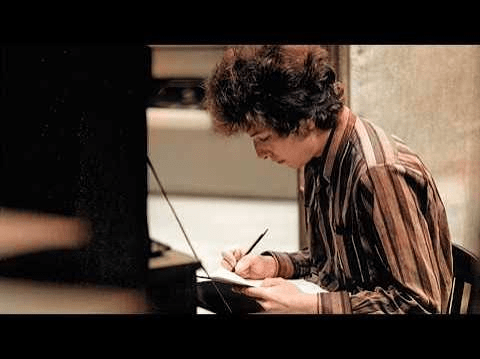
Recently, upon turning 75, I was reflecting upon how my remaining days have become fewer and fewer. Accompanying these thoughts were some pretty bluesy feelings. Suddenly, the Spotify music streaming I was listening to, Bob Dylan’s “Planet Waves” album began to play, “Forever Young.” “Oh, to be young again,” I thought.

The first few lyrics of the song go:

    May God bless and keep you always
     May your wishes all come true
     May you always do for others
     And let others do for you
     May you build a ladder to the stars
     And climb on every rung
     May you stay forever young

The line, “May you always do for others…” hit me pretty hard. I always prided myself as carrying my own weight. When I retired as a psychologist, I decided to continue to make contributions to others by writing a blog, completely financially free, that seeks to offer help for people who want to improve how they get along with others and themselves. The first few years of this, I was writing a blog post every week. Now, I struggle to get one out monthly, my energy slipping. I moaned at the thought of this.

Feeling this way, I wondered if others felt the emotional impact of the song as I have. I notice that on Spotify, most of the songs on the album have one or two million plays. “Forever Young” in contrast,  has over 34 million. Impressive. I then went to Wikipedia to see if there is a writeup on the song, and indeed there is. I found that Bob had written the song as a lullaby for his eldest son, Jesse, who was a youngster at the time. I was a bit surprised by this, because my initial interpretation of the song was that Bob, himself, was expressing his own struggles with feelings of growing older.

With this insight, I decided to ask my son, Jack, who has a young daughter, what thoughts and emotions the song brings up for him. He replied:

“When I hear “Forever Young” while thinking about my 5-year old daughter, I think about the beautiful freedom and lightness in her laugh and her smile. She experiences so much genuine joy.  I know a big part of that is that the world she knows so far is one of safety and love. She hasn’t yet learned about war and violence and greed, and many of the really hard things people face in this world. So when I hear the refrain of “may you stay forever young” I think of a wish for her to have the resilience to keep her big heartedness and her playfulness and the wonderful twinkle in her eye even as she grows up and becomes more aware of all the heavy things in life. And I feel a commitment in myself to do all I can to be there for her and remind her that she is loved even as she faces the challenges of her life.”

Nice! I very much can respect those feelings. Somehow I’m having a harder time respecting some of mine about getting older. As I listen to the song’s final verse, it expresses hope that,

    May your hands always be busy
     May your feet always be swift
     May you have a strong foundation
     When the winds of changes shift
     May your heart always be joyful
     And may your song always be sung
     May you stay forever young
     Forever young, forever young
     May you stay forever young.

Here, again, I find there some words that have me struggling with my emotions. The lines about “May your feet always be swift”  hit me like a walloping club. In my youth, after work I would run two miles, sprinting the last quarter mile, which left me feeling so full of life. Now, I still manage to cover two miles, but it’s a walk, and the last quarter mile has me looking forward to finishing it up so I can lay down on my bed for a while until I can get enough energy to resume the rest of my day.

Oh, the winds of change have come upon me, and my heart has not always remained joyful. Though there are periods of joy–a beautiful day with family and friends, the delight of spending time with my lovely granddaughter, the recognition of the fantastic loving relationship I have with my wife–I am still seeking to adjust to this change. I’ve felt for a long time that we can learn to respect ourselves despite not always being joyful. I’m thinking melancholy in life can be useful in some ways, deepening one’s perspectives. Although this is my accepted understanding in most of life’s challenges, with this new experience related to getting older, my recent limitations are still hard on me. If you are having similar experiences, perhaps you will find some comfort knowing you are not alone.

My Best,
Jeff

Categories
Bob Dylan Learning from mistakes

Thoughts on Bob Dylan’s Song, “It’s All Good”

Welcome to From Insults to Respect.
In a recent post titled, “Is Depression Really So Bad?” I presented the theory that conceptualizing depression as an awful mental disorder too often discourages active coping beyond taking a pill. In contrast, if we frame depression as potentially a healthy functional signal, it may lead to less self-stigma and greater self-efficacy in making healthy life-style improvements.

Quite a few folks objected to my even asking the question. To them, depression is every bit as bad as anyone can imagine.

A few psychotherapists I ran into, in contrast, were open to the healthy functional signal idea.However, one such person who was generally supportive, felt there were times when we might want to first consider the particular reason why someone might be depressed. Thus, he pointed out that sometimes, for example, someone becomes depressed because a loved one dies. He went on to say,

“It’s almost five years ago that my lady died. I’m lost now. Depressed? I don’t know. But I do feel rotten, frozen, angry, and bored. And, indeed, there were people telling me that from my misery something good will happen. Mildly spoken, I sent those to Hell.

To defend my theory that depression, viewed as a healthy functional signal, might lead to more benefits than pathologizing it, I provided a variety of biographical examples of people making significant improvements in their life that had sprung from their depression experiences. For example, the great writer, Leo Tolstoy, described in his own words his bout with his suicidal two-year period of despair.

“I felt that something had broken within me on which my life had always rested, that I had nothing left to hold on to, and that morally my life had stopped. An invincible force impelled me to get rid of my existence, in one way or another…. Behold me then … hiding the rope in order not to hang myself from the rafters of the room where every night I went to sleep alone; behold me no longer going shooting, lest I should yield to the too easy temptation of putting an end to myself with my gun.”

And yet, his depression stimulated a gnawing questioning that eventually led to one insight after another. His trouble had not been with life in general, not with the common life of common men, but with the life of the upper, intellectual, artistic classes, the life that he had personally always led, the cerebral life, the life of conventionality, artificiality, and personal ambition. He had lived wrongly and had to change. And change he did, which led to deeper meanings. “After that,” Tolstoy wrote, “things cleared up within me and about me better than ever, and the light has never wholly died away.”  According to Tolstoy, his suicidal feelings disappeared, and he went on to live a productive life until he passed away at the age of 82 of natural causes.

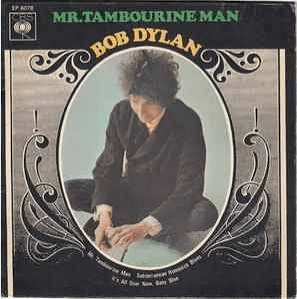
In a similar manner, I discussed how depression led to valued changes in the lives of Abe Lincoln, Joni Mitchell, and others. And then, a few days ago, I happened to be listening to Bob Dylan’s upbeat tempo song, “It’s All Good.”

At first I interpreted it as satirical, for the examples he gave as being all good were hardly likely to be viewed that way. But then I thought that perhaps there just may be some value in thinking that not only depression experiences might be a healthy process, perhaps there is some value, whenever we meet up with something that strikes us as bad, to pause, and consider if there just might be something within the experience that might lead to, or suggest, in some way, something good.

Consider the first verse of Bob’s song:

Talk about me babe, if you must
Throw on the dirt, pile on the dust

I’d do the same thing if I could
You know what they say, they say it’s all good
All good
It’s all good

Bob’s song brings up an event that typically people prefer not to happen, that is, his babe talking dirt about him. But then he says in a cheerful voice, he’d do the same thing if he could, and it’s all good. How might we interpret these lyrics if we don’t just assume he is being simply satirical?

How about this? The lyrics about the event being all good is designed to provoke us to pause, and then think, how I, the listener of the song might derive something good from such an event. From such thinking, I came to realize that how I had acted might have led to the dirt being said about me. And upon further consideration, I came to realize how I might have been wiser to have acted in some better manner. I also realized I would have thrown dirt back at her if she had done something similar that led to the dirt being thrown at me, but I can’t because my babe didn’t give me any reason to do so. In thinking about how this could have gone down, perhaps some wiser way to act in the future would begin to come to light.

Often, many of us merely get angry about what “bad” had happened and lash out at anyone who might be considered at fault. By pausing instead, and asking ourselves to consider what good just might come about from a challenging event may take us to something that is indeed all good.

With this in mind, let’s consider Bob’s next verse,

Big politician telling lies
Restaurant kitchen, all full of flies
Don’t make a bit of difference, don’t see why it should
But it’s all right, ’cause it’s all good
It’s all good
It’s all good

It’s not so easy for me to see how one can interpret this verse as all good, but my point is not that every time we pause to consider if something of value will come to mind. Rather, that it is all good that we indeed go through this type of consideration.

Well, those are some thoughts that came to me as I considered Bob’s intriguing song. I hope they offer something worthy to consider.

My Best,
Jeff

Categories
Bob Dylan Death and dying When the Deal Goes Down

Saying Goodbye at Life’s End

by Jeffrey Rubin, PhD

Dr. Jeffrey Rubin

Welcome to From Insults to Respect. Today I’ve decided to discuss a sad topic. It came about as I listened to music while gazing out my window at the pleasant green garden of my neighbor’s backyard, reflecting upon what I might discuss in my next blog post. At one point it occurred to me that when my next birthday comes around I’ll be turning 75. I inhaled a deep breath, slowly released it as melancholy feelings drifted through me with thoughts that my remaining days are getting shorter and shorter.

As I sat there in the melancholy of this, it just so happened that Bob Dylan’s song, “When the Deal Goes Down,” began to be played. For me, Bob’s voice is not typically associated with sorrowful expressions, although his harmonica playing often beautifully drifts into these realms. However, in this song his singing acutely captures sadness that had swelled up within me.

In the first verse, he poetically sings:

In the still of the night, in the world’s ancient light
Where wisdom grows up in strife
My bewildering brain, toils in vain
Through the darkness on the pathways of life
Each invisible prayer is like a cloud in the air
Tomorrow keeps turning around
We live and we die, we know not why
But I’ll be with you when the deal goes down

With my internal feelings about my upcoming birthday, the sadness in Bob’s voice, and the gentle strains of the accompanying music, I discovered tears coming to my eyes. Images of the times I said my last goodbyes to loved ones who passed away well before they turned 75 drifted by–images of scenes with my father, mother, and several of my dearest friends. I found myself wondering if I respected how I handled such sensitive experiences.

As Bob’s song continues, he plaintively sings,

We eat and we drink, we feel and we think
Far down the street we stray
I laugh and I cry and I’m haunted by
Things I never meant nor wished to say
The midnight rain follows the train
We all wear the same thorny crown
Soul to soul, our shadows roll
And I’ll be with you when the deal goes down

For me, this verse expresses regret the singer experiences as he contemplates such sad goodbyes. Regretful feelings of some of my own actions came to me–things I wished I had said; perhaps I might have done something more helpful; how will I be when I say my own last goodbyes at my own life’s end? To be with the accompanying feelings of these thoughts is not easy.

Thich Nhat Hanh

To come to grips with them I found myself turning to the wisdom of the Vietnamese Buddhist monk Thich Nhat Hanh. In his book, No Death, No Fear, he writes,

“Our greatest fear is that when we die we will become nothing. We believe that we are born from nothing and that when we die we become nothing. And so we are filled with the fear of annihilation. The Buddha has a very different understanding, that birth and death are notions. They are not real.” 

Hanh goes on to say that nothing has a separate self, and nothing exists by itself.

“If we examine things carefully we will see that all phenomena, including ourselves, are composites. We are made of our mothers and fathers, our grandmothers and grandfathers, our body, our feelings, our perceptions, our mental formations, the earth, the sun and innumerable non-self elements….All phenomena are neither produced nor destroyed, because they are in a constant process of manifesting.”

As I reflected upon these words, it occurred to me that in a real sense my mother, long gone in a specific biological sense, is still with me. My memories of her, all that she taught me, the love that we shared, is a part of me. When I go, all of those who had been close to me will, in some sense, find me manifesting within their lives. Throughout his book, Hanh enriches this notion that rather than becoming nothing, our lives continue to manifest in numerous ways.

Dylan’s poetic phrasing continues in the next verse with its nostalgic instrumentation, that beautifully embraces my heartstrings, with a simple but comforting melody:

The moon gives light and shines by night
I scarcely feel the glow
We learn to live and then we forgive
O’er the road we’re bound to go
More frailer than the flowers, these precious hours
That keep us so tightly bound
You come to my eyes like a vision from the skies
And I’ll be with you when the deal goes down 

Although regrets are expressed in the previous verse, here forgiveness is viewed as achievable as we learn to live “o’re the road we’re bound to go.” Where is the road bound to take us? To our last days, the precious hours of our sad goodbyes.

The final verse tells us:

I picked up a rose and it poked through my clothes
I followed the winding stream
I heard a deafening noise, I felt transient joys
I know they’re not what they seem
In this earthly domain, full of disappointment and pain
You’ll never see me frown
I owe my heart to you, and that’s saying it true
And I’ll be with you when the deal goes down 

In this verse, when Dylan sings the lines, “In this earthly domain, full of disappointment and pain, you’ll never see me frown,” no clearer frown has ever been expressed by his vocal phrasing. Yes, the Buddhist perspective provides some soothing regarding the notion of death. Nevertheless, to Dylan’s and my own experience, in this earthly domain there does come disappointment and pain, as well as hard to bear noise and transient joys.

Bob Dylan’s song “When the Deal Goes Down” is a reflective and heartfelt ballad that soothes the soul even as it connects us to the ever present reality that death awaits us all.   

Categories
Bob Dylan crying grieving

Bob Dylan’s “Baby, Stop Crying”

Welcome to From Insults to Respect. Today, we discuss Bob Dylan’s song, “Baby, Stop Crying.”

According to Wikipedia, it was released in the summer of 1978 as a single and in a longer album version on Street Legal. The song charted at #13 in the UK and was a top-ten song in much of Europe, although it failed to chart in the United States. It features a strong saxophone solo, and a trio of female backup singers, providing a delightful counterpoint to Dylan’s raspy vocal performance.

For our purpose, the song provides excellent emotional jumping off points to discuss crying, and how to deal with it in a respectful manner. The first lines tell us,

You been down to the bottom with a bad man, babeBut you’re back where you belong
Go get me my pistol, babeHoney, I’d ain’t tell right from wrong
Baby, please stop crying, stop crying, stop cryingBaby, please stop crying, stop crying, stop cryingBaby, please stop crying

Here, as I interpret the song, the narrator is in a relationship with a woman. He calls her “babe” and “honey,” indicating affectionate feelings. He sees she has been brought to tears as a result of a relationship with a “bad” man. Although the man is labeled “bad,” the narrator hastens to say he’s not someone who really can tell right from wrong.

I’m not sure why the narrator suddenly is asking for the woman to get his pistol, but Dylan tends to throw into his songs a few inscrutable lyrics. My three guesses of what he is seeking to imply are: it’s meant to heighten the drama of the storyline; that he so can’t stand her crying he’s getting ready to shoot her; or he’s going to shoot the guy who has upset her. In any case, the narrator seeks to reassure his honey that she is now in a place where she belongs. At the same time, he’s pleading with her to please stop crying. Hmmm.

The next set of lines are,

You know, I know, the sun will always shineBut baby, please stop crying ’cause it’s tearing up my mind
Go down to the river, babeHoney, I will meet you there
Go down to the river, babeHoney, I will pay your fare
Baby, please stop crying, stop crying, stop cryingBaby, please stop crying, stop crying, stop cryingBaby, please stop cryingYou know, I know, the sun will always shineBut baby, please stop crying ’cause it’s tearing up my mind
Here, the narrator appears to be trying to cheer up the woman, noting the sun always
shines and he offers to pay for a trip to go down to the river. In literature, references to rivers often suggest a place that can take you to freedom, as is the case for Mark Twain’s story about Huck Finn and his friend Jim who is seeking to escape slavery.
Such efforts to cheer someone up often is well intentioned, but is it always wise? One of my readers, Sonia Perez, when I discussed a similar topic about crying a few years back, wrote:

“The worst thing people do is to try to cheer you up! When we are hurting, sad, lonely etc and we are crying all we need is someone that allows us to have our feelings and show they care…. I need to express what I am experiencing. I don’t need someone to determine when I have cried enough.”
In Bob’s song, the next few lines attempt to capture some of what Sonia is driving at.

If you’re looking for assistance, babeOr if you just want some company
Or if you just want a friend you can talk toHoney, call me and see about me
But then, the narrator again pleads with the woman to please stop crying. I understand that many folks in our society feel uncomfortable when they see someone they care about crying. In our society the pharmaceutical industry is spending millions to convince people that to be sad is some pathological condition requiring medication. One of my readers, Luc Thibaud, expressed some views that sit more comfortably in my heart:

“It’s OK baby, cry if that cry is in you.
Cry as long as you need to.
I won’t interrupt you; As you cry, I cry with you.
Crying won’t hurt, not crying will.
Your eyes are sore, your throat is so full of tears and you choke.
Take your time, blow your nose.
Your tears are holy and magic.
I love you and I understand you perfectly.”
The next several lines of Dylan’s song continue with the narrator pleading for his baby to stop crying and reminding her that the sun will always shine; and then he goes on to say,

You been hurt so many timesAnd I know what you’re thinking of
Well, I don’t have to be no doctor, babeTo see that you’re madly in love
Here, we see what this incident of deep sadness is about, unrequited love. It’s easy for most of us to sympathize with someone going through such an experience. The song’s narrator has it in his heart to do just that, but his honey’s crying is tearing up his mind.

For me, it feels natural to remain present and to communicate that I care when someone I care about is crying. But the fact is, some good, well meaning people find crying begins to wear on their nerves to such an extent that they just can’t bear it any longer. If you are in a relationship with someone and you find that at some point you can’t stand the crying any more, how best to respectfully handle this?

Dr. Jeffrey Rubin

If it was me, I don’t think I would ask her or him to please stop crying. What about saying, instead, something like, “I’m going to take a walk for a few minutes to deal with some feelings that are coming up within me regarding what you are going through.” Then, just before leaving, going over to the person crying, and give a tender kiss on the cheek and a gentle loving touch on the back of the shoulder.

I wonder how others feel about this. I invite your thoughts and expressions of your emotional reactions.

My Best,

Jeff

——————————-

Some people will enjoy reading this blog by beginning with the first post and then moving forward to the next more recent one; then to the next one; and so on. This permits readers to catch up on some ideas that were presented earlier and to move through all of the ideas in a systematic fashion to develop their emotional and social intelligence. To begin at the very first post you can click HERE.

Categories
Bob Dylan Fathers

Bob Dylan On Fathers

Welcome to From Insults to Respect.

We’re now into that early summery month of June. I think I’ll glance over here at my calendar.

Hmmm, Father’s Day–June 18th–is rapidly approaching. For Mother’s Day, I utilized aspects of Bob Dylan’s entertaining Theme Time Radio Hour episode on mothers to have some fun commemorating it. I think I’ll do likewise for Bob’s Father’s Day episode. Let’s go see if we can find some precious jewels there.

Bob’s Show On The Theme Of Fathers

Bob begins by telling us, “We’re here today to celebrate fathers.

Jimmie Rodgers

“We’re going to start things off with the singing brakeman, the yodeling cowboy, the father of country music–Jimmie Rodgers.”

Bob then plays us Jimmie’s “Daddy’s Home.” Here’s a few of its lyrics:

I am dreaming, tonight, of an old southern townAnd the best friend that I ever hadFor I’ve grown so weary of roaming aroundAnd I’m going home to my dad

Your hair has turned to silver and I know you’re failing tooDaddy, dear, oh, Daddy, I’m coming back to youYou made my childhood happy but still I longed to roamI’ve had my way, but now I’ll say, I long for you and for home

Dear daddy, you shared all my sorrows and joysYou tried hard to bring me up rightI know you’ll still be one of the boysI’m starting back home tonight
The song kinda gets to me ’cause I sure wish I could go visit my dad. He passed away when I was barely 13-years old. I was talking to my sister just the other day about our memories of him, and both of us had moments when tears came to our eyes.

In the “Daddy’s Home” song we get a sense of what the song writer respected about his dad–being the best friend that he ever had, making his childhood happy, sharing his sorrows and joys, and trying hard to bring him up right. Those sure are fine qualities.
Julie London

As Bob’s show continues, he introduces a humorous song called “Daddy” by the smokey and sultry Julie London that is filled with revelations and bits of stimulation. Let’s check out some of the lyrics:

Ooh Daddy, I want a diamond ring and bracelets, everything
Daddy, you oughta gather this for me
Ooh, Daddy gee, won’t I look swell in sables? Clothes with Paris labels? Daddy, you oughta gather this for me.

Here’s amazing revelation with a bit of stimulation
I’d be a great sensation, I’d be your inspiration
Daddy, I want a brand new car and champagne, caviar
Daddy, you oughta gather this for me

Dress me up in silks and satins
Put good booze in my Manhattans
Tap me with expensive presents
Feed me oysters and broiled pheasants 
The humor of the song comes from the singer pleading with her dad to give her all of these materialistic things. I think that for most people there is a sense of extreme, over the top, shallowness being displayed here.

To me, appreciating the noncommercial aspect of being a dad, such as sharing love, sorrows, and joys, along with providing for those things that children truly need is somehow a deeper quality when it comes to being a great dad.

In the middle of the show, Bob tells us:

Charlie Sheen

“Ran into Charlie Sheen again…. I asked him about his dad, Marty Sheen, a free radical, an atomic molecule of an actor. He loves his father, and he had this to say about him.”

At this point we hear Charlie saying:

“I think it was when I was in elementary school. I had a real hard time with separation anxiety. My dad, for a while would have to stay in the class with me and I started to see the reaction to him by the staff, by the teachers. I started to get the sense that what he did was a lot different from what the other dads were doing.

Marty Sheen

“The most important lessons he taught me involves the truth and honesty, not just in my work, but as the person and the value and the importance of the truth because he told me early on that the truth doesn’t change.

Happy Father’s Day, I love you and thanks for being my dad and being one of the best guys a son can hope to know.” 

Now, there’s a guy who really appreciates his dad. Interestingly for me is that when Charlie told about his father teaching him about the value of truth and honesty, I found myself experiencing a bit of angst for it led me to recall times when I just might have stretched the truth on one or two occasions. I have two sons, now grown men, and I wonder if they have forgiven me for times they feel I had misled them, or do they still hold some rough feelings about me for this. I think this might be worth discussing with them before too long.
The next song is by The Sons of the Pioneers and recounts the great times the singer had with his father before he sadly passed away.

And then Bob introduces the song “Color Him Father.”

“Gonna color him father, color him love, this is a big top ten hit about a father tired and beat, sitting at the table to eat, never a frown, always a smile–‘Color Him Father,’ The Winstons.”
It’s one of those rare songs that pays a heart warming tribute to a stepdad that came to be a real father to his family:

There’s a man at my house, he’s so big and strongHe goes to work each day, and he stays all day long
He comes home each night looking tired and beatHe sits down at the dinner table and has a bite to eat
Never a frown always a smile

When he says to me how’s my childI said that I’ve been studying hard all day in schoolTryin’ very hard to understand the golden rule
I think I’ll color this man fatherI think I’ll color him love
Said I’m gonna color him fatherI think I’ll color the man love, yes I will
He says education is the thing if you want to competeBecause without it son, life ain’t very sweetI love this man and I don’t know whyExcept I’ll need his strength until the day that I die

My mother loves him and I can tellBy the way she looks at him when he holds my little sister NellI heard her say just the other dayThat if it hadn’t of been for him she couldn’t have found her way
I think I’ll color him fatherI’m gonna color him loveI’ve got to color him fatherI think I’ll color this man love

Our real old man he got killed in the warAnd she knows she and seven kids couldn’t of gotten very farShe said she thought that she could never love againAnd then there he stood with that big wide grinHe married my mother and he took us inAnd now we belong to the man with that big wide grin

I’ve got to color this man fatherI’m gonna color him loveI’ve got to color him fatherI believe I’ll color this man love
He’s just been so good to meI know I’ve got to color him love
The song brings up some strong feelings for me because like its narrator, my biological father died when I was young, and when my mother remarried I was raised by a stepdad. Unfortunately for me, as a teenager my stepdad’s authoritarian efforts led me to rebel. I sure wish I could have come up with some less heated ways to respond.

As Bob begins to close this episode, he plays us a little audio from the old “Leave It To Beaver TV show.” The show’s father figure happens to come upon a school assignment of his young son whose nickname is “The Beaver.” The assignment was, “Write something about your most interesting character.” As The Beaver’s father reads it, you can tell he is pretty touched by the words.

The most interesting character I have ever known is my father, Mr. Ward Cleaver. He does not have an interesting job. He just works hard and takes care of all of us. He never shot things in Africa or not saved anybody that was drowning. He might not be interesting to you, or someone else because he’s not your father, just mine.
There’s something kinda touching about these words.

What was Bob like as a father? According to his son, Jakob, the leader of the band The Wallflowers, in an interview with the New York Times, “He was affectionate. When I was a kid, he was a god to me for all the right reasons. Other people have put that tag on him in some otherworldly sense. I say it as any kid who admired his dad and had a great relationship with him. He never missed a single Little League game I had. He’s collected every home-run ball I ever hit. And he’s still affectionate to me.”

Well, there you have it, my Bob Dylan salute to all of you dads out there.

My Best
Jeff

———————

Some people will enjoy reading this blog by beginning with the first post and then moving forward to the next more recent one; then to the next one; and so on.  This permits readers to catch up on some ideas that were presented earlier and to move through all of the ideas in a systematic fashion to develop their emotional intelligence.  To begin at the very first post you can click HERE.

Categories
respect

Bob Dylan On Mothers

Welcome to From Insults to Respect. I hope you all are all having a splendid week, especially you mothers out there for my calendar indicates Mother’s Day is just around the corner.

Regular readers of this blog well know that from time to time I like to utilize aspects of Bob Dylan’s entertaining show, Theme Time Radio Hour, to highlight some important issues regarding the nature of respect (see for examples, HERE, HERE, HERE, and HEAR). Well, it just so happens one of the episodes of his show is on mothers, so let’s see if there are any gold nuggets we can mine.

Bob’s Show On The Theme Of Mothers

You can access Bob’s show for free HERE. He begins by telling us,

Bob getting a kiss from his mom

Today we are going to pay a tribute to that bountiful breast we all sprang from, mother dearest…. A mother is the only person on Earth who can divide her love amongst ten children and each child still has all her love. 

The first song Bob plays is “Momma Don’t Allow It” by Julia Lee. Here are a few of its lyrics:

Now our Momma don’t allow no trumpet playin’ ’round here
Our momma don’t allow no trumpet playin’ ’round here
Papa don’t care what mama don’t allow,
He plays his trumpet any how
Momma don’t allow no trumpet playing in here.

Then we hear some rollicking trumpet playing, followed by another similar verse:

Now my Momma don’t allow no eighty-eight playin’ ’round here
My momma don’t allow no eight-eight playin’ ’round here
I don’t care what momma don’t allow
We’re gonna beat those eighty-eights anyhow
Momma don’t allow no eighty-eight playin’ ’round here. 

The song goes on from here to tell us of other instruments momma don’t allow, but different family members just refuse to listen. The last verse tells us,

Momma don’t allow no good time music here
Oh, we don’t care what momma don’t allow
We’re gonna have ourselves a good time anyhow
Momma don’t allow no, one more time, here we go….

This lively, upbeat song doesn’t seem very respectful to the wishes of Julia Lee’s mom. Nevertheless, it did bring up for me this idea that most of us sure can recall a few incidents that occurred during our upbringing when our mother told us not to do something, we disagreed, and we went right ahead and did it anyway. In most situations we still loved and generally respected her, but just couldn’t accept that everything she felt was wrong was wrong.

Here’s one such example from my own life.

My Example

When I was about nine years old, I was playing in the street with a black buddy of mine, Leroy, and after awhile I became thirsty, so I cried out, “Hey, let’s go up to my apartment to get us some drinks.” This was a common thing to do when I was with a friend, but it was the first time I had invited Leroy.

My Mom when I was 9-years old

My Mom greeted us in her usual warm manner, and gave us each a nice glass of milk and some cookies. We scarfed them down, and then hustled back down into the street for more fun. Later, when I returned home for supper, my mom sat me down, and told me, “Leroy is a fine boy, and I have nothing against him, but you shouldn’t bring a colored person into our apartment. What will the neighbors think?”

I had no idea what my mother was talking about because there were black kids in my Brooklyn school, along with Puerto Ricans, Jews, and a variety of others, and we played together, and at least to me, this seemed as natural as an ocean breeze. So I said to my mom, “Leroy, he’s a good guy.” Mom sighed, and said, “The neighbors might not like this.”

I usually obeyed Mom’s request, and I loved and respected her dearly. However, for this request, I ignored it and brought Leroy to our apartment whenever I felt like it. Mom, as she did the first time, always treated Leroy in a friendly manner. Still, I continued to be confused about why she was concerned that the neighbors might not like this.

But then, a few months later, I saw a movie titled, “To Kill a Mockingbird.” It depicted a story of a small town white lawyer, played masterfully by Gregory Peck, who was asked to defend a young black man against a charge of raping a white woman. When he accepts the case, he and his family take a great deal of heat from several white community members. I don’t want to reveal too much of the plot for those who hope to see it one day, but it led me to come to understand why Mom had become concerned. She was just trying, in her own way, to protect her family. Fortunately, my neighbors never gave any indication that they had become upset with what I continued to do.

Back to Bob’s Show

Although sometimes our moms didn’t always give us the most sound advice, sometimes they were right on, as Bob points out by playing us “Mama Didn’t Lie” by Jan Bradley. Here are a few of the lyrics:

Mama didn’t lie, she didn’t lie Mama didn’t lie, she didn’t lie

Here comes that boy and his friendsMaking eyes at me againDo they all think that I’m a toy?To be played with by every boy?Well, they’re wrong to think IWill be caught by the wink of an eye

My mama didn’t lie(Mama didn’t lie) She didn’t lieMama didn’t lie She didn’t lie

The greatest pastime in this man’s worldIs playin’ tricks on every young girl To have one is how they get their kicksBut not me, because I know their tricksAnd they’re wrong to think IWill be caught by the wink of an eye.

After a few more songs about mothers, Bob tells us that he, “caught up with Penn Jillette of Penn and Teller [the popular magic performers] the other day, and he told me what it’s like to be a momma’s boy.” Here’s what Penn had to say:

There are two ways momma boys turn out. The one way is kinda the accepted nansy pansy way, the whimpsey way. But there is another kinda momma’s boy who had such complete unconditional love from his mother and father that he had the feeling that he was twelve feet tall and bullet proof and that’s what my mom did for me.

My favorite story about my mom about unconditional love is when Penn and Teller opened on Off Broadway. There was this opening tradition in theater that you wait up all night at a party until the New York Times comes out at three or four a.m., and the review is read aloud and that decided whether your show was successful or not. So we waited up and my mother and father was at the party and they were sitting with our producer and they read the review from the New York Times aloud and it was really an unbelievable money review. And, uh, the next day, I had breakfast with my mom and dad, and my mom said, “When they read that review from the New York Times and your producer turned to me and said, “Doesn’t that make you proud?” it made me so sad and uncomfortable because I don’t need the New York Times to tell me to be proud of my son. I was proud of you the instant you were born.”

Man! I just love that story!

Bob’s mom as a young woman

As this show’s episode comes to a close, Bob tells us, “That’s all the time we have today on Theme Time Radio Hour. We’ll see you again next week. In the meantime, go call your mothers.” Sound advice if your mother is still alive. Sadly, my mom passed away several years ago. I sure miss her.

As I thought about Bob’s show, it occurred to me that he didn’t just devote a whole show to mothers, at least two of his great songs featured a mother as a central character.
“Stuck Inside of Mobile with the Memphis Blues Again” repeatedly includes the following lines:

Oh, Mama
Can this really be the end?
To be stuck inside of Mobile
With the Memphis blues again

Throughout the song we hear of a great deal of dissatisfaction with life in Mobile, and Bob cries out to his mom for solace.

Bob with his mom

In “It’s Alright, Ma (I’m Only Bleeding),” Bob tells his ma about a number of disquieting aspects of life but in each of the choruses he seeks to reassure her he will somehow get through this. So, for example, there’s this one:

So don’t fear if you hear
A foreign sound to your ear
It’s alright, Ma, I’m only sighing

And then there is this one:

And though the rules of the road have been lodged
It’s only people’s games that you got to dodge

And it’s alright, Ma, I can make it

And then there is this one:

But though the masters make the rules
For the wise men and the fools
I got nothing, Ma, to live up to

And then there is this one:

But I mean no harm, nor put fault
On anyone that lives in a vault

But it’s alright, Ma, if I can’t please him

And finally, there is this one:

And if my thought-dreams could be seen
They’d probably put my head in a guillotine
But it’s alright, Ma, it’s life, and life only

With Bob’s great poetic art, as is true with much of great art, there are no straight forward solutions offered, and yet the imagery provided is pregnant and is accompanied with angst, deep concern, and a process that we go through that at least offers the possibility of the birth of something beautiful.

My Best,
Jeff

Categories
Alex Murdaugh Bob Dylan Chimes of Freedom

On Bob Dylan’s “Chimes Of Freedom”

Welcome to From Insults to Respect.

Today, while listening to some songs, Bob Dylan’s emotional pleas as he sang “Chimes of Freedom” cried out to my conscience. Its first stanza…

We ducked inside the doorway, thunder crashingAs majestic bells of boltsStruck shadows in the soundSeeming to be the chimes of freedom flashingFlashing for the warriors whose strength is not to fightFlashing for the refugees on the unarmed road of flightAn’ for each an’ every underdog soldier in the nightAn’ we gazed upon the chimes of freedom flashing

Bob’s song, it occurred to me, suggested that people vary in the following three ways. You have the type of person who appears to care only for him or her self, and when making connections with others, it is only for self benefits. Moving from that end of the spectrum to someone who we will call Jill, her family and close friends are dear to her, but beyond that, her feelings toward others can be summed up as an emphatic cry of, “Hey, I got my own problems to deal with!” At the other end of the spectrum, we find feelings expressed in words such as those inscribed on a plaque and placed on the pedestal of the Statue of Liberty–

Give me your tired, your poor,
Your huddled masses yearning to breathe free,
The wretched refuse of your teeming shore.
Send these, the homeless, tempest-tossed to me,
I lift my lamp beside the golden door!

In thinking of all of this, it came to me that Dylan’s “Chimes of Freedom” is the musical version of the Statue of Liberty. As Dylan cries out in the song, we hear his pleas for…

empathy toward the luckless, the abandoned and forsaked, for the outcast, burning constantly at stake, for the kind, for the guardians and protectors of the mind, and the poet and the painter far behind his rightful time, for the disrobed faceless forms of no position, for the tongues with no place to bring their thoughts, for the deaf and blind, for the mute, for the mistreated, mateless mother, the mistitled prostitute, for the misdemeanor outlaw, chased and cheated by pursuit, for the ones condemned to drift or else be kept from drifting, for the searching ones, on their speechless, seeking trail, for the lonesome-hearted lovers with too personal a tale, for each unharmful, gentle soul misplaced inside a jail, for the aching whose wounds cannot be nursed, for the countless confused, accused, misused, strung-out ones an’ worse, and for every hung-up person in the whole wide universe.

Such outpouring of empathy for such a wide range of folks.

When Bob wrote this song, he lived in New York’s Greenwich Village. It is in just that part of the city where heading west down a few side streets you end up facing the grand New York Harbor, with its awe inspiring view of the Statue of Liberty standing guard against a diminishment of what many, but not all, Americans admire.

After jotting down the above ideas and then showing them to my wife and son, they encouraged me to see if I could deepen my thoughts on this theme. I thereby found myself envisioning a circle around each of the three general types of people who have various bands of empathy.

For those persons who have just self-empathy, I envisioned having a circle just around themselves. For those who have empathy for themselves, as well as close family members and friends, I envisioned having a wider circle that encompasses not only themselves, but also all of these other folks. And those whose empathy extends even beyond not only themselves, close family members and friends, but also all of those other folks we hear about in Dylan’s song, I found myself envisioning each of them wrapped around an even larger circle of people.

With this image in mind, I asked myself whether or not I find myself having an increasing amount of respect for people whose circle encompasses more people, compared to those whose circle encompasses fewer people. It turns out that if the type of person who has empathy just for him or herself has done some awful acts this would significantly lower my level of respect. But what about a person who despite having this very narrow encompassing empathy circle who has not harmed anyone? Now the question about my degree of respect becomes harder for me. Similarly, for those who just have empathy for themselves and close relatives and friends, but don’t hurt others, I find myself having some difficulty answering the level of respect question. Curiously, I do seem to have some additional respect for people who have empathy for all people who don’t go around harming anyone. How about each of you who are reading today’s post?

Now, let’s consider a related question. Regardless of how much respect you feel for each of these three general types of people, when you interact with them, do you think it wise to treat them all with equal respect?

As I personally thought about this, I imagined working in the prison. In such prisons, the convicts are typically informed that to the degree that they treat all the other convicts and prison staff members respectfully, and follow the various other prison rules, they will receive additional privileges, and for those who someday will be released, this will increase their chances of an early release. Convicts having the lowest level of privileges might be provided only a single type of very bland food, have the worse work assignments, and just one hour each day to socialize with other prison convicts. At the next level, convicts might be given a modest choice at meal times, a limited choice of work assignments, etc.

Under these conditions, is it wise for us to treat respectfully even those who have committed the most horrendous crime by avoiding mean, insulting name calling, expressions of disgust, asking, rather than demanding, and saying please and thank you at appropriate times? It seems to me that by doing so, you decrease the chances of resentments that can blow up into violence, while also increase the probability of making life in prison a more healthy, supportive place for all. Moreover, by creating a more consistent environment in which respectful behavior is practiced, those who are released after serving their time might end up having picked up the habit of treating people respectfully. In fact, it might even, as some psychological theories suggest, increase the likelihood that respect for others will become internalized for ex-cons thereby leading them to expanding their circle of empathy for others.

As a general rule, treating everyone respectfully, in a prison, or out, serves to model this type of behavior, and research suggests this can increase the chances that others will follow suit. And, finally, I think the golden rule applies well when thinking about these types of issues. If you want others to treat you respectfully, treat others respectfully.

So, there you have it, some thoughts that all spilled out of me after listening to Dylan’s “Chimes of Freedom.” I hope you find value in them, and until next time, may you find ways to be kind to yourself and to others.

My Best,
Jeff

Categories
jails and prisons

Bob Dylan On Jails, Prisons, and Respect

Welcome to From Insults To Respect. 

On an episode of Bob Dylan’s Theme Time Radio Hour, the Nobel Prize winner discusses, as he puts it:

“The Big House, the brig, the clink, the coop, the gray bar hotel, the hoosegow, the joint, the jug, the pen, the pokie, the slammer, the stir–we’re talking about jail, a real hush hush subject where everyone is hurting for someone or something. We’re going to learn about cons, jailbirds, stoolies, lifers, and politicians. Prisons, a house of many doors.”

After Bob’s introduction, we hear the disturbing sounds of prison doors slamming shut.

People who get sent to lockup facilities are typically seen as worthy of being treated with disrespect. Is this the wisest mindset? And what about those who are actually innocent and yet are condemned to the slammer due to some grievous mistakes?

The vast majority of convicts, after serving their sentences, will be released back into our communities. How best to structure the time convicts spend incarcerated so it will be more likely to lead to their earning respect once they are released?

There are a great deal of strong emotions running through this topic, so I’m thinking that by intermingling it with the poetic lyrics and humor presentations from Bob’s radio show, it will at times lighten the discussion and deepen it as well. So, let’s see how this works out.

Respect As It Relates To Those Serving Time In Prison

It is hard to imagine showing any respect for the type of person who is the topic of the first song Bob plays for us, Johnny Cash’s “Folsom Prison Blues.” Some of the lyrics are,

I hear the train a-comin’, it’s rolling ’round the bend
And I ain’t seen the sunshine since I don’t know when
I’m stuck in Folsom prison, and time keeps draggin’ on
But that train keeps a-rollin’ on down to San Antone

When I was just a baby, my mama told me, “Son
Always be a good boy, don’t ever play with guns”
But I shot a man in Reno just to watch him die
When I hear that whistle blowin’, I hang my head and cry 

The song is told from the point of view of a guy who shot a man to watch him die, a mighty awful thing to do. The guy seems to be sad, but perhaps not about the life he cut short, but because he’s stuck in prison instead of on that train taking him to a better place.

Cash, during his lifetime landed in jail seven times, mostly for illegal possession of drugs. His ability to hire skillful lawyers probably saved him from serving any time in prison because people with so many repeated offenses don’t usually get off so easily. Cash’s awareness that he could have easily served some hard time probably led him to write sympathetic songs about convicts, and to perform them on a few occasions directly to convicts within their prison walls.

Cash’s songs about convicts were, and are still mighty popular. Given the hateful things that they have done, why do so many people find themselves relating to them? Perhaps the feeling expressed in the following saying offers an explanation–“There, but for the grace of God, go I.”

Cash and Dylan

These words capture the angst that many of us experience as we realize how outside factors play a role in who ends up in the slammer. If we had been raised in a terribly violent home or neighborhood, experienced crushing poverty, been in the wrong place at the wrong time, might we have landed behind steel bars? Such questions have led some to suggest a new approach to handling prisoners. I’ll return to this issue soon, but let’s get back to Bob’s show.

The Next Part Of Bob’s Show

After playing for us Cash’s song, and then moving on to Magic Sam’s “21 Days In Jail,” Bessie Smith’s “Send Me To The ‘lectric Chair”, and Warren Storm’s “Prisoner’s Song,” Bob tells us,

We’re about half way through our sentence right here on Theme Time Radio Hour, and there will be no time off for good behavior. Here’s the smooth voice of Joe Simon singing a song by Dan Penn. Joe was able to mix R and B [Rhythm and Blues] and country in a uniquely southern style and had a number of hits in the process, including this one, a song about stealing, knowing he done wrong, but his woman’s needs make him ashamed. He steals for love and now he has to say good morning to swinging that nine pound steel hammer. 

Here are a few of the song’s lyrics:

Through these wallsI see the sunI’m here becauseThe wrong I’ve done…
Made me ashamedI stole from herOh, when I should’ve stood up like a manYou see, I’ve got to say good morning To that nine pounds of steel.
Then Bob provides us a few humorous thoughtful quotes:
Will Rogers, “There is no more independence in politics than there is in jail.” Harry Truman, “The White House is the finest prison in the world.” Nelson Mandela, “In my country we go to prison first and then become president.” Charles Bukowski, “I don’t like jail, they got the wrong kind of bars in there.”

Getting Back To The Issue Of Respect And Prisons

The old approach, and still the main approach in America, is to make life in prison miserable so people, hearing how awful it is, will be discouraged from doing anything that might land them there. There is also hope that such treatment will discourage those who had been imprisoned from ever doing anything that will lead to being imprisoned again. How successful has this approach been? America has the highest (and most expensive–despite questionable results) rate of incarceration in the world with a concomitantly high rate of recidivism. In contrast, Germany and the Netherlands, according to a Bloomberg report. prefer a more humane system. Some of the facts it provides are:

Incarceration rates per capita are nearly 90 percent lower than in the U.S.: 79 per 100,000 residents in Germany and 82 per 100,000 residents in the Netherlands, compared to 716 per 100,000 residents in the United States.

Resocialization and rehabilitation are central to the Dutch and German models. Life in prison there aims to inculcate fundamental skills that offenders will need when returning to their community. For example, prisoners are allowed individual expression and a fair amount of control over their daily lives, including the opportunity to wear their own clothes and prepare their own meals; and, in order to instill selfworth, both work and education are required and remunerated. In addition, respect for prisoners’ privacy is practiced as a matter of human dignity.

Contributing to engendering positive self-esteem is the fact that prisoners are trusted. They each have a private dormitory-like room with their own keys. Guards knock before entering. The rooms are spacious with natural sunlight (many inmates grow plants) and have a bathroom apart from the sleeping quarters. They dress with a sense of pride in the styles and fashions which they prefer.

Training for occupations and professions (with degrees) is provided and encouraged. Inmates are urged to pursue vocational jobs while in prison and must save a percentage of their earnings to help them make the post-incarceration transition.

Those inmates who have proven their trustworthiness and reliability are allowed to work outside the prison on a daily basis (all of whom voluntarily return after work). They have a phone to make calls to anyone (including family, friends, attorneys, media, etc.) and a television, radio, and computer (Internet access is not permitted).

Such respectful treatment creates a positive mind-set for those incarcerated. Not only that, but as a direct result of such positive treatment and interactions, violence within the prison is virtually non-existent among prisoners and between staff and prisoners.

The Conclusion Of Bob’s Show

“Well,” says Bob, “we couldn’t do a show about jail without talking about Merle Haggard, a man who turned his life around, walked out of the jail cell and into public acclaim. Here’s a quotation from chairman Merle:”

“‘Sing Me Back Home’ is a popular song because there are a lot of ex-convicts in America that form a troop of fans that want to hear that song and it’s funny that all ex-convicts have something in common, they got their time in and the rest of you still got yours to do.”

Here are a few of “Sing Me Back Home” lyrics:

The warden led a prisoner down the hallway to his doomI stood up to say goodbye like all the restAnd I heard him tell the warden just before he reached my cellLet my guitar playing friend, do my request
Let him sing me back home with a song I used to hearMake my old memories come aliveTake me away and turn back the yearsSing me back home before I die
From the soulful way Merle sings this song, you kinda feel some sympathy for the condemned man.

Well, those are a few thoughts I wanted to share with all of you folks today. Until next time, may you come to fully appreciate your life beyond any real or imaginary prison walls.
My Best,
Jeff

Some people will enjoy reading this blog by beginning with the first post and then moving forward to the next more recent one; then to the next one; and so on.  This permits readers to catch up on some ideas that were presented earlier and to move through all of the ideas in a systematic fashion to develop their emotional and social intelligence.  To begin at the very first post you can click HERE.
Categories
Bob Dylan conflict resolution interpersonal conflicts

Thoughts On Dylan’s “Let’s Keep It Between Us”

Welcome to From Insults To Respect.

In an earlier post (see HERE) I made some rational arguments for people to consider resolving their conflicts in private whenever possible. For example, I mentioned a research study that found people are more likely to escalate an argument into a fight when spectators are around (“Impression Management and the Escalation of Aggression and Violence,” R. B. Felson, Social Psychology Review, 1982).

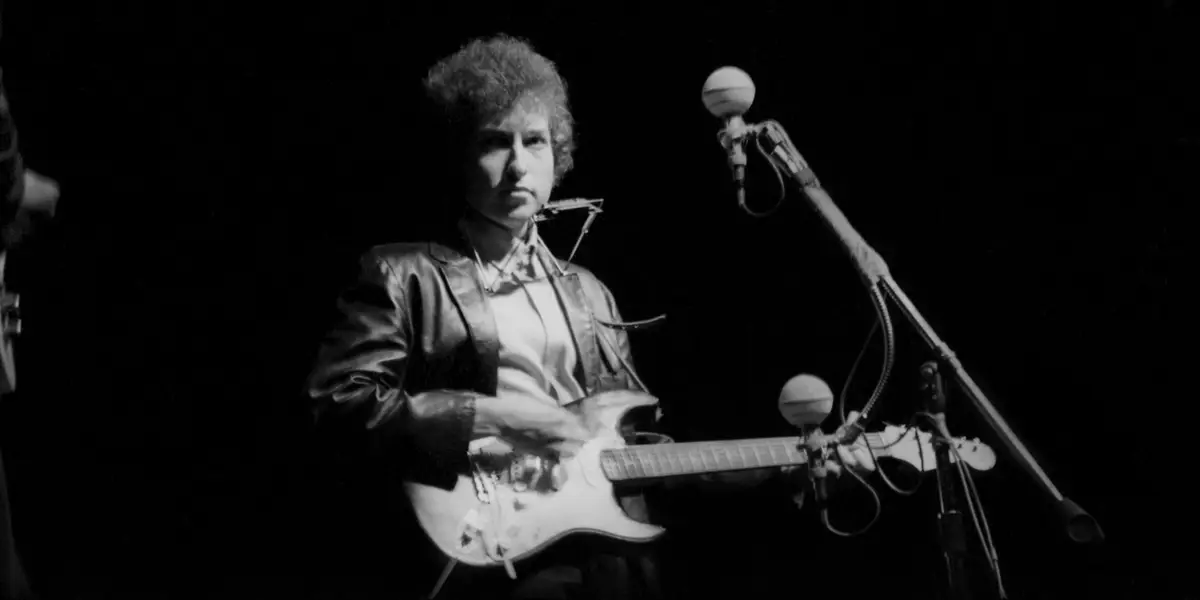
Rational arguments are important considerations as we go about choosing how to deal with social problems. So, too are emotional issues. With that in mind, today I thought we would look at the lyrics of Bob Dylan’s song “Let’s Keep It Between Us” that appears on his Springtime in New York album. There we find Bob tenderly explaining his feeling to his darling.

Bob’s Song

Utilizing a melody deeply influenced by the blues, and featuring an impressive intermingling of organ and guitar, the song’s first stanza goes,

Let’s keep it between us
These people meddlin’ in our affairs, they’re not our friends
Let’s keep it between us
Before doors close and our togetherness comes to an end
They’ll turn you against me and me against you
’Til we don’t know who to trust
Oh, darlin’, can we keep it between us?

In these words, we see the singer’s utmost concerns. Involving others can lead to some taking sides, leading to confusion and thus their relationship might go kaput.

The next stanza reveals more of the singer’s feelings.

Let’s keep it between us
We’ve been through too much tough times that they never shared
They’ve had nothing to say to us before
Now all of a sudden it’s as if they’ve always cared
All we need is honesty
A little humility and trust
Oh, darlin’, can we keep it between us?

Those lines, as I interpret them, have to do with feelings that are missing in people who suddenly claim to want to help because they care. They don’t know about the shared tough times the lovers have experienced. Keeping these experiences alive, along with honesty, humility, and trust is sufficient, says Bob, to work through their problems.

Moving on to the next verse, Bob expresses his feelings that he and his darling have their faults, but so too do those seeking to help them.

I know we’re not perfect
Then again, neither are they
They act like we got to live for them
As if there just ain’t no other way
And it’s makin’ me kind of tired

Here we see Bob growing weary at seeking to live as others believe is right, while those offering advice have their own lack of perfection.

Let’s see where Bob goes from here in the next verse.

Can we just lay back for a moment
Before we wake up and find ourselves in a daze that’s got us out of our minds?
There must be something we’re overlooking here
We better drop down now and get back behind the lines
There’s some things not fit for human ears
Some things don’t need to be discussed
Oh, darlin’, can we keep it between us?

In the above stanza, Bob sings, “Can we just lay back for a moment.” Here he’s asking for time to experience the feelings that the two lovers have shared. These feelings, the singer says, don’t need to be discussed, though they may reveal something of value not noticed before. The two lovers’ shared experiences may yet offer some guidance on how to lovingly move forward.

The next few lines Bob expresses concerns about how much one can trust those who learn about the problems with his relationship.

They’ll tell you one thing and me another
’Til we don’t know who to trust
Oh, darlin’, can we keep it between us?

The final two verses express the fear that involving others that lack knowing the true inner feelings of the lovers will be harmful.

Let’s keep it between us
Before it all snaps and goes too far
If we can’t deal with this by ourselves
Tell me we ain’t worse off than they think we are
Backseat drivers don’t know the feel of the wheel
But they sure know how to make a fuss
Oh, darlin’, can we keep it between us?

Can we keep it between us?

Thoughts

Bob’s expressive singing, music, and words powerfully capture some issues relevant to two lovers working through sensitive problems. Taking time to be mindful of the feelings of both partners is essential for maintaining love relationships. Combining them with more rational type arguments are often the most helpful approach.

Although not addressed in the song, in my opinion, there are some occasions in which it might make sense to consider conferring with a respected adviser such as a professional counselor. But a deep listening beforehand of how your partner feels about sharing certain information is an essential part of any process designed to effectively and lovingly resolve conflicts.

——————————-

Some people will enjoy reading this blog by beginning with the first post and then moving forward to the next more recent one; then to the next one; and so on. This permits readers to catch up on some ideas that were presented earlier and to move through all of the ideas in a systematic fashion to develop their emotional and social intelligence. To begin at the very first post you can click HERE.
Categories
Bob Dylan conflict resolution respect The benefits of walking

Bob Dylan On Walking

Welcome to From Insults to Respect. 

On this blog, we have been exploring the various characteristics that help people earn self-respect and respect from others. Today we focus on one of these–staying in physical and emotional shape by taking a daily walk. It is, of course, true enough that some good people have earned an enormous amount of respect even without bothering to stay fit, but let’s not have such cases deter us from at least considering the value of enhancing our respectability by engaging regularly in this financially free activity.

By the way, increasing respect by regular walking is not its only benefit. Numerous studies demonstrate that it increases your health and how long you live. Just this past week the Journal of the American Medical Association (JAMA) reported on a relevant study that describes a cohort of 2110 adults  with a mean follow-up of 10.8 years. Participants taking at least 7000 steps per day, compared with those taking fewer, had a 50% to 70% lower risk of mortality.

So, for those of you who are regular walkers, let this post serve to provide a pat on your back. For those who haven’t given this healthy practice a fair chance, I’m hoping a little friendly encouragement might lead you to give it a try. To get you through the encouragement process, we’ll be drawing on some fun material from Bob Dylan’s Theme Time Radio Hour show (see HERE).

Bob’s Show on Walking

Bob introduces his walking episode with the following words:

Welcome back to Theme Time Radio Hour, and you will have to forgive me if I sound a little out of breath. I just got back from my morning constitutional. A good walk is important for both body and soul.

Friedrich Nietzsche once said, “All truly great thoughts are conceived by walking.” Aldous Huxley said his father considered a walk among the mountains the equivalent of church going. And the father of democracy, Thomas Jefferson, was known to say, “Of all exercises walking is the best.”

All the world, and all through history, people have known the benefits and joys of walking. So today we’ll be walking on the air, but we will not be walking on eggshells. If you’re walking the dog, or you can walk on water, or walk on clouds, or walk in rhythm, or just walk and not look back, you are going to enjoy the next hour as we play a musical accompaniment to your perambulations. So, get ready to walk the walk, and talk the talk.

Immediately after this delightful intro, Bob plays us a Jack Scott rockabilly song called “The Way He Walks.” There’s some fine harmonizing on this one.

For many people, the way they walk is listening to music with earphones. It’s pleasant doing it that way, and if it keeps your feet putting the miles away, that’s great. However, I’d like you to consider taking some time during your walk to just listen to your thoughts without such a distraction. It will transform the walk into a meditative experience, and in our society, with the TV so often on, and with distractions that come from internet devices, we end up not letting our mind sufficiently drift into our deepest concerns.

After Jack Scott’s song, Bob tells us:

The average person takes between 8,000 and 10,000 steps a day, and walks about 115,000 miles in their lifetime. Wow, that’s more than four times around the world. 

Now you might be wondering how far 10,000 steps is. Well, the average person takes two and a half foot strides. That means that’s a little more that 2,000 steps for each mile. So, 10,000 steps is close to five miles. 

After this little tidbit, Bob introduces his next song, this one by Frankie Lee Sims–“Walkin’ With Frankie.” If you like a lively sax, this little number is right up your alley.

Speaking of walking with Frankie, or anyone else for that matter, one way to enjoy a good walk is to do it with a friend or a group of friends. If your friends aren’t into walking, a great way to meet new friends who do enjoy walking is to utilize a website such as Meetup.com.

As Bob’s show continues to stroll right along, at one point he tells us he’s playing songs with “strolling themes, parading schemes and walking dreams.” And then he launches into a great hit by Fat’s Domino, “I’m Walkin.’” Here are some of the lyrics:

I’m walkin’, yes indeed
And I’m talkin’ about you and me
I’m hopin’ that you’ll come back to me, yeah
I’m lonely as I can be
I’m waiting for your company
I’m hoping that you’ll come back to me
The song, as I interpret it, is about this guy working through his feeling about the loss of his lover by taking a walk, which happens to be a pretty healthy approach for working through any of our difficult feelings.

The next song Bob plays for us has a similar theme, “Walking by Myself” by Jimmie Rogers.

You know I love you.
You know it’s true.
Give you all my love, babe.
What more can I do?
Walking by myself,
I hope you’ll understand.
I just want to be your lovin’ man.
Here we find a guy walking by himself, trying to figure out what else he could do to win his love. The incredible harmonica playing on it can blow you away.

John C. Riley

After a few more songs, Bob tells us about running into the actor, comedian, screenwriter, musician, and producer, John C. Riley, who told Bob about his feelings about walking:

I’m a huge walker. I always have been. From the time I was a little kid, it was the best way for me to kinda ruminate, meditate I guess. I mean I didn’t think about it that way when I was a kid, but now if there’s anything important to discuss, like if I have an issue with my wife or there’s something we need to work out, I really find it hard to sit in one place and look at the person and really download my thoughts, you know, so I say, “let’s take a walk.”
Bob ends this show by excusing himself because, as he put it, “it’s just about time for me to take my afternoon stroll. So, with that, here’s hoping you get out in the fresh air real soon to take an invigorating walk.”

My Best,
Jeff
——————————-

Some people will enjoy reading this blog by beginning with the first post and then moving forward to the next more recent one; then to the next one; and so on. This permits readers to catch up on some ideas that were presented earlier and to move through all of the ideas in a systematic fashion to develop their emotional and social intelligence. To begin at the very first post you can click HERE.