Categories
anger conflict resolution criticism Unfriending over politics

Unfriending Over Politics

Welcome to From Insults to Respect.

Please consider the following quote by Mathias Risse of Harvard University:

“Surely, political debate about what America should be, and which kind of economic system it should have, must count among the most basic themes in democratic discourse.”

Add to this, if you will, that the very first amendment declares that U.S citizens have, as a basic right, freedom of speech.

There is something so basic about the value of free exchanges of views that we hardly ever question it. If we are moved to question it, there are research studies that document that such exchanges are the mechanism by which better solutions are found and better decisions are made. Providing readers here with a formal review of the literature discussing these studies is too lengthy a process for our current purposes. It will suffice for today, I think, if I merely encourage you to imagine yourself seeking justice for yourself in a court of law that provides only the prosecutor getting to make the case against you, without your having any opportunity to present your side. Such an image, it seems to me, provides more than enough intuitive understanding that hearing both sides of an issue is crucial for increasing the chance of arriving at just decisions.

Something Appears To Have Changed

Since Donald Trump has been reelected to the U.S. presidency, I have been hearing more and more from friends, family members, and neighbors about an increase in the number of people who are being unfriended because they have expressed their contrary political views. Thus, opportunities for lively exchanges of different views that had been a regular part of our democracy appear to have diminished.

When I use the term, “unfriending,” I am not referring to how the term is used on Facebook. Rather than referring to this type of internet relationships, I am referring to the ending of what I view as real life, actual in-person relationships. Here are a couple of examples: One guy I know, told me about two of his cousins with whom he has always been close since they were children. A few months after Trump’s reelection, he and his cousins had a conversation expressing different political views. Ever since, these two family members have been refusing to talk to him. When he has made his usual seasonal calls to wish them happy holiday and to catch up with family doings, they now hang up on him. Another person has told me about how, after a brief discussion with a neighbor regarding Trump’s healthcare policy, this neighbor has now begun to turn a cold shoulder to her whenever they pass one another.

In an effort to avoid unfriending, but also leading to a diminishing of exchanges between people with different views, I’ve been seeing more and more folks only willing to discuss political issues when they are among others they know are in agreement with them. These talks are enjoyed for the support that one gets from likeminded folks. If they are with people with whom they disagree regarding their positions, they avoid the discomfort of hearing contrary opinions by insisting they will not engage in discussing political topics.

If we add to this, the current media programming situation in which people can tune into shows that solely express opinions that completely agree with them, we can see why more and more in our society have been losing out on the value that comes from hearing a variety of opinions.

Can We Improve This Situation?

It can be argued that the reason for the changed situation is because Trump has been modeling insulting, disrespectful behavior. Among the insults that I have heard Trump use are “fat pigs” and “disgusting animals.” I observed him on national TV calling Senator Lindsey Graham “a stiff,” Governor Rick Perry “stupid,” and numerous other political opponents, idiots.” He has denigrated federal judges who ruled against his efforts as well as the chairman of the Federal Reserve for not lowering interest rates.

However, whenever Mr. Trump insults his opponents, many voters are apt to defend him by saying he isn’t doing anything much different than all the other politicians. Meanwhile, I’ve heard Trump, when criticized for his insulting style, defend himself by declaring that no one has been more maligned than he. And he can certainly point to instances in which he has indeed been maligned.

That said, permit me to suggest that in an effort to change the current situation in which our fellow citizens are less likely to share their differing political concerns, we leave this maligning issue behind. I just don’t think it likely to  lead to anything productive. Instead, I would like you to consider some suggestions I have personally found helpful.

When a political issue comes up, I say I think the topic is very interesting. Then I encourage the person who first brought up the topic to express his or her opinion. I then give the person an opportunity to fully express it, without my throwing out any insults, or displaying behavior that could in anyway be viewed as disrespectful. I listen without expressing anger and will only interrupt to briefly ask for some clarification of what was said. People value being listened to, and I seek to provide this value.

When the person has clearly finished, I thank the person, summarize what was said, and add that what was said was very helpful to me. I then again thank the person. Then I say, “I’ve heard a different position and I would love to describe it and then get your reaction to it.” I have found that when expressed this way, most will let me proceed. As I describe the different opinion, I use no insults or any tone of voice that might suggest I am maligning the position the other party had expressed. I then ask respectfully for the reaction of the person who had been listening to me, and again I respectfully listen. If I see the person responds angrily, I don’t express return anger. When the person completes the reply, I again summarize what was said using a soft friendly voice and leave the exchange at that. If the person had responded civilly, I would be open to further expand the discussion. Otherwise, I leave the discussion with the hope that in due time both of us will further think about what was said.

This respectful exchange typically works very well for me, and I continue our relationship on friendly terms.

In situations in which people say they don’t want to discuss political issues, I gently encourage them to at least give me a try. I explain that I realize political discussions can get heated and lead to bad feelings, but, with me, they will find me listening respectfully and discuss the issues civilly. I also explain the value that comes from hearing diverse political views. If this leads to an agreement to go ahead with such a discussion, and the person with whom I am having a discussion starts to get heated, I encourage that we return to a civil style. If that doesn’t work, I let the person finish the point that is being made, without my returning the anger, and then suggest we take some time to calm down.

Well, there are my thoughts and suggestions for dealing with this type of situation. I surely encourage readers to express their views regarding this, even if they are contrary to my own.

My Best,
Jeff

———————————
Some people will enjoy reading this blog by beginning with the first post and then moving forward to the next more recent one; then to the next one; and so on. This permits readers to catch up on some ideas that were presented earlier and to move through all of the ideas in a systematic fashion to develop their emotional intelligence. To begin at the very first post you can click HERE.

Categories
American Indigenous People conflict resolution Indians Israel-Palistinian conflict Native Americans Palestinians

Native Americans vs Palestinians

Welcome to From Insults to Respect. 

Today we’re going to take a few minutes to compare a Palestinian conflict to one that Native Americans had been engaged in. Doing so, will suggest a path toward peace for the very violence-prone Middle East region.

The Comparison

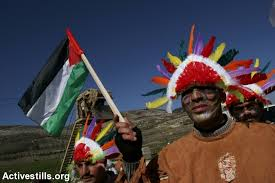
The conflict Palestinians are engaged in can be briefly described by using the mnemonic DIG. These letters serve to remind us to dig to identify what party A in the conflict desires, what is interfering with that desire, and what that party believes the other party in the conflict is guilty of doing wrong. (see my “DIG for the Conflict” post for a more complete description of the DIG model.) In the conflict involving the Palestinians, they desire to regain land they lost when the United Nations members voted to create a partition that separated some of the land in the region. Some went to the Palestinians, and some went to what became the country of Israel. Interfering with the Palestinians’ desire is Israel and its supporters refusing to comply with their desire. The Palestinians generally believe Israel and its supporters are guilty of unjustly taking land rightfully belonging to them. For the past eighty years, many Palestinians have engaged in violence in an effort to regain the land taken from them. A similar conflict had befallen the America Natives (often referred to as American Indigenous People or American Indians).

For several hundred years, American Natives freely resided in the lands we now call the United States (U.S.). When the European settlers came to the U.S., they sought to gain ownership of various parcels of this land. The different authorities that existed over the course of several hundred years organized military forces that supported the settlers. The Native Americans fell into conflict with these settlers, desiring to regain the land they lost to the settlers. Interfering with this desire were military forces supporting the settlers. The Natives believed the military forces were guilty of wrongfully backing the settlers. For several hundred years, many Natives engaged in violence against the settlers in an effort to regain the land taken from them.

Significantly, unlike the Palestinians, for approximately one hundred years the Native Americans have no longer engaged in violence against the settlers. What can account for this?

Why Native Americans No Longer Engage In Violence Against American Citizens?

When I asked a friend this question, he theorized the Natives have simply been subdued by the sheer might of the American military. I am not convinced of this because the Palestinians have not been subdued despite being acutely aware that the same U.S. military that has supposedly subdued the Native Americans is currently supporting Israel. It seems to me a far more plausible reason Native Americans have ceased to continue the violence is that they successfully negotiated an agreement that established Native American reservations.

It might be thought that the Palestinians were given a reservation–the current partitioned Palestinian lands. However, the conditions for the Palestinians to reside in those lands are dramatically different than what is provided to Native Americans. That is, the Palestinian land is guarded by Israeli military forces. Palestinians are basically imprisoned in this land. In contrast, there are no military forces on the Native American reservation borders. There is nothing preventing Native Americans from leaving their reservations and to return there at will. Without any need for a passport or any other paperwork, Native Americans are free to go anywhere within the U.S. and by 1924 they have been declared U.S. citizens. Moreover, they can just as easily obtain a visa to visit other countries as other U.S. citizens.

Now, I’m not suggesting that the negotiated agreement concerning reservations has led to an ideal set of conditions for all Native Americans. There remain additional conflicts to be sure. For example, although 75 percent of Native Americans are living better than where the poverty line has been set by economists, understandably there is a desire to further reduce poverty. I’m only saying that the reservation agreement has led to a toning down of aggressive feelings sufficiently so alternative non-violent negotiations have been substituted. To further that end, the U.S. government has a Bureau of Indian Affairs. Past presidential administrations have provided hundreds of millions of dollars to hear and address the concerns of our Native neighbors.

Might this agreement permitting Native Americans to have control of the reservation lands along with being able to freely integrate with the rest of the United States if they so choose, be the reason why Native Americans have ceased their violent ways? We get convincing evidence for this when we take a look at a section of Brooklyn referred to as “Little Palestine.”

Peace Between Jewish and Palestinian Brooklyn Neighborhoods

In Brooklyn, New York, there is a vibrant neighborhood officially known as Bay Ridge. In the last few generations it has been given the nickname “Little Palestine” because thousands of people had somehow escaped there from the Palestinian region and have become American citizens. Another neighborhood, Bensonhurst, is an easy walk from Bay Ridge. Thousands of Jews live there, and yet there are no rockets being fired from Bay Ridge into Bensonhurst.

In another Brooklyn neighborhood, a yeshiva (a Jewish school) sits across the street from a mosque without any incidents of violence between the members of these two religious institutions. And if you go online and do a Google search to verify what I am saying, you will find not a single hit indicating an incident of violence between Brooklyn Jews and the Brooklyn Palestinians.

Why such peaceful cohabitation? Viewed in light of my theory, the land that the Brooklyn Palestinians are living on is, in essential ways, similar to Native American reservations.

Like those living on Native American reservations, Palestinians living in Brooklyn’s neighborhood can choose to continue living there, or they could freely move to any of the fifty U.S. states. If they desire, they can freely move back to their old Brooklyn neighborhood. They can obtain visas to visit other countries. In my view, this freedom takes enough of an edge off of any disagreements to eliminate violence.

So, if the members of the United Nations were to fully understand this, it would provide them the answer to what is required for bringing peace to those currently living on Palestinian lands within the Middle East. It would direct their attention to the task of identifying regions that can be purchased for Palestinian reservations. Permitting the Palestinians who freely chose to move to these purchased lands and to freely live under the same conditions existing for those living on Native American reservations will bring the violence to a final end.

Is This Plan Realistic?

Is the idea that the United Nations might come up with a successful plan to purchase such reservations realistic? I think it is.

Please note that the world population of Jews, Muslims, and Christians combined is over four billion people. All of them have some religious interest in promoting peace in the region we are discussing. If they think about the cost of war and preparations for war that has been spent during the centuries of violent interactions, and then think of the cost to continue the conflict forever, this will lead to the funds that could be raised to bring this Native American reservation type plan to life.

If I am right, once the new reservation lands have been purchased and have become available for settlements, even those who would choose to remain on Palestinian lands would discover that just knowing they are not trapped there, all of the other issues currently being bitterly fought over would be able to be peacefully negotiated. Likely, neither side would be fully delighted with the final agreement, but the heat that now leads to continuing violence would be replaced by visions of possible improved economic conditions, and a better future for their children.

———————————
Some people will enjoy reading this blog by beginning with the first post and then moving forward to the next more recent one; then to the next one; and so on. This permits readers to catch up on some ideas that were presented earlier and to move through all of the ideas in a systematic fashion to develop their emotional intelligence. To begin at the very first post you can click HERE.

Categories
conflict resolution criticism racism

Cool Steve Deals With Racism

Dr. Jeff Rubin

Welcome to From Insults to Respect. Here’s a story that just might deepen your thoughts about racism.

Cool Steve Deals With Racism

Monday morning.  Lincoln feels more familiar now.  Here and there I see someone I know.

            After lunch, my black friend, Leroy and I are talking about our rock band rehearsal next Thursday night while heading to math class. I spot Steve Marino and Brainy George down the hall.  We’re heading toward them.  I know that Steve and George live in an all-white neighborhood.  How would they react to being introduced to Leroy?

            When Leroy and I reach Steve and George, I nod and try to hurry by, but Steve says, “Wait a minute, Jeff.  I wanna talk to you about playing stickball after school.”

            My heart freezes.  I think, I’ll just keep walking and say quickly, I gotta run.

            But then, what I was doing just feels wrong.  I stop.  My heart—pounding, my forehead—hot—I say, “Hey, this guy over here, he’s… he’s a friend a mine—Leroy Wilson.”

            “Leroy, huh,” says Steve, smiling.  “Hey, you from Coney Island?”

            “No, I ain’t.  I live in Brighton.  Most of the cats in my family, though, live ovuh dere.”

            “Coney Island,’ says George, “a lot of niggers live over there.”

              “What did you say,” yells Leroy? The anger in his voice captures the attention of the hallway traffic.  Students are stopping to see what’s going on.

            Just then, the late bell rings. “Leroy,” says Steve, “I’ll talk to George about his choice of words after school.” Steve then gives Leroy a respectful bow of his head.  Then we quickly head toward our classes.

            On our way, Leroy says, “You know dat Brainy George cat is a real ass.”

*                                  *                                  *

When I spot Steve in the hallway after math, I hustle after him.  “Steve, after school I’m gonna get your friend, George, good.”

            “Get?  Get?  Watcha mean get?”

            “You heard him.  What he said to Leroy, man…”

            “Listen, Jeff, I’ve known George for a couple of years now and I’ve seen quite a few kids rough him up because he can have a big mouth.  And ya know what?  All it does is make him more stubborn. Jeff, I’m with you on wanting George to knock off the insults.  Maybe we could come up with something that actually has a chance of working with him.  I’ll see him in health class eighth period and I’ll tell him we both wanna talk to him after school.  We’ll go to Rocco’s and whyncha keep it friendly until the pizza comes, capeesh?  Then tell him straight how ya feel, without threats.  When you’re through, let him answer you completely.  No matter what he says, don’t interrupt.  When he’s through, you’ll be dying to reply to what he said, but don’t.  Let me go.  We’re old friends.  Some stuff he ough’da hear… well, he’ll be able to take it better if… if it comes from me.  Capeesh?”

            “We still gonna play stickball?”

            “Yeah.  Right after pizza, we’ll go.”

*                                  *                                  *

Later that afternoon, George, Steve and I all walk over to Rocco’s and order a pizza.

            When it comes, I say, “George, ya use the word nigger to piss my friend Leroy off?

            “Hey!  If we start calling those people black, pretty soon they’ll start thinking that they’re as good as us.”

            “George,” says Steve, “why is everything to you in terms of who’s better than the next guy?”

            George doesn’t answer, but his face is turning red.

            Steve pauses a few seconds.  I pick at my pizza trying to restrain myself.  After a few more calming seconds, Steve continues.  “I’ve known you for a couple years now, George, and I know you feel bad about not being too hot in gym and sports and stuff like that.  You looking to put people down to convince yourself that being poor in sports isn’t as bad as being black or… or… or whatever?”

            “Hey!  First of all I don’t give a shit about sports,” George screams.  “And what about you, Steve?! You do the same thing as me, Steve!  You do the same thing!  You’re always saying you want to be the best baseball player around and you’re always comparing yourself to other people!  Just yesterday, I heard you say to Cliff that you think you’re better than Jeff in stickball!  That’s the same thing, Steve!  That’s the same thing!”

            Steve pauses here, looking confused.  Then a smile forms on his lips.  “No.  No, it isn’t,” Steve replies.  I notice he has put his hand on George’s shoulder, and his voice is soft and calming.  “You’re right that I wanna be the best baseball player around, but I know that even if I become the best, that still doesn’t make me better than anyone else as a human being.  Mickey Mantle and Willie Mays are the best players around, but that doesn’t make them any better people than you or me.  It’s okay to strive to be the best at something.  That’s a person’s special contribution.  Cliff’s great at writing about sports; you’re a genius at school stuff; I’m good at baseball; and Jeff’s a good stickball player, maybe not as good as me, but pretty good.”  Steve turns to me and smiles.

            “Finish up with George,” I say, “and we’ll straighten out the stickball issue over the next few games.”

            “All right,” says Steve, still smiling.  “George, first of all, you know I like you, don’t ya?”

            “Yeah.  I guess so.”

            “There’s no guessing here, George.  I don’t have to hang out with you.  I don’t have to be talking to you now.  I do it because I like you.  That’s gotta be pretty obvious to someone with your intelligence.  No?”

            “Yeah.”

            “Good.  Now, correct me if I’m wrong.  No matter how special our talents are, it still don’t make us better or worse than the next guy as a person.  You can see that, can’t ya?”

            I think to myself, maybe in some basic way we are all equal—but people do respect some people more than others.

            George glares at us.  He then roughly shakes hot pepper on his pizza and too much comes spilling out.  “SHIT!” he hollers as he slams the shaker on the table.  He shoves his slice away, crosses his arms in front of his chest, and angles his chair away from us.  We sit silently, listening to the juke box playing “Downtown,” and watching the other patrons passing the time.  Now George is rubbing his head, messing up his already messy hair.  Slowly, a quiet sadness comes over him.  I see a glimmer in his eyes.  He turns to Steve.  “It’s not that I’m bad in sports,” he says, his voice much softer now.  “I couldn’t care less about sports.  It’s just… well, all through elementary school there were these black guys who would gang up on me.  I know white people have roughed me up also.  And probably whites have beat up far more blacks than the other way around.  It’s in the paper all the time how whites are stringing up blacks, especially in the South.  But, when you’ve been beaten up as much as me by blacks, it’s hard to forget just like that.”

            Everyone remains quiet for a few moments.  I notice every now and then Steve looks softly into George’s eyes.  After a while George says, “I guess Leroy… well… he never did anything wrong to me so… well, I guess I should at least give him a chance.”

*                                  *                                  *

A couple of days later, Leroy and I run into George out by the side entrance of Lincoln.  George turns red, stutters for a minute and then says, “Listen, Leroy, I… I… well, I’m sorry about the way I acted the first time we met.”

            “Sorry,” says Leroy.  “Sorry.  Man, git the hell away from me.”

            “Leroy, listen to George for a minute, will ya,” I say.


“Leroy,” says George.  “When I was in junior high there were these… well these black kids, and they taunted me day in and day out.  And a few times they beat me up and some of my white friends.  And… well… I wasn’t alone about getting to hate them.  After awhile, the white kids I knew started to say stuff about black people, without bothering to say the stuff just about the kids who picked on us, and… I guess we began in some strange way to think we were better than blacks.  That’s wrong, and I’m… well, I’m sorry.”

            Leroy places his hands on the tight black curls of his closely cropped hair.  He clears his throat by going, “Ahmmm. Ahmmm.”  He crosses his arms in front of his chest and takes a tough looking stance.  Then he puts his arms down to his side.  Finally, in his deep rich voice he says, with his hands moving in front of him: “Ya know, it’s funny… it’s funny about dis business of so many cats tryin’ ta think dey’re better dan everyone else.  Ya know, when I go ta Coney Island, some of da black cats ovuh dere mess wit’ me just because dey know I have white friends.  Dey start squawking, ‘Boy, you a whitey’ or ‘You a Oreo!’  Dey think dey’re better den me ‘cause dey have just black friends.  Dere’s times when I hated all of ‘em because of it.  At uda times, I hated all whites fuh makin’ black people hate me.  T’ tell ya da truth, George, I guess… well, I guess I have no call holden’ a grudge wit’ you, not wit’ me sorta doin’ da same thing lots of times.”

——————————-

Some people will enjoy reading this blog by beginning with the first post and then moving forward to the next more recent one; then to the next one; and so on. This permits readers to catch up on some ideas that were presented earlier and to move through all of the ideas in a systematic fashion to develop their emotional and social intelligence. To begin at the very first post you can click HERE.


Categories
conflict management conflict resolution respect

Cool Steve Confronts Poverty

Dr. Jeffrey Rubin

Welcome to From Insults To Respect.

When thirteen-year old Cool Steve’s parents no longer can afford the rent where they had been living, they move to a less expensive, run down apartment. Steve has to start a new junior high school even though it’s the middle of a school year. Let’s see if we can learn something when we see how Steve handles his first day there.

*           *.         *

At lunchtime, Steve’s teacher informs him, “Young man, because this is your first day here, when you get down to the lunchroom, you’re to report to the vice principal, Mr. Lantern. He’ll assign you a place to sit. You can’t miss him; he’s the large, bald gentleman down in the lunchroom.”

    You must be the new member of our team,” says Mr. Lantern, amidst the noisy sounds of the lunchroom. He glances at a clipboard. “Steve Marino?”

     “Yes,  Mr Lantern.”

     “Welcome to Cunningham. Follow me.”

    They walk past rows of long rectangular lunch tables until Mr. Lantern, pointing to an empty spot, says, “Why don’t you have a seat right here? This is where the students in your homeroom sit.”

     “Okay,” says Steve, nervous but attempting an air of nonchalance.

     As Steve begins to sit down, this very pretty girl who is sitting just to the right of where he has been assigned leaps up wildly screaming. “I can’t believe this!”

     Steve looks around for some answer to this crazed girl’s actions.

    “I can’t believe this!” she screams. “The incredible power!”

     Steve sees that she’s talking to him while intensely staring at him.

     “You have a very old soul,” she continues, “an ancient soul of some mighty leader. I’ve never sensed such power! This is incredible!” Then she touches Steve’s arm and her shining, green feline eyes drift up as if leading her to another dimension and she swoons, “Ohhhhhhhh!”

     Steve, shaking his head, sits down, looking bewildered.

     “Don’t mind her,” says this broad, dark haired guy sitting opposite to the girl. “You’ll get used to Mysterious Jane.”

     “Mysterious Jane?” Steve asks.

      “Yeah,” says the guy, “we call Mysterious Jane, Mysterious Jane, because she’s strange. Anyways, I’m Ron DeFilipo. 

       After Steve introduces himself, he looks over the situation. Directly to Steve’s right sits Mysterious Jane, with her long glimmering black hair, lovely green eyes, strikingly beautiful facial features, and, even as a thirteen-year-old, her curves are hard to ignore.

    Ron points to a guy on his left. “This here is Jerry Miller, the best athlete in eighth grade.” Jerry, thick dark brown hair, swarthy, and wearing a silver chain around his neck with a distinctive Star of David hanging from it.

     Steve gives Jerry a respectful salute.

     Jerry returns the gesture with a nod.

     “You see those kids over there?” says Ron to Steve, referring to the table two feet away. “They’re the SP kids, the biggest wimps at school.”

       We had SP students, those in the “Special Progress Program” for super smart kids in my last school, Steve thinks to himself.

    At the SP table this blond-haired, blue-eyed kid who, upon hearing Ron calling SP kids wimps, turns to Ron and yells, “We aren’t wimps, you are!”

     Both glare at each other.

     “Personally,” says Steve, “I like some of the kids that got school smarts. I like to have a couple of them for my friends ‘cause I’m not all that great with school stuff, capeesh? They help me to understand some stuff.”

     “I don’t need no help from any wimpy SP kids,” says Ron.

     “We wouldn’t give you any,” the SP kid bitterly responds.

     “Ya wanna be friends with those jerks, ga’ head,” says Ron.

     “I’m not saying you have to be a school wizard to be my friend,” says Steve. “I like to know kids with different kinds of talents.”

     “So you’re a new kid here,” says another kid sitting at the SP table.

     “Yeah. Today’s my first day.”

     “Well, I’m Cliff, Cliff Schweitzer, and this blond guy sitting across from me who is always arguing with Ron; well, the guys call him Brainy George.”

     “Your real name is ‘Brainy George’?” Steve asks smiling.

     “Na. George Beck.”

     Steve looks him over. His fine blond hair is sloppily combed mostly to the right, but some haphazardly falls over to the left. Thick glasses magnify his pale blue eyes.

    Steve turns to look at Cliff. Even though he’s in the SP program like George, Cliff hardly looks like an intellectual. Dark and athletic looking, Cliff is quite a contrast to his buddy, Brainy George.

     “Just because these guys are in the SP program, you don’t like them, Ron?”  Steve asks.

     “Aaa, they’re a bunch of losers,” Ron responds.

     “What did he say?!” asks a student who is sitting to Cliff’s left.

     “Shutup Abromowitz!” Ron hollers.

      “I don’t like this kind of talk, Ron,” hollers Jerry Miller, his gold star of David glimmering reddish blue like an igniting flame.

      Mr. Lantern points to Steve’s section of the lunchroom.

      “That means it’s time for us to get in the lunch line,” says Mysterious Jane to Steve touching his arm and smiling into his eyes.  

As Steve begins to get up, he feels an intense anxiety pang. Great, he says to himself. Now I gotta get on this lousy lunch line and use this damn free lunch pass I got at the welfare agency.

*                                  *                                  *

The aroma of chicken soup, peanut butter sandwiches, and fried fish cakes drifts into Steve’s nostrils. He picks out a peanut butter sandwich, a container of milk, and some ice cream. Then he shows the cashier his free lunch pass. Ron DeFelipo, standing right behind Steve, starts to laugh and says to Mysterious Jane, “Look at this! This is the guy with all the power! He can’t even afford to buy himself lunch! What a joke!”

       When Steve hears this, it feels like a knife has been stuck in his gut. His face becomes hot, he pleads with himself not to have tears well up in his eyes, and he looks down avoiding everyone’s eyes.

       Jane looks at Steve, turns to Ron, shoves him, and says, “You have no brains.”

       “Don’t ya get it?” says Ron. “He’s got all this power and…”

       “Lay off. It’s hard enough,” says Brainy George, who’s standing nearby.

       When Steve gets back to his table, his appetite’s gone. There’s a sour feeling in the pit of his stomach. After a few moments he accepts that he isn’t going to get any food down, so he pushes his tray away.

       A few minutes later, Ron turns to Steve and says, “Can you believe this? This ugly midget George says he can take me.”

      Now Cliff, who has been quietly reading the Daily News sports page while eating, decides to put in his two cents. “If it’s important to you to be a good fighter, Ron, why don’t you join a wrestling team or karate club? Or learn to box. There’s a boxing club not too far from here where the former world heavyweight champ, Floyd Patterson, trained when he was growing up. Join one of those things. You’ll find that, compared to people who train regularly, your skills are awful. With training you can develop them and test them respectfully against other people who are also skilled.”

       “I don’t need no training,” says Ron. “I can take anyone around here.”

       “Anyone?” Jerry Miller asks.

       “Well, maybe not you, Jerry,” Ron comes back, “but pretty much anyone.”

       “Look,” says Cliff, “all I’m trying to say is, no matter how good you get at fighting, it’s not going to prove who’s a man and who isn’t. Patterson was the champ. Sonny Liston beat him and now he’s the best fighter around. He can take all of us. Does that mean he’s the only man around and the rest of us are wimps? And what happens when someone finally takes Liston? Does that mean that one day Liston’s a man and the day he loses suddenly he becomes a wimp?”

       Steve once again begins to wrestle with his food and this time he gets some of it down, though it tastes like sawdust.

                                             *              *.         *

Well, that’s my story for today. I hope it provokes some thoughtful reactions about how poverty isn’t just a shortage of money; it includes embarrassing experiences and opportunities to be cruelly looked down upon.

My Best,
Jeff

Categories
Uncategorized

Cool Steve Deals With An Insult

Jeffrey Rubin, PhD

Welcome to From Insults To Respect.

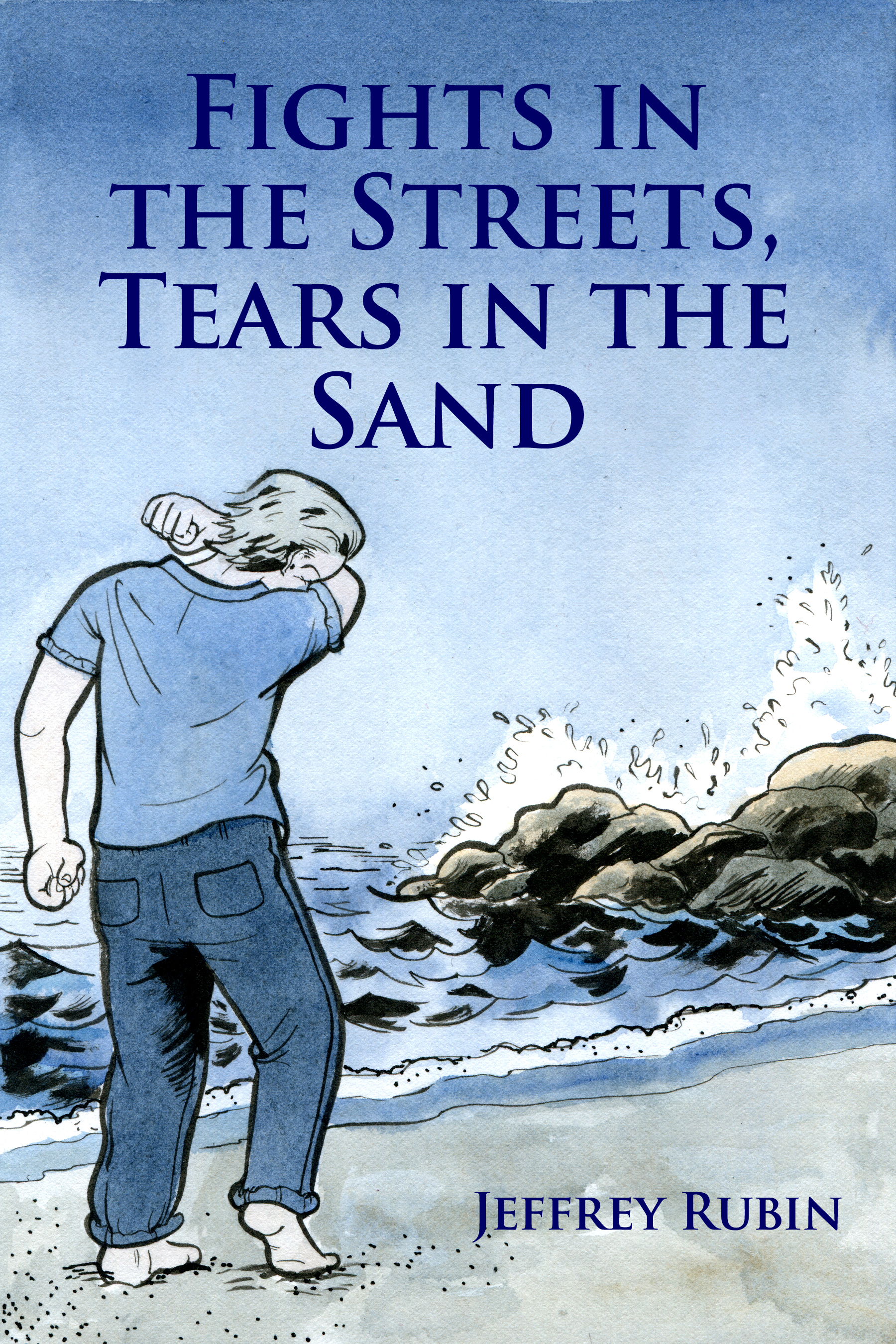
Today, I present a brief story that asks the question, How would someone people respect handle the challenging situation of being insulted? The story is an abbreviated section from my novel, Fights In The Streets, Tears In The Sand. The story’s setting, 1965, Brooklyn’s lower middle class section of Brighton Beach. Jeff Star, one of the two major character’s of the novel and its narrator has begun his second day at Lincoln High, and he is intrigued and jealous as he begins to hear about a classmate some students refer to as “Cool Steve.”

The Story

My second day as a student at Lincoln High, at lunch I spot an open seat at a table. A couple of guys that I recognize from my gym class are sitting there. One of the guys is reading a story in Sports Illustrated with a great shot of Mickey Mantle. The Mick’s neck and forearms are bulging as he’s clobbering a monster home run. There’s another guy sitting next to Cliff, two very nice to look at girls are there as well. I’ll give this a try.

     “Anybody got this seat?” I ask while preparing myself for rejection.

    The guy reading the sports magazine checks me out for a couple of seconds, then replies, “Sit down. I’m Cliff Schweitzer.” The two girls give me a friendly smile and resume a conversation they’re having about what they did over the summer. The other guy at the table completely ignores me.

     “Hey, who do you have for Social Studies?” Cliff asks,

     After checking my schedule card, I answer, “Mr. Lofton.”

     “Is he any good?”

     “I don’t know. I have him for the first time a couple of periods from now.”

    “I got stuck with Mr. Putzmeister,”Cliff says mournfully.

     “Putzmeister,” I reply with a smile.

     “Yeah. I got to get out of there. He’s major league boring.”

     “You only had him for one period,” I reply. “Maybe he’ll get better. You’re interested in history?”

      “Well, to me, a branch of history is ‘The world of sports,’ and I love sports. In fact, I’m writing a column for the school newspaper. It’s called the ‘Sports Scene.’ The first issue comes out on Friday. Check it out. Let me know what you think.”

     While we’re talking, we hear a kid from a nearby table, yelling, “I bet you wouldn’t do that ta Cool Steve!”

     I turn to Cliff. “That’s the second time I heard this name, Cool Steve. You wouldn’t happen ta know him?”

    “Yeah, from Cunningham,” he answers, referring to one of the junior highs that feed into Lincoln. “I guess most of the kids who know him, know him from there.”

     “There seems to be some kind of respect thing connected to him.”

     “Respect? Steve? Well, yeah.”

     “You respect him?”

     “Sure.”

     “How come?”

      “Well, I guess for me it’s got something to do with the fact that he’s a pretty decent athlete. In stickball he’s got explosive power and a rocket arm, and in football he’s got lightning speed and incredible hands. He’s… he’s history in the making! But, um… I got a feeling people would respect Steve even if he wasn’t so great in sports.” Then Cliff’s voice trails off and he looks like he’s searching for a more complete answer but ends up shrugging his shoulder and resumes reading his article.

     Hmmm. I bet this guy Cool Steve is a real jerk. Everybody thinking he’s such a cool dude. I hate people like that.

     As I begin to eat my lunch, I wait for a break in the two attractive girls’ conversation so I could introduce myself. After several minutes pass, without a single conversational pause, one of the two girls at my table begins to check me out. And then she introduces herself.

     “I’m Jane.”

     “We actually call her Mysterious Jane,” says Cliff.

     “Mysterious Jane?” I ask.

     “Well, we call Mysterious Jane, Mysterious Jane, because she’s strange,” he explains.

She might be strange, I think to myself, but she’s mighty fine–long, straight, glossy black hair that slightly covers her prominent cheekbones, voluptuous body. Her green, almond shaped eyes have a thin line of black mascara and perhaps within these glimmering eyes there is a hint of some sort of mysteriousness.

     “I’m Sandy,” says the other girl. She’s cute, with a peachy complexion, and long, wavy, sandy-blond hair. She glances at me and smiles.

    After a quick sandwich, we all go sit on the steps of Lincoln’s main entrance. It’s warm and the sun is shining. Suddenly something catches Sandy’s attention, and she cries, “Who’s that gorgeous guy?”

     Mysterious Jane turns with her large green eyes in the direction that Sandy is looking—down the steps and off to the right. She lets out a long sigh. “Oh, that’s Steve Marino.”

     “That’s the guy the guys call Cool Steve,” says Cliff.

      “Ain’t he built!” Sandy squeals. “You know him?”

     “Yeah, from Cunningham,” Jane replies. “All the girls were nuts about him because, well, a lot of the girls say it’s because he’s so cute. And he is cute, especially his eyes. I l-o-o-v-e his eyes.” This is followed by a moan, and she then drifts off into another dimension.

     Sandy pokes Jane, returning her back to Earth.

     Jane looks over to Sandy, lowers her voice to an eerie whisper and says, “If you want to know the truth, the real reason all the girls are crazy about Steve is because he moves with the grace and power of a large panther, but he has far more power than any panther you’ve ever seen.”

     I think to myself, that Mysterious Jane, she’s strange!

     Watching Steve down the steps, I can’t notice him moving in any special way. He’s tall with dark eyes and hair, like me. But compared to me, Steve is broader and has more of a Paul Newman nose. Mine ain’t nothing to be proud of.

     Anyway, the guy’s gotta be some kind of jerk. People thinking he’s cool, what a jerk. I notice in my innards a sense of jealousy. In junior high, I was far from the most respected kid there, getting into fights and cursing out anyone who looked at me in a way that provoked me even when later I couldn’t figure out why it had. Oh, I had problems at home, my parents were divorced, I was teased about it, and I had an awful relationship with stepdad, but I sense that being jealous of this guy, Cool Steve, who I had not even yet met, made no sense, but still I had crazy angry feelings toward him.

     I’m walking out the south side exit of Lincoln heading home. Images of how I had treated my friend Leroy disrespectfully earlier in the day flashed through my mind.  Hey, I don’t give a crap about this respect garbage!

     Suddenly I hear, “Hey, Jeff Star!”

     I turn to my left and spot Cliff calling after me and he’s with Steve Marino. “Jeff, that guy Steve you were asking about, here he is.”

     As I walk over, I’m feeling a completely unfamiliar nervousness. And then, when I open my mouth, I find myself saying in a loud tough voice, “So you’re Steve Marino. I’ve been hearing about you. The word is you’re a jerk!”

     As I glare at Steve, my heart pounds furiously. From the corner of my eye, I notice Cliff watching on, his mouth closed so tight he seems to have no lips. His words from yesterday come to mind—”Steve’s the best athlete I’ve ever personally known. Big shit!

     I’m waiting for an angry come on, or a quick jab from his right. My muscles are as tight as a hangman’s noose.

     I notice several students who were walking home from school have put on their brakes and their eyes are darting back and forth between me and Steve.

     Steve’s eyes lower, his forehead creases. Then his eyes look into mine and I see, instead of fury, sadness. “I guess,” he begins to say haltingly, “well… I was hoping… you know… starting a new school here… well, I was hoping the kids would like me.”

     Those dark, glimmering eyes of his….

     “Jeff,” says Cliff, “why did you say that?”

     My eyes dart to him and back to Steve. Cold perspiration beads up on my forehead. The students looking on are almost drooling.

     In junior high, whenever I started to put someone down, I had the favor returned with cries of “Fuck you!” and blood splattering fistfights. Such reactions would turn me into a raving lunatic as we would go at each other screaming and swinging until one of us had nothing left to offer but thoughts of revenge. Now, uncomfortably, I look into Steve’s eyes…the sadness there…eyebrows down. He looks directly into my eyes, then down, and then back up into mine.

     “Listen Steve,” I find myself saying,  “I… I don’t know why I said that… everyone I talked with said you were okay.” I take a quick glance at Cliff and the other students watching on…and hurry away.

    A few minutes later, I’m pushing the elevator button in my apartment lobby. Jeez, I guess I just made a great impression, a hell of a great impression. Steve’s eyes… man, who is this guy?

   *.         *.         *

Well, that’s my story for the day. I’m wondering how my readers think Cool Steve handled the insulting situation. Any views on how Steve or Jeff could have handled the situation better?

My Best.
Jeff

Categories
conflict management conflict resolution Racial Discrimination

How Would Cool Steve Handle This?

Welcome to From Insults To Respect.

Today, I present a brief story that asks the question, How would someone people respect handle the challenging situation of racial discrimination? The story is an abbreviated section from my novel, Fights In The Streets, Tears In The Sand. The story’s setting, 1965, Brooklyn’s lower middle class section of Brighton Beach. Jeff Star, one of the two major character’s of the novel and its narrator has begun his first day at Lincoln High, and he begins to hear about a classmate some students refer to as “Cool Steve.”

The Story

Fights in the Streets, Tears in the Sand

After English, I’m heading to Biology and some guy behind me says to someone next to him, “Hey, Cool Steve’s in my health class!”

     “Wow, Cool Steve! Really!?”

     “Yeah! He sat right next to me.”

     “Damn! Hey, tell him I say hi.”

     There’s an excitement that accompanies this dialogue that somehow has me going, hmmm.

     I go to Math and as I’m entering the room, I spot an old friend from Brighton Beach—Leroy Wilson. We recently had lost touch with each other because my family, when I was twelve, had moved from Brighton to Bensonhurst when my mom remarried. Leroy and I got together a few times after that, but after a bloody incident at a car repair shop that involved a close friend of mine, his mother wouldn’t let him have anything to do with me. I didn’t expect to run into Leroy at Lincoln. He and a few of the other kids my age who I knew from Brighton had always gone to either a Catholic school or a Yeshiva.

     It was Leroy who had taught me to play the guitar. Man, we were really driven back when we were twelve and thirteen with this dream of becoming the greatest rock ‘n’ rollers ever. And when we would get a song down just right it was a wild thrill beyond compare—lightning and sparks everywhere. So, when I first see Leroy, I smile. But then it hits me. Leroy is black. In Boody Junior High, if any white kid was to be nice to a black kid, he would have been taunted.

     How would the white kids at Lincoln react if they learn I have a black friend? Over ninety percent of the guys at Lincoln are white. I should be siding with whites, the more powerful group, the majority. Crap, he’s gonna blow my cover.

       “Jeff! How’s ya old self doin’?” cries Leroy as he spots me.

        I look up into Leroy’s eyes and then down at the wood classroom floor—my heart racing. Quickly, I move to an available seat that’s surrounded by seats other students are already sitting in. I avoid looking at Leroy, but I can feel him looking at me. All through class my eyes avoid his, but my heart grapples with his presence. When the period ends, I race out of class.

        One more class to get through before I can head home for the day. In the hall, with hundreds of students racing by, and a couple of guys bumping into me, I check my program card—Social Studies, Room 316. I have to go up a flight of stairs. I look around for a stairwell. There’s one, down the hall. How could I treat Leroy like that? Leroy’s dark confused eyes flash before me.

      “I’m Mr. Lofton,” announces a heavy-set, fortyish-aged teacher. “Welcome. Today we’re going to review some of the major news events of the summer. Then, later in the school year, we will be connecting our social studies lessons with these and other current events. I have some newspaper clippings here. As I read them, I want to get your reactions.

     “Crime at highest level ever,” cries Mr. Lofton. “Latest statistics indicate 13 percent increase. When I was a boy, we used to camp out in Central Park. Now you’d be crazy to go there at night.”

     I think about the newspaper story I read last week of Coney Island boys who were stabbed.

      “Ignoring Nazi pickets and bomb threats, the Reverend Dr. Martin Luther King moved into Washington’s ghettoes and told crowds of his admirers that economic freedom is the new cry of the civil rights movement. A dozen brown shirted American Nazis picketed with signs saying, ‘America for whites, Africa for blacks.’”

      Man, how I treated Leroy. Am I turning into a Nazi? Leroy’s dark confused eyes. An image of an exhilarating scene of us playing “Johnny B. Goode.” Am I turning into a jerk to be respected?

     After school, I walk to Rocco’s Pizzeria over on Brighton Beach Avenue. Rocco is shoveling a new pie out of his large steel oven. I take in deeply the familiar aroma of baking dough, oregano, cheese, and Rocco’s underarms.

    With a slice and Coke in hand, I discover none of the tables are empty. At one of them is this guy Brainy George Beck sitting by himself with his blond hair looking like it hadn’t been combed in months. I had noticed him earlier in the day in my gym class and he sat at my lunch table. “How come they call him Brainy George?” I had asked one of the guys in gym.

     “Da guy’s a freakin’ genius,” came the reply.

      With nowhere else to sit, I ask if he’d mind if I sit across from him. He looks up with these large thick glasses and nods his okay. “You were in gym today and at our lunch table,” he says as I sit down.

      “Yeah.”

       “I hate gym.”

        “You do?”

         “Can’t stand it—all the retards trying to prove they’re Mr. Atlas.”

         “Hmmmm.” Personally, gym is a whole lot better than the rest of the garbage we gotta take at school. “What junior high did you go to?” I ask.

         “Cunningham.”

         “That’s the same junior high as this kid some are calling Cool Steve. I guess ya don’t think much of him since he’s inta sports.”

          Oh, you mean Steve Marino? Steve’s different than the guys I’m talking about.”

          “Izzat so?”

           “Yeah. I respect Steve because, well, first of all, he’s not one of those idiots who picks on me because I can’t run as fast as the other guys. And I like the way he’s gutsy. He’s not afraid to stand up for what he believes in. And it’s the way he carries himself… the way he moves. I… I just have a lot of respect for Steve.”

          Hmmm. Well, being gutsy shouldn’t be too hard, I think to myself. Hell, I was gutsy enough to get in lots of fights in my old school. But I don’t quite know what to make of this stuff about the way Steve moves.

When I get home, I go into my bedroom, sit on my bed, pick up my guitar and start to slide my fingers across the strings. Then I find my fingers playing a little piece that my former black friend, Leroy had taught me. It begins with a sort of angry, rough part, but closes with a gentle refrain. As I play, I imagine Leroy playing along, just like the old days. We start to kick it up, jamming up a storm, reelin’ and rockin’ all night long! And then that image of his dark eyes returns to me—how they looked in class—confused, hurt. I wonder, How would this Cool Steve handle this?

*                                  *                                  *

Good Question. The search for the answer is a story for another day. For now, I’m asking my readers who have the courage to propose their answers.

My Best,
Jeff

———————————
Some people will enjoy reading this blog by beginning with the first post and then moving forward to the next more recent one; then to the next one; and so on. This permits readers to catch up on some ideas that were presented earlier and to move through all of the ideas in a systematic fashion to develop their emotional intelligence. To begin at the very first post you can click HERE.

Categories
Bob Dylan Death and dying When the Deal Goes Down

Saying Goodbye at Life’s End

by Jeffrey Rubin, PhD

Dr. Jeffrey Rubin

Welcome to From Insults to Respect. Today I’ve decided to discuss a sad topic. It came about as I listened to music while gazing out my window at the pleasant green garden of my neighbor’s backyard, reflecting upon what I might discuss in my next blog post. At one point it occurred to me that when my next birthday comes around I’ll be turning 75. I inhaled a deep breath, slowly released it as melancholy feelings drifted through me with thoughts that my remaining days are getting shorter and shorter.

As I sat there in the melancholy of this, it just so happened that Bob Dylan’s song, “When the Deal Goes Down,” began to be played. For me, Bob’s voice is not typically associated with sorrowful expressions, although his harmonica playing often beautifully drifts into these realms. However, in this song his singing acutely captures sadness that had swelled up within me.

In the first verse, he poetically sings:

In the still of the night, in the world’s ancient light
Where wisdom grows up in strife
My bewildering brain, toils in vain
Through the darkness on the pathways of life
Each invisible prayer is like a cloud in the air
Tomorrow keeps turning around
We live and we die, we know not why
But I’ll be with you when the deal goes down

With my internal feelings about my upcoming birthday, the sadness in Bob’s voice, and the gentle strains of the accompanying music, I discovered tears coming to my eyes. Images of the times I said my last goodbyes to loved ones who passed away well before they turned 75 drifted by–images of scenes with my father, mother, and several of my dearest friends. I found myself wondering if I respected how I handled such sensitive experiences.

As Bob’s song continues, he plaintively sings,

We eat and we drink, we feel and we think
Far down the street we stray
I laugh and I cry and I’m haunted by
Things I never meant nor wished to say
The midnight rain follows the train
We all wear the same thorny crown
Soul to soul, our shadows roll
And I’ll be with you when the deal goes down

For me, this verse expresses regret the singer experiences as he contemplates such sad goodbyes. Regretful feelings of some of my own actions came to me–things I wished I had said; perhaps I might have done something more helpful; how will I be when I say my own last goodbyes at my own life’s end? To be with the accompanying feelings of these thoughts is not easy.

Thich Nhat Hanh

To come to grips with them I found myself turning to the wisdom of the Vietnamese Buddhist monk Thich Nhat Hanh. In his book, No Death, No Fear, he writes,

“Our greatest fear is that when we die we will become nothing. We believe that we are born from nothing and that when we die we become nothing. And so we are filled with the fear of annihilation. The Buddha has a very different understanding, that birth and death are notions. They are not real.” 

Hanh goes on to say that nothing has a separate self, and nothing exists by itself.

“If we examine things carefully we will see that all phenomena, including ourselves, are composites. We are made of our mothers and fathers, our grandmothers and grandfathers, our body, our feelings, our perceptions, our mental formations, the earth, the sun and innumerable non-self elements….All phenomena are neither produced nor destroyed, because they are in a constant process of manifesting.”

As I reflected upon these words, it occurred to me that in a real sense my mother, long gone in a specific biological sense, is still with me. My memories of her, all that she taught me, the love that we shared, is a part of me. When I go, all of those who had been close to me will, in some sense, find me manifesting within their lives. Throughout his book, Hanh enriches this notion that rather than becoming nothing, our lives continue to manifest in numerous ways.

Dylan’s poetic phrasing continues in the next verse with its nostalgic instrumentation, that beautifully embraces my heartstrings, with a simple but comforting melody:

The moon gives light and shines by night
I scarcely feel the glow
We learn to live and then we forgive
O’er the road we’re bound to go
More frailer than the flowers, these precious hours
That keep us so tightly bound
You come to my eyes like a vision from the skies
And I’ll be with you when the deal goes down 

Although regrets are expressed in the previous verse, here forgiveness is viewed as achievable as we learn to live “o’re the road we’re bound to go.” Where is the road bound to take us? To our last days, the precious hours of our sad goodbyes.

The final verse tells us:

I picked up a rose and it poked through my clothes
I followed the winding stream
I heard a deafening noise, I felt transient joys
I know they’re not what they seem
In this earthly domain, full of disappointment and pain
You’ll never see me frown
I owe my heart to you, and that’s saying it true
And I’ll be with you when the deal goes down 

In this verse, when Dylan sings the lines, “In this earthly domain, full of disappointment and pain, you’ll never see me frown,” no clearer frown has ever been expressed by his vocal phrasing. Yes, the Buddhist perspective provides some soothing regarding the notion of death. Nevertheless, to Dylan’s and my own experience, in this earthly domain there does come disappointment and pain, as well as hard to bear noise and transient joys.

Bob Dylan’s song “When the Deal Goes Down” is a reflective and heartfelt ballad that soothes the soul even as it connects us to the ever present reality that death awaits us all.   

Categories
Lambers Fisher Offending Someone

Unintended Interpersonal Offense: How to Handle Them

Welcome to From Insults to Respect.

Sometimes we say something to a lover, friend, or colleague and find we are being angrily criticized because what was said offended the listener. Regular visitors to this blog know I have discussed how to deal with criticism in a manner that enhance how much people will like and respect you (see as examples HERE, HERE, and HERE). In these posts, I made the case that one approach to responding to criticism in a likable manner is as follows:

Illustration by Deanna MartinezListen to the criticizer in a supportive, warm, friendly style, and then, with the use of summarizing, make it clear that you fully understand what was said. Moreover, you put the criticizer at ease by making statements that indicate that the wise learn from criticism. Some time is spent on showing that you are thinking about the criticism by asking for clarification about key points. If, after thinking about the criticism the criticism is deemed to be correct, you make a statement frankly indicating, “I can see your ideas have merit and I intend to use them in the future.” If you are not sure if you agree, you make a statement indicating that you are very interested in what was said, plan to think a little more about this over the next few days and then you will be ready to discuss this further.  If, after thinking about the criticism, the criticism is deemed to be incorrect, a statement is made designed to disagree without being disagreeable. More specifically, a sense of humor, some listening in a caring way and a few smiles help to traverse rough terrain.  As the episode winds down, the criticizer is encouraged to feel comfortable communicating suggestions in the future.

In a later post, I suggested that:

In addition to actions consistent with the above approach, the most skillful folks seek ways to use, whenever they disagree with the criticism, a technique known as steering in the direction the criticizer would prefer to go. That is, rather than just disagreeing without being disagreeable, the criticized person seeks to find a new choice of action that creatively utilizes some aspect suggested from the criticism, thus showing a willingness to bend for the purpose of enhancing the relationship. Steering cannot be incorporated into all situations, but it is an additional goal of the most skillful individuals.

In addition to these descriptions, I provided many examples and practice sessions so readers could incorporate these ideas into their own approach to handling criticism.

Since publishing these posts, it has come to my attention that sometimes we are criticized because we said something that was in no way intended to offend the listener, but, nevertheless, indeed led to the person feeling offended. For example, some guy I know recently referred to a mature woman as a girl, and the woman took offense to this. The guy became defensive, insisting he fully respect women despite using that word. His tone, along with his insistence that he has no intention of changing, left hard feelings behind.

Lambers Fischer

While thinking about this, I came upon an excellent Ted Talk by Lambers Fisher titled, What to do When you Offend Someone? I encourage folks to give it a listen. Here, I will discuss the two suggestions of his that I view as most helpful.

The First Suggestion

As Lambers Fisher puts it:

What’s offensive is not always about an absolute list of rights or wrongs, but more often something that was said or done that reminds someone of a past hurt and makes them fear that future harm is on the way. As a result, if you find out that you’ve unintentionally offended someone, I encourage you to resist the temptation to get stuck in the shock of the existence of the offense. Instead, accept the inevitability of offense. Take the time to learn what made that offensive to the person in front of you, and then make every reasonable effort to reduce the likelihood of repeating that offense moving forward.

So, as I interpret this point, we will first learn and come to fully accept and expect that people do become offended at things that may surprise us. In the example that I gave of a woman being offended because a guy referred to her as a girl, if you deeply learn this principle, you wouldn’t get stuck in the shock that she was upset about this. You would, instead, accept that this indeed offended her, and in a caring, compassionate manner seek to learn from her why she finds it offensive.

I remember my mother, who worked in a Wall Street bank as a secretary, would come home from time to time very upset explaining that one of the bankers got “fresh” with her. I learned that that meant someone did something very sexually objectionable to her. That left an awful feeling in her, and if those guys had been calling the secretaries “girls” maybe the association with that word and the sexual behavior might have stayed with her and brought with it fear of harm.

Whatever the reason, if you care about the relationship, rather than be stuck in the shock of finding out the offended person is offended, learn instead to express empathy regarding the feelings of the offended person. Letting the offended person know you intend to no longer repeat the offense is a great way to strengthen the relationship.

The Second Suggestion

Lambers Fisher puts it this way:

If you are informed that you’ve unintentionally offended someone and the first thing out of your mouth is the justification for how you didn’t know that it was offensive, it is emotionally reasonable for someone else to respond in frustration. “How could you not know? Everybody knows that that’s offensive.” 

Lambers encourages us to accept that there’s nothing everyone knows. Trying to convince the offended party of this when they are feeling offended is only likely to increase anger and frustration. If we can learn to accept the accusation without becoming defensive, and instead frame it as an opportunity to reduce our ignorance and the likelihood of the next offense, we are in a much better position to maintain, and even enhance, positive relationships.

Unfortunately, merely hearing a set of suggestions in a Ted Talk is unlikely to produce highly satisfying improved behavior. If these suggestions are to be truly used in the midst of some anger being expressed by the offended party typically you must practice it in a pleasant nonthreatening situation. To that end, I encourage you to find a partner who will act out with you a few scenarios that display an offended person reacting angrily while you employ the suggestions. Do this three or four times over several days, and you very likely will notice a distinct improvement in your skillfulness.

—————————————–

Some people will enjoy reading this blog by beginning with the first post and then moving forward to the next more recent one; then to the next one; and so on. This permits readers to catch up on some ideas that were presented earlier and to move through all of the ideas in a systematic fashion to develop their emotional intelligence. To begin at the very first post you can click HERE.


Categories
Conceit Negative human characteristic

Bob Dylan’s Song, “Disease of Conceit”

Welcome to From Insults to Respect. Our topic today–conceit.

If you are seeking to be respected, actions by you that suggest to others that you are conceited are probably not helpful. To increase your motivation to change such behaviors, listening to Bob Dylan’s emotionally powerful song, “Disease of Conceit,” just might help.

The song appears on Bob’s 1989 album, Oh Mercy. The first verse tells us,

There’s a whole lot of people suffering tonight
From the disease of conceit
Whole lot of people struggling tonight
From the disease of conceit
Comes right down the highway
Straight down the line
Rips into your senses
Through your body and your mind
Nothing about it that’s sweet
The disease of conceit

Wow, calling conceit a disease, and then pairing it with words like “suffering,” “struggling,” and “rips into your senses” evokes strikingly negative feelings toward this fairly common human characteristic. Makes one wonder why Bob viewed it as so awful.

In the bridge of Dylan’s song, he sings;

Conceit is a disease
That the doctors got no cure
They’ve done a lot of research on it
But what it is, they’re still not sure

Hmm. Well, if doctors have little to offer on this topic, maybe others do. To find out I turned to my immediate family–my wife, Andrea, and our two sons, Lennon and Jack. “What does being conceited mean to you, is it a negative attribute, and if so, why?” Here are their replies:

Lennon: When I think of the word conceited, I generally think of it as the opposite of being humble. Where it gets tricky is exploring the difference between being conceited and being self-confident. While I might respect somebody who is self-confident, I might dislike somebody I consider to be conceited. 

The first difference would depend on if I think the person’s self-confidence was justified or not. The second difference would be based on how I feel the person projects that confidence energetically. If they do it in a way that rubs me the wrong way, I’ll be more likely to classify them as conceited rather than as self-confident. But perhaps “arrogant” is a better word for somebody whose confidence is justified, but they throw it in the faces of others in a way that ruffles their feathers.

Jack: I’d say conceited means being full of yourself or arrogant. When the word conceited is used I feel it’s usually used to describe someone in a negative way – possibly based in the person acting like they’re better than other people rather than just feeling self-confident which would be a more positive or neutral quality.

Andrea: Conceit typically feels like a cover-up to me. Boastfulness suggests an insecurity that needs soothing. Upon a first meeting, I’m likely to wonder about this. If, in time, it continues, it might start to be annoying.

Well, now that we have reactions from my family members, let’s see what else Bob’s song has to offer. His next verse goes:

There’s a whole lot of hearts breaking tonight
From the disease of conceit
Whole lot of hearts shaking tonight
From the disease of conceit
Steps into your room
Eats your soul
Over your senses
You have no control
Ain’t nothing too discreet
About the disease of conceit

These words give me the impression Bob has had some pretty tough experiences when it comes to dealing with conceit. Perhaps either he, or someone close to him, has been acting conceited in a a pretty awful manner and he hates it.

Dr. Jeffrey Rubin

My experience with conceit hasn’t been as dramatic. I find most of the people I know who come off as conceited strike me as insecure, but are pretty decent folks, nevertheless. I do think they might be better off canning the bragging. Perhaps the drama of the song grabs our attention to focus on this.

It seems to me people are most likely to come off as conceited when they have a great success. They might, for instance brag about their great skill in bringing about the success. In contrast, consider how Abraham Lincoln, upon hearing the news that he had won the 1864 presidential election, responded to his supporters:

I am thankful to God for this approval of the people. But while deeply grateful for this mark of their confidence in me, if I know my heart, my gratitude is free from any taint of personal triumph. I do not impugn the motives of any one opposed to me. It is no pleasure to me to triumph over any one; but I give thanks to the Almighty for this evidence of the people’s resolution to stand by free government and the rights of humanity.

Here we don’t see Old Abe boasting of having amazing skills that outwitted the opposition. Rather, he strikes a humble tone, expressing gratitude to some higher power and the people’s resolution to stand by free government and the rights of humanity. Others, upon some success, express gratitude to specific individuals who helped them along the way. I like that.

Well, there you have it, some thoughtful words from Bob Dylan, and a few others, that hopefully motivates all of us to be weary of coming across as conceited. Yes, it’s often tempting to blow our own horn. Nevertheless, perhaps there are better approaches to enhance respect. The dramatic words of Bob’s song hopefully motivates us to look within and then consider if we might be wise to make changes.

My Best
Jeff

——————–
Some people will enjoy reading this blog by beginning with the first post and then moving forward toe mindful the next more recent one; then to the next one; and so on. This permits readers to catch up on some ideas that were presented earlier and to move through all of the ideas in a systematic fashion to develop their emotional intelligence. To begin at the very first post you can click HERE.


Categories
Insulting Trump

Insulting Trump Supporters: Wise or Foolish?

Welcome to From Insults to Respect.

Dr. Jeffrey Rubin

In my last post, I made the following argument: Supporters of Kamala Harris would be wise to seek to make friends with Trump supporters rather than to demean them. Here’s my approach for doing this.

I explain to his supporters that I get why they are awfully angry about such things as the prices at the supermarket and the situation at our southern border. I also explain to them that I recognize that most of Trump’s supporters who are angry about these issues are wonderful Americans. They consist of some of my dear friends, and even several family members that I love dearly.

They also include many crucial members of our communities, such as nurses who are tending to the sick, law enforcement workers keeping our neighborhoods safe, brave military personnel protecting us from would-be foreign invaders, and waiters and waitresses making special meals a delight. It is just that these Americans are so angry about certain situations occurring in America that they find themselves in their fury blaming those whom they view as responsible for these situations. Each time they hear Trump also blaming those same people, they find themselves cheering.

I then pause to listen to their responses, summarizing from time to time what they are saying so they know I’m really listening.

After a few minutes of this listening, I add that in my view Democrats are just as unhappy with the cost at the supermarkets, and well recognize that when so many people are racing across our borders illegally that this does create real problems in communities already struggling to carry out basic services. At the same time, I find myself wondering if the emotional reactions of many of Trump’s supporters, along with their blaming those whom they view as responsible for these problems, by itself, is going to fix them. I propose that perhaps the best way forward is to figure how we can work together to do the necessary hard work.

For me, if I combine these words with empathic listening, it works to maintain my valued relationships and in some cases, to further mutual respect with several of my golf buddies.

Since writing my last blog post, I was delighted to hear a few speakers at the Democratic National Convention (DNC) echo similar sentiments.

Nicholas Kristof

And then, this morning, I happened to read in the New York Times an opinion piece by Nicholas Kristof titled “Here’s Why We Shouldn’t Demean Trump Voters.” Today I would like to highlight a few of his cogent points.

Early on in the piece, he quotes a paragraph of Bill Clinton from his DNC speech:

“I urge you to meet people where they are. I urge you not to demean them, but not to pretend you don’t disagree with them if you do. Treat them with respect — just the way you’d like them to treat you.”

Why does Mr. Kristof like this quote? He explains in detail,

That’s critical counsel because too often since 2016, the liberal impulse has been to demonize anyone at all sympathetic to Donald Trump as a racist and bigot. This has been politically foolish, for it’s difficult to win votes from people you’re disparaging.

It has also seemed to me morally offensive, particularly when well-educated and successful elites are scorning disadvantaged, working-class Americans who have been left behind economically and socially and in many cases are dying young. They deserve empathy, not insults.

Mr. Kristof brings this to life by telling us of a friend who is “a good generous woman” who feels betrayed by the Democratic and Republican political establishments. When factories closed and good union jobs left the area, she ended up homeless and addicted; four members of her extended family killed themselves, and she once put a gun to her own head. She views Trump as outside the major parties, and this gives her hope. Moreover, she reports hearing liberals mocking her faith when it was an evangelical church that helped her overcome homelessness.”

Mr. Kristof goes on to argue,

Working-class Americans have a right to feel betrayed. After almost 3,000 people died in the Sept. 11 attacks, we started two wars and allocated trillions of dollars to the response. But every three or four days we lose as many Americans to drugs, alcohol and suicide as died in the Sept. 11 attacks, yet the national response has been pathetically weak. The social fabric in many blue-collar communities has unraveled, and people are angry and frustrated.

Listening to the pain many in our blue-collar communities are feeling is humane and the decent thing to do. Viciously berating them for supporting Trump is not my idea of being helpful.

At one point, Mr. Kristof tells us:

FDR

I worry about Democrats neglecting their proud heritage since at least the time of Franklin Roosevelt of standing up for working-class Americans. Maybe it’s time for more educated liberals to reread F.D.R.’s famous Forgotten Man” speech of 1932, hailing “the forgotten man at the bottom of the economic pyramid.” 

By Kamala Harris choosing as her running mate, Tim Walz, a man who can reach working-class voters with his words as well as his policies is hugely helpful. And presenting herself as the candidate who worked at McDonald’s while her opponent was exploiting his inheritance and renters, demonstrates her understanding for connecting in a positive way to all of those who feel forgotten.

Mr. Kristof closes his opinion piece with the following words:

Sure, it’s satisfying to hurl invective. But calling people “Nazis” probably won’t win over undecided voters any more than when Trump supporters deride “libtards” or the “Biden crime family.”

Whatever our politics, Trump brings out the worst in all of us. He nurtures hate on his side that we mirror.

So let’s take a deep breath, summon F.D.R.’s empathy for the forgotten man, follow Clinton’s advice — and, for the sake of winning elections as well as of civility, remember that the best way to get others to listen to us is to first listen to them.

I fully agree.

My Best,
Jeff

———————————
Some people will enjoy reading this blog by beginning with the first post and then moving forward to the next more recent one; then to the next one; and so on. This permits readers to catch up on some ideas that were presented earlier and to move through all of the ideas in a systematic fashion to develop their emotional intelligence. To begin at the very first post you can click HERE.