
 Welcome to From Insults to Respect. Today we take up the question, can the science minded and religious minded legitimately take up an attitude of mutual respect?
 There are, of course, people who fervently believe that opinions that do not rest firmly on the broad shoulders of scientific evidence are nothing more than superstition. Many of these individuals, as soon as they hear that a person is religious, give off vibes of disdain.
 Meanwhile, there are religious folks who believe that science minded individuals have led to a world of atomic energy catastrophes, billowing coal chimneys, people with their noses in their devices while tending to their babies, etc. In their hearts, these religious folks angrily believe that the science minded are leading humanity down a filthy, destructive path.
 Then there are people who richly agree with Albert Einstein when he wrote, “Science without religion is lame, religion without science is blind.”
Oftentimes, these differing beliefs are embedded in hearts so bound up with barbed wire that probably nothing I can say will produce any significant change. I get that. Nevertheless, I am determined to present a view that might move a few folks from where they currently stand on this issue to where the view is distinctly more rewarding. I, myself, underwent a distinct change in attitude with regards to the respect I hold toward folks with differing attitudes on this topic, so perhaps my goal is not entirely hopeless.
We’ll begin with a quick look at the nature of science and religion from the perspective of psychologist and philosopher William James and the physicist Albert Einstein. Then, I’ll share my own views on the compatibility of the two realms of understanding. A little paragraph written by Albert Einstein will bring today’s discussion to a kind of conclusion. Of course, the real conclusion is open ended because of the discussions that will continue long after this post has been published.
The Nature of Science and Religion
William James made a distinction between two orders of inquiry concerning anything.
“First, what is the nature of it? what is its constitution, origin, and history? And second, What is its importance, meaning, or significance, now that it is once here? The answer to the one question is given in an existential judgment or proposition. The answer to the other is a proposition of value…. Neither judgment can be deduced immediately from the other. They proceed from diverse intellectual preoccupations, and the mind combines them only by making them first separately, and then adding them together.”
As Einstein put it, “It is the aim of science to establish general rules which determine the reciprocal connection of objects and events in time and space.” With these rules, we are able to predict the behavior of phenomenon in certain domains, sometimes with incredible precision. For example, the position of the planets within our solar system may be calculated in advance with great exactitude on the basis of a number of simple laws.
 Religion, in contrast, seeks to deliberately nurture the moral sense. For Einstein, “A person who is religiously enlightened appears to me to be one who has, to the best of his ability, liberated himself from the fetters of his selfish desires and is preoccupied with thoughts, feelings, and aspirations to which he clings because of their super-personal value.”
Now, although science and religion are two orders of inquiry that are not deduced immediately from the other, we can choose to utilize both according to our own values. Consider a married couple, Laura and Harry, along with their greatest treasures, two beautiful children.
The Laura and Harry Parable
Laura and Harry live in Syracuse, New York. It is Christmas time, so they are wondering about the wisdom of driving the family to New York City for a visit with their parents. They are aware of information acquired according to sound scientific methods that indicate an increased risk of a deadly crash in this region during this time of year.

As Christmas day approaches, at church their minister gives a stirring presentation on the importance of honoring your mother and father. Moreover, he presents a beautiful picture of families uniting during the holidays. From Laura and Harry’s religious experience at church, family values are placed alongside the driving risks that science has provided.
Laura and Harry decide to drive to New York City, but make sure that all seat belts are properly fastened because science methodology indicates that this can reduce harm in case of an accident.
From this little parable, we see that in making the decision to go to New York City, Laura and Harry chose to consider science information while also considering values that were enriched by their religious experience.
The Compatibility of Science and Religion
 Did Laura and Harry make the right decision? The question may seem easy if they had a great time and came back uninjured. But what if they had had a terrible accident? Would this require that they conclude that they had made the wrong decision? Can science answer this question?
No. Science can provide a statement like the following: 22,272 families drove over 300 miles through terrain that was similar to the terrain Laura and Harry drove during the Christmas season. Of these, there were 14 families that sustained an auto accident injury and 4 deaths. Going beyond statements of this type takes us out of the realm of science. People still have to decide what is right or wrong based on their values and whatever information they believe is most relevant to them.
If some, upon hearing that the family ended up having a terrible accident, concluded Laura and Harry made the wrong decision, they would be entitled to their opinion. And if some, upon hearing that the family had a terrible accident, refuse to second guess Laura and Harry’s decision, respecting their right to choose between complete safety and seeing their extended family during Christmas, they too would be entitled to their opinion.
Some Arguments Against and For the Compatibility of Science and Religion
 Now, some science minded folks well recognize that some decisions must be made before the availability of sufficient scientific evidence. They argue that in such cases, they don’t need any religion to tell them what is right and what is wrong, they can decide that perfectly well on their own. I, for one, am on friendly terms with these people. I am not seeking to force religion on them. At the same time, I know there are people who choose to participate in a religion, valuing the stirring lessons from their clergy, the social connections, and the community support for worthy causes. They choose to use some of what they experience by being a member of their religion to make some of their decisions. I, for one, am on friendly terms with them. I don’t see the sense of automatically disdaining either the science minded or religious minded.
 Some people in the science camp like to point to several religious related incidents, such as planes crashing into the World Trade buildings, in order to condemn all religion. But there were people in the science camp during the religious hating Soviet Revolution that participated in the slaughter of millions. Moreover, during the Nazi regime, Hitler found plenty of science minded people willing to aid in the carrying out of atrocities.
Yes, we can find within both groups people with whom we very much disagree. At the same time, it has been my experience that as I have gotten to know religious and science minded folks, most turned out to be decent and well worth respecting.
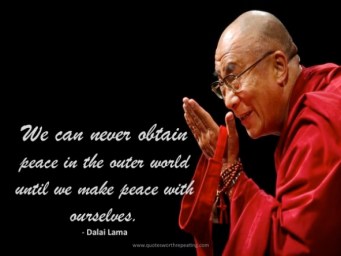
 Perhaps the greatest difficulty science minded people have with religion is that it promotes magical thinking. I hasten to point out that not all religions do so. For example, the Transcendentalists, with Ralph Waldo Emerson as one of their most eloquent writers, embraced principles of science. The Dalai Lama, as well, presents us a religion very open to what science can teach us.
 Let me add as well, with regards to this magical thinking issue, that many people who view themselves as religious, well recognize the magical thinking that appears in their scriptures, but do not accept them. Instead, they view them as comforting to those who don’t have a scientific mind, then they slip by those sections of scripture to those that they more highly value. We can liken it to a guy who recognizes that his mother holds some beliefs with which he completely disagrees, but he continues to love her for all the other aspects of her life that so beautifully nourishes his existence.
Yet, another issue regularly arises when the science versus religion issue comes up.  This one has to do with the wisdom of remaining skeptical until we have sound science evidence to support our position. I can see some merit in that. At the same time, in real life circumstances, a question comes up regarding just what is the point at which our opinion should be coerced by the existence of sound science? Bear in mind that there was not so very long ago a procedure known as lobotomies. This brain surgical procedure was viewed as being backed by such solid scientific evidence that powerful people were able to involuntarily subject less powerful folks to the scalpel. It didn’t turn out well, at least not for those who had part of their brains gouged out.
Then there were scientists who assured us that the Fukushima nuclear power plant was safe. In the end, it poisoned a beautiful sea side section of our planet.  So, there are good people who are hesitant to accept what science folks tell us. Is it wise to treat them with disdain, or to remain on friendly terms with them while respectfully disagreeing?
In his essay titled, “The Will To Believe,” William James, despite considerably lacking himself the religious sentiment, brilliantly defends his father’s religious beliefs.  James points out that in most areas of human life, science simply has not come far enough to determine with any great precision what is the most favorable road to travel. The variables that in a controlled lab seem somewhat predictable frequently become entangled in so many other variables out in the more natural world that we must make decisions as best that we can, guided by nonscientific lights. Having some faith, even without sufficient scientific evidence, may be helpful.
- “Do you like me or not?—for example. Whether you do or not depends, in countless instances, on whether I meet you half-way, am willing to assume that you must like me, and show you trust and expectation. The previous faith on my part in your liking’s existence is in such cases what makes your liking come. But if I stand aloof, and refuse to budge an inch until I have objective evidence, until you shall have done something apt […] ten to one your liking never comes. […] The desire for a certain kind of truth here brings about that special truth’s existence; and so it is in innumerable cases of other sorts.”
 For James, some people possess a strong religious sense, others less so, and others find a void in that section of their brain. Where is the evidence that any one of these types are somewhat less human, or less worthy of respect? Perhaps there is some value in having some diversity within the human species.

In concluding this post, I leave you with a quote from Einstein, who encouraged us to “not only tolerate differences between individuals and between groups, but we should indeed welcome them and look upon them as an enriching of our existence. That is the essence of all true tolerance; without tolerance in this widest sense there can be no question of true morality.”
——————–
Some people will enjoy reading this blog by beginning with the first post and then moving forward to the next more recent one; then to the next one; and so on. This permits readers to catch up on some ideas that were presented earlier and to move through all of the ideas in a systematic fashion to develop their emotional intelligence. To begin at the very first post you can click HERE.

 Between 1931 and 1933, Albert Einstein engaged Sigmund Freud in a discussion that addressed the question, “Is there any way of delivering mankind from the menace of war?” Their exchange was subsequently published as a pamphlet that is available for free on line by clicking
  Do you not share the feeling that a change could be brought about by a free association of men whose previous work and achievements offer a guarantee of their ability and integrity? Such a group of international scope, whose members would have to keep contact with each other through constant interchange of opinions, might gain a significant and wholesome moral influence on the solution of political problems if its own attitudes, backed by the signatures of its concurring members, were made public through the press.
  Such an association would, of course, suffer from all the defects that have so often led to degeneration in learned societies; the danger that such a degeneration may develop is, unfortunately, ever present in view of the imperfections of human nature. However, and despite those dangers, should we not make at least an attempt to form such an association in spite of all dangers? It seems to me nothing less than an imperative duty!
 As one immune from nationalist bias, I personally see a simple way of dealing with the superficial (i.e., administrative) aspect of the problem: the setting up, by international consent, of a legislative and judicial body to settle every conflict arising between nations. Each nation would undertake to abide by the orders issued by this legislative body, to invoke its decision in every dispute, to accept its judgments unreservedly and to carry out every measure the tribunal deems necessary for the execution of its decrees…. Thus I am led to my first axiom: The quest of international security involves the unconditional surrender by every nation, in a certain measure, of its liberty of action–its sovereignty that is to say–and it is clear beyond all doubt that no other road can lead to such security….
 The craving for power which characterizes the governing class in every nation is hostile to any limitation of the national sovereignty. This political power hunger is often supported by the activities of another group, whose aspirations are on purely mercenary, economic lines. I have especially in mind that small but determined group, active in every nation, composed of individuals who, indifferent to social considerations and restraints, regard warfare, the manufacture and sale of arms, simply as an occasion to advance their personal interests and enlarge their personal authority….
 But then he notes that he realizes that Einstein is not so much interested in a lot of theorizing, but rather, in concrete steps that may be taken to promote lasting world peace. The answer, he says, perhaps lies in trying to figure out why he, Einstein, and some others developed into human beings who are so much less likely than others to heed the drums of war. Perhaps if we understand this, we can create the conditions for others to reach a similar level of development. Thus, Freud wrote,
 Because every man has a right over his own life and war destroys lives that were full of promise; it forces the individual into situations that shame his manhood, obliging him to murder fellow men, against his will; it ravages material amenities, the fruits of human toil, and much besides. Moreover, wars, as now conducted, afford no scope for acts of heroism according to the old ideals and, given the high perfection of modern arms, war today would mean the sheer extermination of one of the combatants, if not of both. This is so true, so obvious, that we can but wonder why the conduct of war is not banned by general consent….
  The psychic changes which accompany this process of cultural change are striking, and not to be gainsaid. They consist in the progressive rejection of instinctive ends and a scaling down of instinctive reactions. Sensations which delighted our forefathers have become neutral or unbearable to us; and, if our ethical and aesthetic ideals have undergone a change, the causes of this are ultimately organic. On the psychological side two of the most important phenomena of culture are, firstly, a strengthening of the intellect, which tends to master our instinctive life, and, secondly, an introversion of the aggressive impulse, with all its consequent benefits and perils.
  Now war runs most emphatically counter to the psychic disposition imposed on us by the growth of culture; we are therefore bound to resent war, to find it utterly intolerable. With pacifists like us it is not merely an intellectual and affective revulsion, but a constitutional intolerance, an idiosyncrasy in its most drastic form. And it would seem that the aesthetic ignominies of warfare play almost as large a part in this repugnance as war’s atrocities.
 But actually solid research evidence, brilliantly summarized by Steven Pinker in his book, The Better Angels of Our Nature: Why Violence has Declined, indicates that over the course of human history we have been finding less and less violent ways to resolve our differences.
 Those who point the way toward alternatives to violent interactions, can, in time, perhaps way too slowly than we would like, effect change. As Pinker says in the conclusion of his book, “the data we have seen in this book show it is a goal on which progress can be made–progress that is halting and incomplete, but unmistakable nonetheless.” It is my sincere hope that Einstein’s and Freud’s efforts so many years ago will serve as an enduring inspiration to all of us to keep up the struggle toward bringing about a more peaceful world.
 Do you not share the feeling that a change could be brought about by a free association of men whose previous work and achievements offer a guarantee of their ability and integrity? Such a group of international scope, whose members would have to keep contact with each other through constant interchange of opinions, might gain a significant and wholesome moral influence on the solution of political problems if its own attitudes, backed by the signatures of its concurring members, were made public through the press.
  Such an association would, of course, suffer from all the defects that have so often led to degeneration in learned societies; the danger that such a degeneration may develop is, unfortunately, ever present in view of the imperfections of human nature. However, and despite those dangers, should we not make at least an attempt to form such an association in spite of all dangers? It seems to me nothing less than an imperative duty!
 As one immune from nationalist bias, I personally see a simple way of dealing with the superficial (i.e., administrative) aspect of the problem: the setting up, by international consent, of a legislative and judicial body to settle every conflict arising between nations. Each nation would undertake to abide by the orders issued by this legislative body, to invoke its decision in every dispute, to accept its judgments unreservedly and to carry out every measure the tribunal deems necessary for the execution of its decrees…. Thus I am led to my first axiom: The quest of international security involves the unconditional surrender by every nation, in a certain measure, of its liberty of action–its sovereignty that is to say–and it is clear beyond all doubt that no other road can lead to such security….
 The craving for power which characterizes the governing class in every nation is hostile to any limitation of the national sovereignty. This political power hunger is often supported by the activities of another group, whose aspirations are on purely mercenary, economic lines. I have especially in mind that small but determined group, active in every nation, composed of individuals who, indifferent to social considerations and restraints, regard warfare, the manufacture and sale of arms, simply as an occasion to advance their personal interests and enlarge their personal authority….
 But then he notes that he realizes that Einstein is not so much interested in a lot of theorizing, but rather, in concrete steps that may be taken to promote lasting world peace. The answer, he says, perhaps lies in trying to figure out why he, Einstein, and some others developed into human beings who are so much less likely than others to heed the drums of war. Perhaps if we understand this, we can create the conditions for others to reach a similar level of development. Thus, Freud wrote,
 Because every man has a right over his own life and war destroys lives that were full of promise; it forces the individual into situations that shame his manhood, obliging him to murder fellow men, against his will; it ravages material amenities, the fruits of human toil, and much besides. Moreover, wars, as now conducted, afford no scope for acts of heroism according to the old ideals and, given the high perfection of modern arms, war today would mean the sheer extermination of one of the combatants, if not of both. This is so true, so obvious, that we can but wonder why the conduct of war is not banned by general consent….
  The psychic changes which accompany this process of cultural change are striking, and not to be gainsaid. They consist in the progressive rejection of instinctive ends and a scaling down of instinctive reactions. Sensations which delighted our forefathers have become neutral or unbearable to us; and, if our ethical and aesthetic ideals have undergone a change, the causes of this are ultimately organic. On the psychological side two of the most important phenomena of culture are, firstly, a strengthening of the intellect, which tends to master our instinctive life, and, secondly, an introversion of the aggressive impulse, with all its consequent benefits and perils.
  Now war runs most emphatically counter to the psychic disposition imposed on us by the growth of culture; we are therefore bound to resent war, to find it utterly intolerable. With pacifists like us it is not merely an intellectual and affective revulsion, but a constitutional intolerance, an idiosyncrasy in its most drastic form. And it would seem that the aesthetic ignominies of warfare play almost as large a part in this repugnance as war’s atrocities.
 But actually solid research evidence, brilliantly summarized by Steven Pinker in his book, The Better Angels of Our Nature: Why Violence has Declined, indicates that over the course of human history we have been finding less and less violent ways to resolve our differences. Human beings who take the time to make vivid the negatives of war, rather than glorifying it, do make a difference.
  Those who point the way toward alternatives to violent interactions, can, in time, perhaps way too slowly than we would like, effect change. As Pinker says in the conclusion of his book, “the data we have seen in this book show it is a goal on which progress can be made–progress that is halting and incomplete, but unmistakable nonetheless.” It is my sincere hope that Einstein’s and Freud’s efforts so many years ago will serve as an enduring inspiration to all of us to keep up the struggle toward bringing about a more peaceful world.


 Dealing with the frustration that goes along with challenging conflicts has some similarities to sailors dealing with stormy seas—it is best to utilize a well-rehearsed plan.


