Categories
confiict management conflict management conflict resolution coward cowardly criticism emotional intelligence emotional maturity fear free social intelligence and emotional intelligence curriculum interpersonal conflicts negative criticism Uncategorized wisdom

Fear, Cowardliness, and the Military

fearLast week my blog post asked, “Does Your Fearfulness Make You a Coward?”  While attempting to answer this question, I pointed out that viewing yourself as a coward when you experience fear consumes time and energy. Moreover, it is way too simplistic. Fear is actually a highly valuable emotion. It motivates us to take some wise precautions. And the fact that some people can fearlessly perform a task that would make you quake actually indicates, when properly considered, that diversity in what people fear is helpful for the survival of our species. When it comes to fear, we are wiser to seek to learn to skillfully utilize it, rather than to seek to insult ourselves.

Sec. John Kerry
Sec. John Kerry
Edward Snowden
Edward Snowden

Within three days of my writing that post on fear, NBC Nightly News presented a video of Secretary of State John Kerry calling Edward Snowden, the NSA document leaker, a coward. I found this rather ironic because John Kerry, as a younger man, demonstrated against the Vietnam War. Such demonstrators were repeatedly called cowards by those who supported our military’s war efforts. And so I guess that makes both John Kerry and Edward Snowden cowards, at least in the eyes of some people who choose to use this name calling strategy when they believe it suits them.

John Kerry Protesting Against the Vietnam War

What’s up with this Name Calling?

generalWhen we call someone a coward, we are not making a scientifically objective distinction as we do when, for example, we call a snake a reptile rather than an insect. People use the word “coward” as a strategic move to actually increase fear in the hopes of achieving their personal desires. I know that this can seem counterintuitive at first, but with a little thought, this becomes simple to understand.

Many people are afraid to put themselves in a position in which others are publically calling them cowards. Thus, Sec. Kerry, by calling Mr. Snowden a coward on national television, sought to discourage others with access to secret government information from revealing what they know for fear that they, too, would be branded a coward. And those who called Sec. Kerry a coward when he was a younger man protesting against the Vietnam War sought to discourage others from doing likewise lest they, too, would be subjected to such name calling.

medel of honorWhen we think of the military we often think about how it honors certain individuals who act fearlessly in the face of danger. Typically this is done in a ceremony during which medals are handed out and an inspiring speech is presented. It stirs our hearts to participate in these events.

Although we may think that courage and bravery is the driving force of the military, far more often utilized are strategies designed to actually increase fear. It is worth taking a good hard look at these strategies because when people become more aware of this, their simplistic kneejerk reaction of construing any fearfulness that they personally experience as a sign of their cowardliness can be dispelled. A more realistic understanding of these experiences can then take its place, thus aiding people to make better informed choices as they seek to achieve their most treasured desires.


The Military’s Use of Fear

pearl-harbor-newspaperWhen Japan attacked Pearl Harbor, it was the fear that our country would be conquered by another country that led men to enlist in the various branches of the military in record numbers. But even when our country is not actually attacked, those who seek military intervention artfully manipulate fear to achieve their ends.

Domino TheoryThose of us who lived through the period during which the Vietnam War mounted, recall how our fear was heightened by repeated references to the “Domino Theory.” This theory claimed that if one country in a region came under the influence of communism, then the surrounding countries would follow in a domino effect. Thus, fear was aroused that if South Vietnam was to fall to the communists, other countries in the region would soon follow. And then these countries would enter into a vast policy of conquest. The Philippines, the Hawaiian Islands, and the whole of our coast west of the Sierra Passes would be swamped by the invaders in rapid succession. If we fail to act decisively in Vietnam, the rest of America would, in but a few short years, be enslaved by the conquerors, our women raped, and our children brainwashed.

A dismal forecast indeed! And yet, just plausible enough to rile up enough Americans to wage a terribly costly war.

vietnamIn the end, the U.S abandoned its effort to keep South Vietnam from falling to the communists. And yet none of the fearful projections about our own country being swamped by foreign invaders came to pass. Among the effects of the fear campaign were approximately 58,000 US combat deaths and a million Vietnam combat deaths. Several million others were seriously wounded and according to  Vietnam’s government, the U.S. herbicidal warfare program, Operation Ranch Hand, conducted during the Vietnam War, led to 400,000 people killed or maimed as a result of after effects, and 500,000 children born with birth defects. To this day, our own country continues to provide treatment to thousands of American veterans who were wounded in Vietnam battles or have been suffering from the effects of exposure to Agent Orange.

iraq warMore recently, as a result of the military’s leadership that drummed up fear of “weapons of mass destruction” in Iraq, we fought a war costing billions of dollars, the lives of 4,486 U.S. soldiers, and approximately 100,000 Iraqis. Many more are still suffering from serious injuries.

Once people begin to serve in the military, fear is a dominant driver of carrying out one’s duties. Military personnel quickly become aware that insubordination can lead to prison time and various forms of name calling, including being branded a coward. Fear is further heightened by knowledge of the possibility of being disgraced with a dishonorable discharge, or shot for desertion. If soldiers don’t carry out their duties under fire, this can increase the likelihood of the enemy either killing them along with their fellow service personnel or to being captured and subjected to possible torture. All of these fears are strategically heightened by the military so that these fears, when combined, will be greater than the competing fear that comes from the sounds of bombs going off, bullets flying overhead and knowing that severe injury or death may come at any moment.

military trainingNow, of course the military doesn’t just rely on fear to achieve its ends. It provides training, initially under relatively easy conditions, and then under more and more arduous ones, eventually requiring trainees to perform with live bullets flying overhead. This increases the military personnel’s confidence that they can indeed perform under highly stressful conditions. Stories are told of simple soldiers who achieved great acts of bravery. Military personnel are provided with leaders who have distinguished themselves as individuals of great intelligence and character. And there are rewards for carrying out one’s duties—a salary, cheers from one’s comrades, an honorable discharge, veteran’s benefits, etc. Nevertheless, the idea that there is no place for fear in the military is a bunch of hogwash.

Conclusion

rock bandBob, experiencing fear as he prepares to perform with his band in front of a large audience, initially observes his thoughts going off into a chain of insults. “I’m such a coward. Why can’t I be like a brave soldier, never experiencing any fear even in the face of bullets raining down from the enemy?”

But then it dawns on Bob that soldiers actually do experience fear. With this knowledge, he decides to let his thoughts continue for a few more minutes, but he simply nonjudgmentally observes them passing by without attaching any belief in them. Soon, they pass. He gets on with the work before him. He spends some time practicing his performance. He recalls some stories he heard about other performers who experienced fear before shows and yet managed to thrill their audiences. And, from time to time, he reminds himself that if it turns out that the life of a musician ends up not suiting him, there are other paths he can take to create a worthwhile life.

———————————
Some people will enjoy reading this blog by beginning with the first post and then moving forward to the next more recent one; then to the next one; and so on. This permits readers to catch up on some ideas that were presented earlier and to move through all of the ideas in a systematic fashion to develop their emotional intelligence. To begin at the very first post you can click HERE.

Categories
African American anger assertiveness Bullied bullying conflict management conflict resolution criticism emotional intelligence emotional maturity free social intelligence and emotional intelligence curriculum insults interpersonal conflicts Jr. Martin Luther King N-word Name calling psychological maturity respect social intelligence taunting wisdom

On Responding to the N-word

Leonard Pitts, Jr.
Leonard Pitts, Jr.

Leonard Pitts, Jr. is a columnist, author of three novels and winner of numerous awards including the 2004 Pulitzer Prize for commentary.  When I heard that he was speaking at Flagler College, having enjoyed reading his insightful column for many years, I eagerly went to see him.

Mr. Pitts’s formal presentation was well received.  Then, he began to take questions from the audience. His responses to each were like a laser in that his answers were precisely on point–that is, until I asked my question.

My Question

When I first stepped up to the mike, I explained that I had worked with teenagers for many years, and sometimes a white student would seek to insult a black student by calling him the N-word.

Often the response was a physical fight that would lead to a school suspension.

Before returning to school, in some cases both students were asked to meet with me.  I saw each separately at first and usually I’d discuss Martin Luther King, Jr. For the black students, at some point in our discussion I would ask, “Do you understand that Martin Luther King, Jr. was all about non-violence when dealing with injustice?”

“Sure, I know that, man!” was a common reply.

Then I would say something like, “When you were called the N-word, you started to physically attack the guy who called you that.  That’s a violent approach to the injustice you had faced.  If it happens again, can you think of some other way to deal with this, some way that would respect Martin Luther King, Jr.’s memory?”

I would then typically get the following type reply: “If Martin Luther King, Jr. lived in my neighborhood, he’d have realized that if anyone called him that, the only way to respond is to bloody the guy up good!”

Having had experiences like this, I asked Mr. Pitts, “As a respected black man, how would you respond to someone who called you the N-word, and how would you advise black people to respond in the event that someone called them the N-word?”

Mr. Pitts’s Response

As I had said before, prior to my question, Mr. Pitts’s answers to questions that were being presented to him were right on point.  Now, his reply wandered off to related issues, never directly answering my question.

hip hopHe spoke, for example, of how he objected to hip-hop’s embrace of the word.  He related it to how many women in the women’s movement have now embraced the phrase, “She’s my bitch,” as a form of flattery, despite the fact that historically it was used in an unkind manner by sexist men seeking to put down women.  And he spoke eloquently about why he personally found the N-word so offensive.  I didn’t write down his exact words, but it seemed to closely match the words he used in some of his earlier newspaper columns.  For example, in a column published on November 30th, 2013, he wrote:

The N-word is unique. It was present at the act of mass kidnap that created “black America,” it drove the ship to get here, signed the contracts at flesh auctions on Southern ports as mother was torn from child, love from love and self from self. It had a front row center seat for the acts of blood, rape, castration, exclusion and psychological destruction by which the created people was kept down and in its place. The whole weight of our history dictates that word cannot be used except as an expression of contempt for African Americans.

Now, I do want to avoid a too simplistic presentation of Mr. Pitts’s position on the N-word.  He does believe that the word can be rightly used in certain situations.  For example, in a column titled, Don’t Censor Mark Twain’s N word” he defended how it is used in The Adventures of Huckleberry Finn:

huck finn It is, perhaps, the seminal moment in American literature.

Young Huck Finn, trying to get right with God and save his soul from a forever of fire, sits there with the freshly written note in hand. “Miss Watson,” it says, “your runaway nigger Jim is down here two mile below Pikesville and Mr. Phelps has got him and he will give him up for the reward if you send.”

Read more here: http://www.miamiherald.com/2011/01/09/2007730/dont-censor-mark-twains-n-word.html#storylink=cpy

Huck knows it is a sin to steal and he is whipped by guilt for the role he has played in helping the slave Jim steal himself from a poor old woman who never did Huck any harm. But see, Jim has become Huck’s friend, has sacrificed for him, worried about him, laughed and sung with him, depended upon him. So what, really, is the right thing to do?

“I was a-trembling,” says Huck, “because I’d got to decide, forever, betwixt two things and I knowed it. I studied a minute, sort of holding my breath, and then says to myself:

‘All right, then, I’ll go to hell’ — and tore it up.”

Mr. Pitts wrote this column in response to a publisher who had decided to put out a new edition of this classic story that replaced all 219 occurrences of the N-word with words such as “runaway slave.”  Although Mr. Pitts acknowledges the publisher means well, he states that, “…it is troubling to think the state of reading comprehension in this country has become this wretched, that we have tweeted, PlayStationed and Fox Newsed so much of our intellectual capacity away that not only can our children not divine the nuances of a masterpiece, but that we will now protect them from having to even try.”

I liked what Mr. Pitts had said in reply to my question but as I left the auditorium, I wondered why he appeared to avoid answering my question more directly.  And I wondered what he would say about the approach that I have been recommending for responding to insults (see for example, “Insulting Criticism: What Can We Do About It?”).

My Alternative to Violence When Responding to the N-word

Although I have given a number of different types of examples of people responding maturely to insults in past posts, I have never described specifically what my approach would look like in the type of a situation we have been discussing today.  I, of course, recognize that since I am not an African-American, I lack much legitimacy in offering my opinion on this topic.  Nevertheless, just to spur a deeper discussion, very tentatively I am tossing out one alternative to violence.

In the scenario presented below, this is the first time Fred is calling Leroy the N-word.  In my view, Leroy’s response would be very different if Fred has begun to repeatedly taunt him.  Concerns about how to handle taunting are addressed in my post titled “The Art of Playful Teasing”.

black and whiteLeroy, an African-American teenager is called the N-word by Fred, a white teenager.  Leroy replies by looking firmly into the eyes of Fred and says,”You just called me a nigger.  I want to make certain you clearly understand that that word was used in the past by people who believed in slavery and that African-Americans are less than human.  Is that what you are trying to say to me, that you believe in slavery, and I’m less than a human being?”

“Yeah, you nigger!” Fred replies.

Leroy pauses to think about this for a moment, looking down in a sad manner.  Then, looking squarely into Fred’s eyes, he says firmly, “Why are you trying to insult me, Fred?”

“Because I hate niggers!”

“Fred, I’ve met some black guys who strike me as pretty hateful characters.  But from my experience, there are a lot of great black guys out there. I hope in time you’ll change your mind.  Anything else you want to say to me?

“Yeah, go to hell!”

“I understand that you’re trying to insult me, Fred. I’m always interested to hear you out.  I’m sorry to hear how you feel about black people.”

Well, those are some thoughts I have for you this week.  I encourage readers to continue the discussion by posting comments.  I know these issues bring up for many of us some very strong emotions.

——————————-

Some people will enjoy reading this blog by beginning with the first post and then moving forward to the next more recent one; then to the next one; and so on. This permits readers to catch up on some ideas that were presented earlier and to move through all of the ideas in a systematic fashion to develop their emotional intelligence. To begin at the very first post you can click HERE.

Categories
anger Bullied bullying conflict management conflict resolution criticism free social intelligence and emotional intelligence curriculum insults interpersonal conflicts MATURITY Name calling negative criticism playful teasing psychological maturity respect social intelligence taunting teasing types of criticism wisdom

PUTTING DOWN NON-GROUP MEMBERS

calvin argumentOn this blog, I have often discussed various reasons why someone might throw insults at you, and, depending on the reason, how to maturely deal with these challenging experiences (see for example, “Insults: A Comic Strip Guide“).  If John is throwing an insult at you because he is in a bad mood, just asking in a concern manner, “Is everything OK, John, you sound like something is bothering you?” might be a useful way to begin to respectfully deal with this type of situation.  You might want to respond differently, however, if you see that John is insulting you because he hopes it will encourage you to make a change he thinks you need to make.  In this type of situation, beginning your response by initially ignoring the insult and instead summarizing his concern could be more helpful than asking if everything is OK or making a big thing about the insult.

In earlier posts, we have discussed eight different reasons why people throw insults at others, and mature responses to deal with each of these situations. Today let’s focus on some ways to deal with situations in which you might find yourself being insulted by those in a group because they view you as a non-group member.

Putting Down Non-group Members

Many people have a desire to join together in a common cause.  This can dramatically increase their own personal power.  And it is one of the big reasons why playing a game like baseball can be so much fun.  Hit a homer or even a ground ball that brings in the winning run, and your group is patting you on the back and cheering.

When immature people join together, however, because of their lack of empathy, they often join together to put down and humiliate non-group members–particularly if the non-group members are a minority or viewed as too powerless to defend themselves.

Sometimes we see this sort of behavior occur when a new girl starts a new school.

When someone faces these types of difficult situations, what is a respectable way to respond?  No single blog post can fully answer this question, but I would like to throw out some ideas for your consideration.  Let’s begin with a parable.

The Parable of Jason and Ron

As you look at the four pictures of this parable, let me add some details.  When Jason says, “I’m sorry you feel that way, Ron,” he looks squarely into Ron’s eyes.  Then he gives Ron a slight nod of his head and goes on his way.  Throughout the interaction between Jason and Ron, Jason remains friendly, while at the same time, self-assured.

When I was in school, one day I noticed a boy handle a similar situation like Jason.  The other students seemed to respect how the boy handled the teasing.  So I began to rehearse this style in front of a mirror over the course of a few days.  The next time one of the older students teased me, I gave it a try.  It ended up working just fine.

The “Give The Teasers What They Want” Approach

Now I understand that the approach described in “The Jason and Ron Parable” might not work perfectly in every situation.  Acting self-assured might actually increase the desire by group members to prove that they are powerful and the person being insulted is nothing but a pile of trash.  To try to prove this, they might insult you even worse than if you said nothing, or they might even physically attack you.  Because of this risk, many people faced with insults from a larger, more powerful group choose to give the teasers what they want–to feel they are more powerful than others.  People using this approach, when faced by these teasers, keep their eyes down toward the ground, and try to walk away as quickly as they can without saying anything. In this way, they don’t challenge the teasers sense of power in any way.

I’ve seen people use the “Give the Teasers What They Want” approach and it sometimes works to a certain degree.  The immature group members, with their lack of empathy toward others, after saying a few mean things, let the teased person walk by, and there is no more of these incidences. The group members feel that they had a little fun and the teased person gets away without any physical harm.  His or her feelings might feel hurt, but this passes before too long.

I must admit that I used this approach a few times when I was young.  It bothered me that I didn’t stand up for myself in a more “manly” manner, but at the same time I was glad that I got home safe.

The “Physical Attack” Approach

Now in contrast to the approach used in the “Jason and Ron Parable” and the “Give The Teasers What They Want” approach, some people have made the case that if anyone insults you, the only proper way to deal with this is to start swinging with everything you got.  It doesn’t matter if you end up getting ganged up, beaten severely, or evenbeing killed, you must physically attack to maintain your dignity.  Consider Mike’s story.

Mike’s Story

One day, I received a comment on my blog by a young man who recalled an incident that he had had when he was a new kid at school.  “On the school bus,” he wrote, “I began to get picked on.  I was not the kind of mature kid who ignored the situation and so I ended up getting into fights as a result. I’d like to preface my next statement with the following–I am not condoning fighting and do not recommend fighting as a solution to any type of verbal altercation. That being said, after showing the bullies that I’d stand up for myself, not only did the bullying come to an abrupt end, but I ended up becoming friends with several of them and seemed to garner the respect of many of the other kids on the bus. Again I’m not condoning fighting but am suggesting that in some cases a show of strength can be an effective way to resolve conflict.”

Here’s how I responded to Mike:

Hi Mike,

You are absolutely right. In some situations a kid who starts to get picked on will physically go at those doing the tormenting. The tormentors end up backing down, others end up respecting the kid who shut the tormentors up, and the kid even ends up making friends with the tormentors. This is a real possibility. Now, let’s consider other possibilities of a kid physically going at his tormentors so all of us can make an informed decision about how best to handle these types of situations.

In one case that I’m familiar with, a boy that we will call Cal, went to his dad and complained in a choked up voice of a bully picking on him on the bus. The dad, having had a very similar experience when he was young that you had, Mike, began to holler at his son. “If someone picks on you, you go at him with everything you have and that will shut him up. That’s how I handled that type of situation and it worked every time. I can’t believe you didn’t do that. Here you are crying over it. I’m ashamed of you!”

What the dad didn’t know at the time was that Cal had already witnessed another kid on the bus who was bigger and stronger than him try to do just what his dad had said to do. The bully quickly grabbed the arm of this kid, twisted it behind his back until it was excruciatingly painful. After the kid tried his best to get free, the twisted arm was twisted tighter and the kid let out a scream. The bus driver yelled to quiet down. The bully then loosened his grip on the kid, slapped him on the side of his face, and said, “If you ever start in with me again, I’ll catch you after school and you’ll really be sorry.”

Cal, seeing this happen to someone he knew was stronger than he is, became increasing depressed and when he began to talk about killing himself, he ended up in my office. Before long he blurted out all that he was going through.

Now, here’s another possible outcome of a kid going physically at bullies. The kid ends up winning the fight, or at least does enough harm to the bullies, that they settle down for the remainder of the trip. But the bullies belong to a gang, and having embarrassed the bullies on the bus, the gang decides to get revenge. The kid gets attacked and ends up with serious injuries, or even dead.

Or the bullies, seeing that they can’t get the kid to kowtow to them, end up working up their fury until they begin to get revenge by doing some things behind the kid’s back. The kid discovers his backpack has been slashed and in the crowd that is looking on, he sees the bullies smirking. Then the kid’s bike is stolen. Again the bullies have smirks on their faces. The kid tries to get even, the conflict escalates, and before long someone gets knifed or a gun explodes.

These are just some of the other outcomes that have occurred when someone has decided to physically attack bullies. Each person has to consider the situation and decide what is right.

Since writing the above reply to Mike, I read Malcolm Gladwell’s bestselling book, Outliers.  In one of his chapters, I learned that communities that have a higher than average percentage of people who hold the attitude that the only way to deal with people being disrespectful to you is to physically attack them tend to have higher than average murder rates.  Is that the type of community you wish to live in.  Some of the bullets that fly by in those communities end up striking people who are not even involved in the anger arousing situation, including children.  And so, I think people should think seriously about this issue.

Making a choice between which type of approach to use in any given situation requires some deep thought.  I hope this post gives you some useful material as you go about deciding for yourself what makes the best sense.

——————–
Some people will enjoy reading this blog by beginning with the first post and then moving forward to the next more recent one; then to the next one; and so on. This permits readers to catch up on some ideas that were presented earlier and to move through all of the ideas in a systematic fashion to develop their emotional intelligence. To begin at the very first post you can click HERE.

Categories
bullying Chris Christie conflict management conflict resolution criticism emotional intelligence free social intelligence and emotional intelligence curriculum insults Name calling respect social intelligence wisdom

GOV. CHRIS CHRISTIE’S USE OF INSULTS

In earlier posts on this blog I have advocated that it can be helpful to become familiar with five levels of maturity for responding to negative criticism and five levels of maturity for providing negative criticism (see for example Providing Negative Criticism: Five Levels of Maturity).  In those posts, I have contended that when responding or providing negative criticism the use of insults tends to lower your level of maturity.  Moreover, people who are less mature tend to be less liked and respected.

If the arguments that I have made in those earlier posts are accurate, how then can I explain the successful career that New Jersey Gov. Chris Christie has had?  Here is a man who is well known to use insults when he is criticized and when he is criticizing others.  Here is a man who likes to characterize his use of insults as his way of being “blunt and direct” even though a person can surely be blunt and direct without seeking to insult people.  Here is a man who has managed to get himself elected as a county legislator in New Jersey’s Morris County, appointed as United States Attorney for New Jersey, elected Governor of New Jersey twice, and viewed as one of the front runners for the next U.S. presidential election.  Here is a man that many people have come to admire.

By addressing this apparent paradox between my proposed levels of maturity and the success of Gov. Christie, readers will have an opportunity to come to a more refined, precise understanding of how to utilize the levels of maturity as a guide for dealing with interpersonal and intrapersonal relationships.

Explaining the Paradox

First of all, as I have explained in earlier posts, the five levels of maturity for responding or providing negative criticism are most relevant to your interpersonal relationships and your intrapersonal relationships.  As I define these terms, your interpersonal relationships are your interactions with people with whom you have direct, face to face interactions on an ongoing basis; your intrapersonal relationships involve interactions that you have with yourself.

The relationship that Gov. Christie has with his voters is best viewed as an intergroup relationship, rather than either an interpersonal or intrapersonal relationship.  This intergroup relationship involves the group of people who might potentially vote for him, the group of people who have a vested interest in getting the governor elected, and the groups of people who are working to get someone else elected.  Although the five levels of maturity are relevant in intergroup relationships, other issues often become more important.

In an interpersonal relationship, if you attempt to insult the person whom you are interacting with, that person might insult you back and the interaction can escalate into violence.  When we see Gov. Christie seeking to insult someone, he almost always has a group of supporters standing behind him and a team of armed security personnel well trained to intervene if an insulted party makes any moves at all that can be viewed as violent.  Under this set of circumstances, it is far safer to play the part of a tough guy who doesn’t take any crap from anyone than if you, personally, seek to insult someone with whom you have an interpersonal relationship.

Here’s another difference between what typically happens during your interpersonal relationships and the intergroup interactions that involve the governor.   When someone directly seeks to insult you, unless you are well trained in handling this in a peaceful manner, you are likely to take the insult personally.  The emotions that arise in this situation are more likely to be stronger than if you see on TV, or in a large arena, the governor throwing insults at someone you are not likely to personally know.

The governor, moreover, is not seeking to develop a sound interpersonal relationship with you.  He is, instead, seeking your vote.  He knows very well that not everyone is going to vote for him.  If he angers 49 percent of voters, but 51 percent end up voting for him, he’s achieved his goal.  In the last election, the governor managed to get 60% of the vote and not only did this mean that he was reelected, but the media repeatedly described his win as a landslide victory.  This victory meant that 40% of the voters voted for someone else.  Now, when it comes to interpersonal relationships, if you act in a manner that leads to 4 people out of 10 not liking you, this can lead to far more direct problems for you then if 4 out of 10 people don’t vote for you in a statewide election. Those who don’t like you can begin to say things behind your back to people who actually personally interact with you. Some of what get says can be untrue and very unfair.  You may find that when people that you like have parties, you no longer get invited.  When you used to be invited to go bowling, now someone else is getting invited.  These types of consequences have far more direct effects on your personal life than anything that is likely to happen as a result of a New Jersey election.

When people decide on who to vote for, they consider many issues, not just whether or not the candidate insults anyone.  When Gov. Christie insults someone, many voters are apt to say to themselves, he isn’t doing anything different than all the other politicians.  They therefore decide to choose a candidate based on other issues.  If some voters recognize that Governor Christie insults others a bit more than other candidates, they may feel that his stand on keeping taxes low is a far more important issue for them.

Gov. Christie’s popularity, in my opinion, is largely based on his positions on the issues and, indeed, on some of his personal characteristics.  Although the media plays up, and repeatedly show instances in which he insults people, if you really follow his career, you find that the vast majority of the time he conducts himself in a manner very consistent with the highest levels of maturity.  When someone criticizes him, most often he listens without getting defensive, clearly shows that he understands the criticism, and when he agrees with the criticism, he says so.  When he disagrees, in a warm and friendly style he very articulately explains why he disagrees.  People who have not made up their minds on a particular issue have an opportunity to see his take on the issue and a significant amount of undecided voters end up becoming convinced that the governor’s position is correct.

Gov. Christie has demonstrated that he knows how, when he is criticized or when he criticizes others, to act in the most mature manner.  When he does choose to throw an insult at someone, in the vast majority of cases he is very careful to do so when it is unlikely to harm him politically.  You can be sure that when he was the United States Attorney for New Jersey, any time  he disagreed with one of the judges involved in a case he was working on he never chose to directly insult the judge.  If he had, his career would have taken a tailspin.

The governor knows full well that there are voters in New Jersey who will never vote for him no matter what he says.  And so, when he chooses to insult someone, it is almost always directed at that group of people or the positions that they tend to believe in.  By doing so, his supporters come to see him as a leader who will be a strong defender of the positions they hold dear.

In recent events involving some lane closings on the George Washington Bridge into New York City that created gridlock traffic in Fort Lee, New Jersey, Gov. Christie began to use his style of insults in a very different manner than I had become accustomed to, and it has landed him in a heap of trouble.  The lane closings appeared to some reporters as a “get back” strategy designed to punish someone who didn’t support Gov. Christie in his latest run for reelection.  When questioned about this, the governor became sarcastic, and he sought to insult the questioners, saying they were “obsessing” over a minor issue, and claiming that the questioners must “having nothing else to do.”

This incident does demonstrate that using the most mature levels of dealing with criticism can be important even in the political arena.  If the governor, when he was being criticized for how he was handling the bridge lane closings incident, instead of responding with insults, replied in a manner consistent with a 4 or 5 level of maturity, his response would have looked something like this:

“I understand your concern.  Those lane closings led to thousands of people being inconvenienced for several days.  If it was one of my kids who ended up missing two hours of school for no apparent good reason, I would have been very upset, and as someone who cares about my fellow New Jersey citizens, I am very upset.  Making this situation worse was that police and ambulances had difficulty getting to where they were needed.  This is a very serious issue, and I am bound and determined to get to the bottom of what happened.”   

Such a response would have shown the questioner and all that listened in that he shared their concerns and had empathy for those who were involved in the mess.  Because of his more immature responses, a few days ago, after it became more and more apparent that his administration was indeed involved in a “get back” scheme, the governor had to apologize for his insulting actions.  In his nearly two hours of addressing the criticism in a national televised press hearing, the governor did not even once attempt to insult those who were publicly criticizing him as they asked their questions.  Instead, the governor modeled the most mature levels of responding to criticism.  Will it be enough to overcome all that he created when he responded at the lowest levels?  We’ll have to wait and see.

———————
Some people will enjoy reading this blog by beginning with the first post and then moving forward to the next more recent one; then to the next one; and so on. This permits readers to catch up on some ideas that were presented earlier and to move through all of the ideas in a systematic fashion to develop their emotional intelligence. To begin at the very first post you can click HERE

Categories
anger challenge child discipline conflict management conflict resolution dig for the conflict emotional intelligence fairness free social intelligence and emotional intelligence curriculum insults MATURITY Name calling parenting respect social intelligence threats wisdom

DEALING WITH SUBTLE FORMS OF CRITICISM

If you have been following this blog, you know that from time to time I have been discussing insults and criticism.  In earlier posts, we looked at situations in which people end up feeling insulted because someone provided negative criticism.

peanuts opium

dilbert criticism 1

I have argued that rather than to feel insulted, it is possible to learn to welcome criticism, as well as words that might come off as insulting.  When we learn to respond skillfully to negative criticism and insults, we develop a confidence in these types of situations.  This dramatically reduces our defensiveness.

An important step toward mastering this skill is to learn to clearly recognize when criticism is occurring.  If you can’t identify when a red light is flashing, you won’t be able to know when to apply the brakes on the car, and you are likely to end up in a serious accident.

Illustration by Lois Hubertz

Illustration by Lois Hubertz

Similarly, if you can’t identify when criticism is occurring, you won’t be able to know when to begin to put in place the plans that effectively deal with criticism.

male criticismfemale-criticsm

Although some forms of criticism are as easy to recognize as a red light, some forms of criticism are far more subtle and therefore often go unrecognized as criticism.  I therefore have presented posts that discuss dealing with direct and implied forms of criticism.  I’ve noted that when someone makes a suggestion, this usually implies some negative criticism.

Subtle 3I also explained how recommending that someone get some additional education also usually implies some negative criticism.

Illustration by Lois Hubertz

We also took a good hard look at certain forms of levity, in which negative criticism is designed to be charmingly provocative.  It seeks to get people to think more deeply about an issue.  As George Bernard Shaw put it in his provocative book, Back to Methuselah:

George Bernard Shaw 2“When a thing is funny, search it carefully for a hidden truth.”
Shaw, to ward off defensive reactions to his quips, often created fictional plays and had the characters in the plays say them.  Great examples are:
“No man ever believes that the Bible means what it says: He is always convinced that it says what he means.
“The difference between a lady and a flower girl is not how she behaves, but how she’s treated.”
“Life isn’t about finding yourself. Life is about creating yourself.”

Today we will spend a little more time practicing enhancing our skills for recognizing subtle forms of criticism.  This will help to improve our ability to know when to start using our dealing-with-criticism skills.

More Examples of Subtle Forms of Negative Criticism

As we move forward, please keep in mind that for the purposes of this blog, if someone evaluates something as negative the evaluator has made a negative criticism.

FIRST EXAMPLE

subtle 1In the above Calvin and Hobbes scenario, Miss Wormwood politely asks Calvin to put his tiger, Hobbes, in his locker.  Calvin objects to this request by crying out—“In my locker?!  He’ll suffocate!”

Calvin’s response to Miss Wormwood’s request is an example of indirect negative criticism.  He doesn’t directly state he has evaluated her request and found that there is something wrong with it, or that it is bad, or something of that sort.  Nevertheless, he indicates that if he did what she asked, his tiger would suffocate.  To recognize this as a form of negative criticism, it helps to notice that in addition to Calvin’s statement there are other indications that he thinks there is something wrong with Miss Wormwood’s request.  The exclamation marks after Calvin’s statement, the drawing of Calvin with his mouth being wide open as if he is shouting, and the fact that he is practically flying out of his seat while he is shouting, all add up to indicate that Calvin’s reply is rightfully classified as a form of negative criticism of Miss Wormwood’s request.

Although Miss Wormwood takes Calvin’s negative criticism in stride, other teachers might become defensive, and yell something like, “Don’t you talk back to me, young man!”  This might silence students, but leave them seething with anger that is expressed by a rejection of the school enterprise; or it might lead to shouting back at the teacher, creating an escalation of conflict that takes valuable learning time away from the class.

If Miss Wormwood would have become defensive and started to yell at Calvin in response to his negative criticism, this would, according the the DIG Conflict Model, be rated an immature level of responding (see Responding to Criticism: Four Levels of Maturity). Instead, she steers in the direction of Calvin’s criticism by offering the compromise of putting his “tiger” under his desk where it will be at least out of the way.  This, according to the DIG Conflict Model, is one of the most mature responses (see Responding to Criticism: The Most Mature Level).  We see, in this example, that Calvin quickly complies and his teacher can now go on with her lesson without any further delay.

SECOND EXAMPLE

Here’s a Sally Forth comic that illustrates that whenever there is a transaction involving a request or demand, we would be wise to anticipate negative criticism will be present as well.

Subtle 2In this comic, because Sally is visiting her mother for a few days, Ted is left on his own to deal with his nine-year-old daughter, Hil.  When Ted tells Hil it’s time for bed, she begins to reject his demand.  Is Hil’s rejection of the demand a form of criticism?

Well, consider her reply to her dad:  “But Mom’s not here!  We don’t need a bedtime!”  Hil has negatively evaluated her dad’s demand by expressing her disagreement with it.  If you tell someone you disagree with what he or she has done, you have negatively criticized the person’s act.

If Ted was skillful at first recognizing that Hil was providing him criticism, he would be in a better position to say to himself, “From what I’ve learned about the different levels of maturity, let me see if I can design a mature response.”  What if he came up with something like this?

“Hil, I admire the way you seek to defend your freedom.  I want to encourage that.  And you know I’m crazy about you.  At the same time, I also love your mom, as I know you do. It seems to me that we don’t want to break her rules behind her back.  The bedtime schedule is designed for you to get enough rest so you will do well in school.  Both of us have seen what happens to you when you don’t get enough rest.  When your mom gets home, if you want to discuss the rules, we can do it with her, you and me all altogether.  That would be the fair thing to do, wouldn’t it?”

These Examples are Designed to Encourage Deeper Thought

Above, I provided two examples of someone providing negative criticism.  For each example, a response was described that I think is pretty mature.   Please note, however, that I am NOT claiming that they are the ideal responses.  Nor am I trying to make the case that the responses portrayed in the above examples are the only mature responses that can be made.  There is a great deal of flexibility that we have for coming up with high level responses.  I present the above examples in an effort to challenge you to think more deeply about what mature levels of responding look like according to your own lights.

Well, that’s my post for this week.  To all of you who celebrate the beautiful Christmas season, I wish you good cheer, peace on Earth, and good will toward all of our fellow human beings!

With Warmest Regards,

Jeff

———————
Some people will enjoy reading this blog by beginning with the first post and then moving forward to the next more recent one; then to the next one; and so on. This permits readers to catch up on some ideas that were presented earlier and to move through all of the ideas in a systematic fashion to develop their emotional intelligence. To begin at the very first post you can click HERE.

Categories
anger Bullied bullying conflict management conflict resolution criticism emotional intelligence free social intelligence and emotional intelligence curriculum insults interpersonal conflicts MATURITY Name calling negative criticism playful teasing taunting teasing types of criticism

THE ART OF PLAYFUL TEASING

TEASING 2Teasing is a game sometimes known as bantering, joshing, crackin’, rankin’, playing the dozens, and trash talk.  You are judged in part on the quality of your insults and also how well you keep your cool on being insulted.

Even the most mature people may like to play the teasing game, for they enjoy the duel of wits and the occasional humorous comeback.

MATURE VERSUS IMMATURE TEASING

Mature people are distinguished from immature people in this game by their lack of desire to hurt somebody in this game.  Their empathy helps them to realize that the smiles and the lighthearted tone they try to set throughout the game sometimes mask real tensions.  Thus, they keep their senses tuned to the subtleties of the repartee, and know when to back off when things begin to get too serious.

TEASING 4Less mature people, partly because of their lower levels of empathy, may think that the more awful they can make someone feel during this game, the better they are at it.  When the criticizers have themselves been humiliated by other immature people, they may come to be even more motivated to humiliate others as a way to take out their own pain on others.

IS PLAYFUL TEASING REALLY WHAT IS GOING ON?

TEASING 3If you find that you are being criticized and it doesn’t seem to be motivated by a desire to get you to improve, and you’re not sure what else may be the reason, my advice is to first theorize that it’s just some playful teasing.  If the criticism is provided with a smile, or by someone you know who likes to tease in a friendly way, you can be pretty sure that it is just for fun.  Then, if you reply with a smile and a comment such as, “That’s a good one,” it shows that you can take a little teasing without getting defensive.  If you want to take the game a little further, you can throw a friendly insult right back, like “Same to you, fellow.”  When you’ve had enough of the game, smiling and giving the other player a pat on the back can be a good way to draw the game to an end.

TEASING 8Sometimes you are not sure if playful teasing is the name of the game.  Then you have to be careful about throwing insults back at the insulter.  If it turns out that the criticizer’s comments are not meant to be playful teasing, throwing back insults might make the situation worse.  Here are some ideas that permit you to play along while providing you time to figure out what’s really going on.

After the first insult, consider responding in a kidding around way by crying, “OH YEAH!?”  As you do this, pretend, in an obviously joking around way, that you have become defensive at the insulter’s comment.  But then follow up your fake outrage with a broad smile.  This shows that you can play along with the insult while, at the same time, you can take a joke.

If the insulter again insults you in a manner that still leaves you uncertain if the person is just teasing, consider saying the following.  “It looks like you have some more missiles to send my way.  Okay, hit me with your best shots.  I already know that you think my nose is too big and my mother is a fool, so there’s no need to bother with those.  Go ahead.  I can take it.”

Then, if the insults continue, cry out, “Look out! Incoming torpedoes!  Mayday!  Mayday! I’m going down!  I’m sinking!  I’m sinking!” Then fall to your knees, and cover up your ears.

All of this allows you to continue to play along without throwing insults back at a criticizer who may not be playing the teasing game.  By the time you fall to your knees, if you still aren’t clear about what is going on, get back up and try saying in a concerned, caring way, “Listen, at first I thought you were joking around.  Now I’m not so sure.  Is everything okay?”

This often leads to the insulter revealing what is actually motivating this behavior.  But if the insulter walks away, and then begins to insult you on another occasion, it’s time to go down the list of other desires that motivate criticism (see HERE).

If you find that the person, or the group of people teasing you are playing the game of teasing in the immature manner—that is, just trying to make you feel as awful as possible—what can you do?   I suggest that you just give a quick nod at the comment and then get as far away as possible.  Then do your best to stay away from such people.

Now, I certainly realize it is not always easy to avoid a person or a group.  Students or bus monitors who ride the school bus are pretty much forced to be confined with a certain set of students for a period of time a couple of times each day.  TEASING 1Or the group you want to avoid might be in your classes.  As you leave the class you might be stuck walking down the hall with the criticizers.  In such cases, when you feel that you have reached your limit of dealing with the put downs, sometimes the following approach is worth a try.

To begin, this approach only requires that you learn to say two words—Please, enough.  That’s the easy part.  For some, learning how to say these words is the hard part of this strategy.

To use this technique, after two or three insults, say, in a very serious way, rather softly, but loud enough to be clearly heard, “Please.”  Then pause for about three seconds while looking firmly into the eyes of each person who has been teasing you.  Than say, “e” using the long “e” sound.  Then, after another second, say, “nough!”  When you look into the eyes of each of the name callers, you are NOT to glare at them in a threatening manner, with your eyebrows pressed to the middle of your forehead.  Rather, you are seeking to be firm and very, very, serious.

If immediately after you finish saying this, somebody begins to insult you again, repeat the same words in a similar manner, but this time say it distinctly louder, though just short of shouting.  At this point you are seeking to communicate that dire consequences are at hand.  You must be firm and look squarely into the eyes of each insulter once again.  Then you are to remain very serious while staring either out the school bus’s window or straight ahead where you are walking, but not at any one of the criticizers.  You are to remain silent, without talking to anyone, for the remainder of the period you are stuck together, looking the whole time like you are through fooling around and enough is enough!

When the end of the time period that you are stuck together comes, immediately take your stuff and hurry away from the group continuing to look like you are very much annoyed.

The next time you see them, again, turn very serious and silent.  If the group members don’t bother you, after a few minutes you can slowly begin to reduce the tension you have created.  If the group members again insult you at any time, be silent and serious while again staring out the window or, if you are walking, straight ahead.

tennis serveThe game of immature name calling is kind of like a tennis game.  In tennis, if someone hits the ball over the net to you and you refuse to hit it back, people will stop playing with you.  Similarly, if someone insults you and you remain silent, often the insulter will find the game too boring to continue.

Although the style I want you to consider comes fairly easy to some, others must learn it with someone who can model the right tone and expression.  Some people I worked with over the years found it hard not to put a smirk on their face after they said, “Please, enough!”  Some came off as embarrassed while they carried out the technique.  If you are not sure how you look while carrying out each step, observe yourself in a mirror.  Also run through a role play with a couple of friends or family members and ask them if it looks right to them.  Better yet, find out who directs plays at your school.  Find out the director’s office hours, and go and explain what you want to learn.

TEASING 7I encourage you to avoid becoming discouraged if you end up botching the performance the first few times you try this during practice sessions.  I’ve worked with students that at first kept cracking up throughout the process.  Every one of them eventually learned to effectively utilize this technique.  Five sessions, each lasting about fifteen minutes, can usually get a shy guy to put together an academy award winning performance.

TEASING 5There are times when those who are doing the teasing are being so cruel and relentless, that the wisest course of action is to inform authorities such as a school principal and the police.  This may take courage, but keep in mind that if you remain silent, not only will you continue to be cruelly treated, but so too will others.

———————
Some people will enjoy reading this blog by beginning with the first post and then moving forward to the next more recent one; then to the next one; and so on. This permits readers to catch up on some ideas that were presented earlier and to move through all of the ideas in a systematic fashion to develop their emotional intelligence. To begin at the very first post you can click HERE.

Categories
anger cold shoulder conflict management conflict resolution criticism emotional intelligence fairness free social intelligence and emotional intelligence curriculum insults interpersonal conflicts MATURITY psychological maturity respect social intelligence wisdom

GIVING SOMEONE THE COLD SHOULDER: WISE OR FOOLISH?

Welcome to From Insults to Respect. Today we begin with a Blondie comic:

Blondie cold shoulder 3

In the above scenario, as Dagwood gets into bed, rather than greet him with warm, open arms, Blondie has turned her back to him.  Because she has become angry with him, all that Dagwood is going to get from Blondie on this night is Blondie’s cold shoulder.

What Does it Mean to Give Someone the Cold Shoulder?

When we are in a relationship, if someone does something that results in arousing our anger, we often seek to punish the person whom we believe to be the source of our anger.  One way to do this is to act in a manner that is typically referred to as “giving him the cold shoulder.”  Of course it is not just women who give guys the cold shoulder; guys do it to their spouse perhaps just as much as women.

man with cold shoulderAlthough when I think of someone giving the cold shoulder to someone, the image that typically comes to my mind is two people in a marriage relationship, but the fact is that a friend can do it to a friend as well.

cold shoulder with 2 womenAccording to Wikipedia, “the phrase “cold shoulder”  has been used as a description of aloofness and disdain,[1] a contemptuous look over one’s shoulder,[4] and even in the context of a woman attempting to decline the advances of an aggressive man.[6] Overall, it remains widely popular as a phrase for describing the act of ignoring someone or something, or giving an unfriendly response.[5] “

Is the “Cold Shoulder” Technique Good or Bad?

I have had discussions with people who use this type of punishment and many of them are just fine with it.  They report that whenever they use this approach, almost always, after awhile, the argument somehow gets worked out and their relationship, overall, has been wonderful.  And they say that they know people who have had a valued relationship lasting a lifetime despite one or both parties in the relationship using the cold shoulder from time to time.

Although I agree that there are certainly worse ways to deal with disagreements than giving the person you are angry with the cold shoulder, nevertheless, I believe there is a much better alternative.

dagwood needs a momentNotice that in the above comic when Dagwood becomes angry with Blondie, instead of giving her the cold shoulder, he lovingly says, “Please, Honey, I need a moment…”

Regular readers of this blog know that I have long advocated that when you see yourself becoming angry, it is wise to provide the other person in your relationship a time out signal that you have worked out when both of you were in a pleasant mood (see ANGER, STRESS AND THE SIGNALING TO BACK OFF TECHNIQUE). This postpones any deep problem solving until you give yourself some time to calm down.

dagwood needs a momentIn the Blondie comic that we just looked at, Dagwood’s signal is “Please, Honey, I need a moment…”  Notice that he includes in his signal a sweet nickname for her.  This can be very helpful. By learning to express your signal in a loving way, it decreases the likelihood that the problem will turn into a more heated problem that will be harder to solve in the future.

Also notice that Dagwood, in this example, says he needs a moment.  Sometimes we need more than a moment.  There is nothing wrong with taking even a week to calm down and to figure out how to best handle the problem you are experiencing.  However, if you do think that it will take you more than 24 hours, I agree with the position that Thich Nhat Hanh takes in his beautiful book, Anger: Wisdom for Cooling the Flames. Before the 24 hours are up, do your best to tell the other person why you think you are angry in a loving manner if it is a family member, or a friendly manner with others.  Hanh writes, “Try your best to say it peacefully.  There may be some sadness in your voice, that’s fine.  Just don’t say something to punish or to blame.”

Blondie cold shoulder 3At the beginning of this post I presented a comic in which Blondie makes it clear to Dagwood that she has no intention of telling him why she is angry.  I think that keeping it a secret about why you are angry is simply not fair.  And when you do something that strikes the other party as unfair, you now have created an extra reason to fuel the anger in the relationship.

If you agree with me that within 24 hours it is only fair to share in a loving or friendly way a little description of what you are experiencing, at the point that you provide your description there is no need to try to solve the problem.  But Hanh and I both agree that you owe it to the person who is in a relationship with you to at least give him or her some explanation for what is going on within you.  If you find that you don’t think you can say the words of this communication using a loving or friendly tone, at least try to write a brief note indicating a little of what you have been experiencing.

To help you to make the best use of the time that you are seeking to calm down and to problem solve, I hope you will read the two of the posts in which I discuss this process–Being a Wise Friend to Your Angry Self, Part 1 and Being a Wise Friend to Your Angry Self, Part 2.

Hanh aptly summarizes this process when he wrote:

When we are angry, we have to go back to ourselves and take good care of our anger.  We cannot say, “Go away anger, you have to go away. I don’t want you.” When you have a stomachache, you don’t say, “I don’t want you, stomach, go away.” No, you take care of it.  In the same way, we have to embrace and take good care of our anger.  We recognize it as it is, embrace it, and smile…

Our practice is based on the insight of non-duality.  Both our negative feelings and positive feelings are organic and belong to the same reality.  So there is no need to fight; we only need to embrace and take care…. You may think that you have to combat evil and chase it out of your heart and mind.  But this is wrong.  The practice is to transform yourself.  If you don’t have garbage, you have nothing to use in order to make compost.  And if you don’t have compost, you have nothing to nourish the flower in you.  You need the suffering, the affliction in you.  Since they are organic, you know that you can transform them and make good use of them.

Well, that’s my post for today.  I hope you find within it some food for thought.  And please feel free to provide comments or ask questions by typing in the Leave a Reply box at the very bottom of this page.

Have a wonderful week!

Jeff

———————————
Some people will enjoy reading this blog by beginning with the first post and then moving forward to the next more recent one; then to the next one; and so on. This permits readers to catch up on some ideas that were presented earlier and to move through all of the ideas in a systematic fashion to develop their emotional intelligence. To begin at the very first post you can click HERE.

Categories
anger bullying child discipline conflict management conflict resolution criticism dig for the conflict emotional intelligence free social intelligence and emotional intelligence curriculum insults interpersonal conflicts MATURITY Name calling respect stress taunting teasing wisdom

RESPONDING TO INSULTS BY IGNORING

If you have been following this blog, you know that I have often discussed different ways to respond to insults.

Illustration by Eric Sailer

For example, some people respond to negative criticism that is designed to be constructive as if it was an insult.  They then become angry, defensive and end up storming away.  In a post titled CRITICISM AND WISDOM, I encouraged people who respond in this way to this type of criticism to learn to change their attitude. I explained that this type of criticism does not have to be viewed as an insult, but rather, as something potentially helpful and something that can lead toward wisdom.  Rather than becoming defensive, we can learn to welcome this type of criticism and even encourage the criticizer to feel free to provide additional criticism in the future.  This takes practice, but it can be achieved.

Sometimes people begin to throw insults at you because they are angry about a conflict they have with you.  In this type of situation, rather than to respond to the insults by becoming defensive and returning the insults, I advocated in an earlier post learning a plan to DIG FOR THE CONFLICT in a friendly, assertive manner.

More recently, I mentioned that in certain types of situations RESPONDING TO INSULTS WITH QUIET SADNESS can be helpful.  This type of response is most helpful when the insults are being provided because the insulter is in a stressed-out mood about something that has nothing to do with you, or because the insulter is jealous of you.

When I engage in discussions about the above types of responses, people sometimes ask me what I think about just ignoring an insult.

luann insultIn the above Luann comic strip, Delta tries to get Luann to consider ignoring Tiffany.  I wonder if it would be better to ignore her insult but not ignore Tiffany.

This ignoring insults strategy has been with us for a long time.  I remember a principal many years ago advocating that kids should learn to ignore insults because tossing insults at someone is a lot like a game of tennis.  tennis serveThat is, in tennis, if Ron serves a ball to you, if you refuse to hit the ball back, Ron will quickly become bored and find someone else to play with.  Similarly, if Ron throws an insult at you, if you ignore it, rather than throw the insult back, Ron will soon become bored and leave you alone.

There are times when I have used the ignoring approach fairly successfully.  I remember a time when I was about 12-years old.  I  was  passing three guys who were hanging out on a street corner.  They appeared to be around 18.  When they started insulting me, I ignored it and just kept walking.  They let me pass with just one more insult.  It was all over in a matter of seconds and no physical harm had occurred to me.  And so, the ignoring strategy worked pretty well.

However, when I got home, my imagination took flight.  I wondered  if my sense of being a “true” man had gotten roughed up just a bit.  supermanMaybe, I thought, if I really had guts, I should have told those guys a thing or two even at the risk of being beaten to a bloody pulp.  Then I imagined being Superman, and I used my super powers to beat all three of them up.

But now that I’m quite a bit older and I have a far more secure sense of my manhood, I think that under the circumstances that I found myself as a 12-year old, my actions were indeed reasonable.  I’ve learned over the years that nothing I could have done differently would have been really likely to have had any real positive impact on those three guys.

To create real change with boys like that requires an intervention that a typical 12-year old could hardly be expected to create.  martin luther kingIt would have to involve, for example, someone the older boys genuinely respect, or creating a coalition of citizens working together to take the type of nonviolent actions that was used to put a stop to the disrespectful treatment of blacks during the civil rights demonstrations of the 1960s.

For young children and those individuals who have trouble learning words, the great benefit of the ignoring approach is that it is perhaps the easiest strategy to learn.  Not even a single word is required, and it indeed can often produce better results then returning insults with insults.

word powerClose cousins to the ignoring approach, is to learn to use a particular word or phrase in response to the first insult followed by ignoring any following insults.  The most popular of course is “Sticks and stones will break my bones but words will never harm me.”  Others are:

“So.”

“Good one.”

“Nice try.”

“I’m not going there.”

This “word or phrase approach” can give the person using it the experience of doing something to stick up for oneself.  The word or phrase is meant to convey to the insulter that you recognize the game that the insulter is trying to play, and you are smart enough to know how to refuse to play it if that’s what you wish to do.  There is a sense of empowerment that comes with being involved in a choice and taking some outward action to exercise your choice.  ignoreIgnoring, or covering your ears to pretend to ignore, without saying anything may seem “weaker” to you than at least saying something on your behalf in a pleasant, self-assured manner.

This strategy works best when the word or phrase is uttered in a pleasant, friendly tone while looking squarely into the eyes of the insulter.  If you instead say the word or phrase with a sneer or with any other action that tries to convey that you are somehow better or smarter than the insulter, the strategy is likely to make the situation worse.  You don’t want to do anything that makes the insulter angrier than he or she may already be. That might lead to an escalation of any underlying conflict and violence.  A sneer amounts to returning the insult, when that’s just what you want to avoid.  Any action that comes off as returning the insult will most likely motivate the insulter to try harder to make you feel bad.

Now, although ignoring or using a quick word or phrase followed by ignoring is easy to learn and often much better than returning the insult, for most situations trying to first find out why the person is throwing out insults is a much better course of action (see INSULTS: A COMIC STRIP LOVER’S GUIDE).  concernedBy asking the insulter in a concerned manner the reason for the insult can lead to a quick fix for some underlying problem.  And of course, if this “asking in a concerned manner” approach doesn’t work, you can always use the ignoring approach or one of its cousins afterwards.

Well, that’s my post for this week.  I’m hoping readers will take some time to post a comment about these ideas.  What has worked for you?  What has been your experience in trying any of these strategies?  I’d love to hear from you.

Have a great week!

——————————-

Some people will enjoy reading this blog by beginning with the first post and then moving forward to the next more recent one; then to the next one; and so on. This permits readers to catch up on some ideas that were presented earlier and to move through all of the ideas in a systematic fashion to develop their emotional and social intelligence. To begin at the very first post you can click HERE.

Categories
anger bullying conflict management conflict resolution free social intelligence and emotional intelligence curriculum insults interpersonal conflicts Mike Tomlin N.F.L. pranks respect Richard Incognito Ryan Tannehill teasing threats Troy Polamalu

The NFL and Bullying: How to Change the Culture

RichieThis is my third “NFL Bullying” post since the topic splashed all over the national media this past Monday.  The first (“The N.F.L. Culture and Bullying“) presents the theory that one reason why bullying is sometimes viewed as acceptable is the belief that it can increase motivation to reach a level of excellence not achievable without bullying.

Whereas there may indeed be legitimate examples of some people achieving more in some valued area than they would have because of some insult, there are many arguments that insults are far more likely to be harmful rather than helpful.  From my own observations, insults most often just lead to a nasty exchange and wasted energy.  Moreover, some talented people who might have made an excellent contribution to a team may end up quitting altogether rather than putting up with what they feel is abuse.

parent yellingOff the football field, recent research has found that harsh verbal discipline by parents led to increases in teenage depression and more behavior problems, including fighting with peers, trouble in school and lying to parents (see Longitudinal Links Between Fathers’ and Mothers’ Harsh Verbal Discipline and Adolescents’ Conduct Problems and Depressive Symptoms).

I am therefore not convinced that people, to be fully motivated, need to be insulted.  Football playIn the NFL, players know that if they do well their records will show this. Millions of dollars help to motivate.  Lack of effort will lead to being cut from the team.  When players do well they are cheered by millions and receive more financially rewarding sponsor deals. The players want to do well not only for themselves but for their teammates and to be respected as a skillful player by their fellow professional football players.  The coaching team is hired to demonstrate passion for excellence, and they convey this attitude through modeling.  With these types of motivators, hazing, with its likelihood of causing more harm then good, makes little sense.

My second post on this topic (N.F.L. Bullying: The Real Reason For It) argued that whereas part of the reason for the hazing of rookies in the NFL is the belief that it can challenge players to perform better, the larger reason has to do, in my opinion, with a completely different dynamic. I expressed this dynamic as follows:

“Veterans recognize that the rookies are after their jobs.  When Joe Quarterback sees a fresh new quarterback on the team, he says to himself, After all my hard work and effort and all of the damaging blows that I’ve taken for the team, now this young son-of-a bitch wants to take my job.”

selma marchThis underlying anger is the real fuel igniting the bullying.  I likened what the bullies of the NFL are doing to what white racist southerners did to blacks in the south.

Now I do want to make it clear that I certainly don’t have enough information to say if any specific person involved in the Incognito-Martin incident is guilty of doing anything wrong.  But I personally think there is ample evidence that there is currently too much bullying going on in the NFL, and we should go ahead and start discussing ways to change the culture.  Why do I believe this?

Ryan+Tannehill+August+9One reason is the words used by Ryan Tannehill, QB for the Miami Dolphins, while defending his teammate, Richie Incognito, who is being accused of bullying.  “Does he [Incognito] like to give guys a hard time?” said Tannehill. “Yes. Does he like to pester guys and have fun? Yes.  But he brought a lot of laughter and a lot of cohesiveness.” (Quoted in Bloomberg Press in article titled, NFL Bullying Accusation Forces Teams to Look at Own Locker Rooms“).

These kinds of statements even from someone trying to defend Incognito supports my contention that it is time to start thinking about changing the NFL culture.  A much better culture would impart to the players a clear understanding that there are far better ways to bring cohesiveness to a team than giving teammates a hard time and pestering them and that laughing about such behavior doesn’t make it excusable.  I’m not alone.

Jason Reid
Jason Reid

Jason Reid, a writer for the Washington Post wrote a column on this topic titled, “Miami Dolphins Blacks’ Support for Richie Incognito in NFL Bullying Affair is Troubling.”

Here’s what Reid  had to say:

Miami Dolphins players don’t get it. Their support of suspended guard Richie Incognito – even after they learned he used a racial slur in a threatening voice mail left for biracial linemate Jonathan Martin – is among many troubling aspects of the bullying controversy that has engulfed the NFL franchise.

But for me, what’s most disturbing is that several misguided African- American Dolphins players – Mike Wallace, Mike Pouncey, Brent Grimes and Michael Egnew have been among Incognito’s most vocal defenders – identify more closely with Martin’s alleged tormentor than they do with Martin. Their support for Incognito shows the wrongheaded thinking that can arise from the locker-room culture and long-standing beliefs in the African American community about what behavior is socially acceptable for blacks.”

IF indeed there is too much bullying going on in the NFL, such verbal statements can be one way to change its culture.

There is some hope that the culture can indeed be changed.  According to a recent USA Today report, at least one NFL team has already managed to do this at least for one team–the Pittsburgh Steelers.  There we learn that:

tro PolamaluThe attention hazing and bullying have received this week surprises Pittsburgh Steelers safety Troy Polamalu. Having only played for one organization his entire 11-year career, Polamalu says he’s never seen any young players deal with anything even resembling hazing.

“Coach Tomlin has always said that if you are willing to help us win than you’re part of our family,” Polamalu said. “Whenever anybody young or new comes into here, we always have open arms and are willing to help them get used to their professional lives, whether it’s getting a car or giving them some change before they start getting paid.”

In another report, this one from ESPN, Polamalu said that the Steelers’ ethos starts at the top with chairman emeritus Dan Rooney and president Art Rooney II.

“They’ve really instilled a family environment that’s permeated our locker room so whenever a rookie comes in we accept them with open arms. We teach them the best way we know on how to be professional, how to take care of your body, how to train, how to learn the defense, the offense, whatever it may be.

Mike TomlinIn the same article, Steelers’ coach Mike Tomlin is quoted as saying:

“We take a simple approach in that young players can be quality reasons why we’re successful so if they’re capable and willing to help us in terms of what we desire to get done as a football team then we’re all committed to helping them help us,” the seventh-year coach said. “I think our veteran players embrace that and have mentor-like relationships with our young guys…”

These statements suggest that it is possible to create a culture in the NFL without the hazing of the younger players that appears to go on elsewhere.

In my view, the culture should start at the point just before a player’s contract is signed.  The coach should look the player in the eye and say emphatically, “I don’t know what you’ve been taught while playing football before, but if you sign with us, you must agree that you will not participate in any hazing or putting down of players, young or old.  Is that absolutely clear?!”

Moreover the contract should clearly have wording indicating the consequences of breaking this rule that includes suspensions and monetary penalties.  The coach should underline where in the contract these provisions are, and they should be fully discussed.  If the player doesn’t want to agree to these terms, he should be told that he’ll have to find work elsewhere.

Now, I understand that one of the strategies of football teams is to insult players on the other team. This is done in the hopes of getting the insulted player so angry that he will start a fight and end up either getting thrown out of the game or costing his team some other penalty.  And so, teams do have to train their players to handle these types of insults.  This can be done very effectively without hazing in the following way.

Coaches can have the players practice responding to insults by saying, “Nice try.”  The players are told that when they say these words, it actually means, “I am not stupid enough to fall for that trick.”

The players should undergo repeated training on this.  The training periods should begin with the coach standing in front of all of the players.  He then states, “We are all going to now practice handling insults.  This practice session will be done like this.  I’ll shout an insult and all of you are to call out, ‘Nice try.’  After your reply, I’ll then shout, ‘What do we mean when we say, Nice try?’  Then in unison, all of you will call out,  ‘I am not stupid enough to fall for that trick.'”

This drill should be done with twenty repetitions and then repeated on several different occasions.  Then the players are told by the coach that during intra-squad scrimmages,  to practice using the “Nice try” technique, from time to time he will have one squad start to insult the other squad players during the practice game.  At such times, the individuals being insulted are to practice responding to the insults by saying with a smile, “Nice try.”  The coach should mention that it is only during these types of practices that players insulting players will be tolerated.

With this type of practice, players can become competent in handling insults during real games that is consistent with a respectful culture among fellow team members.

——————————-

Some people will enjoy reading this blog by beginning with the first post and then moving forward to the next more recent one; then to the next one; and so on.  This permits readers to catch up on some ideas that were presented earlier and to move through all of the ideas in a systematic fashion to develop their emotional intelligence.  To begin at the very first post you can click HERE.

Categories
Bullied bullying conflict management conflict resolution downward comparison theory fairness free social intelligence and emotional intelligence curriculum N.F.L. pranks respect taunting wisdom

N.F.L. Bullying: The Real Reason for it

N.F.L.Yesterday, my post discussed a New York Times article titled “In Bullying Case, Questions on N.F.L. Culture.”  There we learned that what are being called pranks by some and humiliating behavior by others is ubiquitous in the N.F.L.  What is the reason for it?
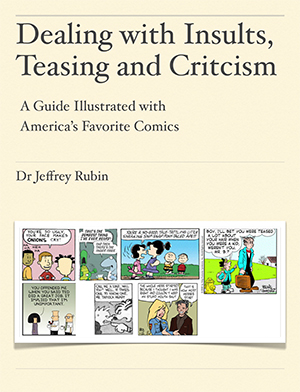
The Times article tried to throw some  light on this when it stated that “Most incidents come with tacit, unsupervised approval of coaches and executives, who see the pranks as a rite of passage, a worthy bit of team building and character strengthening.”  Hmmm.  If the coaches and executives really believe this, what is the reason for their “tacit” approval.  Why not openly encourage this type of behavior?  I think it’s because they realize that there is something not quite right with this explanation.  And if this explanation is not quite right, what is a better one?

We get a clue from the Times’s report when it indicates that the behavior designed to humiliate the rookies is viewed by the veterans as being done “in all good fun” is “entertaining” and leads to “a room full of laughing teammates.”  What would account for the veterans enjoying humiliating the rookies so much?

Here’s what I think.  Veterans recognize that the rookies are after their jobs.  When Joe Quarterback sees a fresh new quarterback on  the team, he says to himself, After all my hard work and effort and all of the damaging blows that I’ve taken for the team, now this young son-of-a bitch wants to take my job.

It seems to me that there is an undercurrent of resentment that comes to most players in this type of situation.  Couple this with the fact that there are always far fewer guys on the team who are rookies, thus making the youngest players a clear minority.  With this combination, we end up with the very same motivation of why so many southerners persecuted blacks for so many years.  Many southerners realized that if blacks were to be treated equally, they would end up competing for the limited jobs in their area.  When blacks were humiliated, those who were doing the persecution found it funny.

In psychology, there is a theory called the “downward comparison theory.” It posits that persons experiencing negative affect can enhance their subjective well-being through comparison with a less fortunate other, the process occurring on either a passive or active basis.  When it is on an active basis, people actively try to create the conditions for others to be less fortunate.  This explains why people persecute others, and it is the real reason why the majority of players are persecuting the younger ones.

To claim, however tacitly, that the humiliating treatment of some in the N.F.L. is to help those being humiliated to develop their character is no different than if white racists claimed they were persecuting blacks out of the goodness of their hearts because they were really seeking to benefit blacks.

selma marchIt is high time that all of us come to understand that to persecute anyone is wrong, period!  Whether we are rookies, blacks, whites, Latinos, Asians, Jews, Christians, Muslims, Hindus, rich or poor, we can all be harmed by prejudice.  It is only by standing strong together as true Americans, that we can transform irrational hatred to wise understanding.

——————————-

Some people will enjoy reading this blog by beginning with the first post and then moving forward to the next more recent one; then to the next one; and so on.  This permits readers to catch up on some ideas that were presented earlier and to move through all of the ideas in a systematic fashion to develop their emotional intelligence.  To begin at the very first post you can click HERE.