Categories
Uncategorized

Cool Steve Deals With An Insult

Jeffrey Rubin, PhD

Welcome to From Insults To Respect.

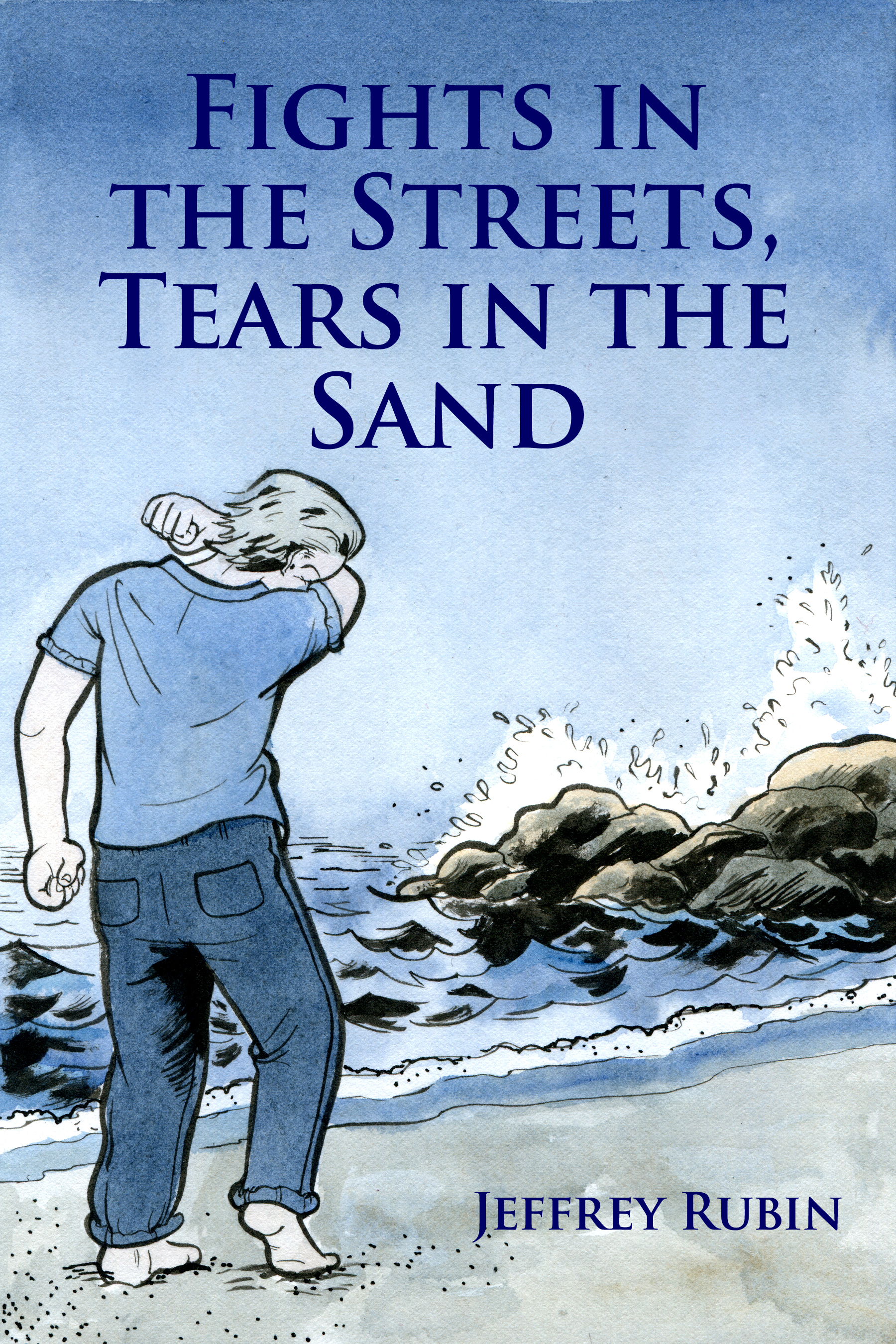
Today, I present a brief story that asks the question, How would someone people respect handle the challenging situation of being insulted? The story is an abbreviated section from my novel, Fights In The Streets, Tears In The Sand. The story’s setting, 1965, Brooklyn’s lower middle class section of Brighton Beach. Jeff Star, one of the two major character’s of the novel and its narrator has begun his second day at Lincoln High, and he is intrigued and jealous as he begins to hear about a classmate some students refer to as “Cool Steve.”

The Story

My second day as a student at Lincoln High, at lunch I spot an open seat at a table. A couple of guys that I recognize from my gym class are sitting there. One of the guys is reading a story in Sports Illustrated with a great shot of Mickey Mantle. The Mick’s neck and forearms are bulging as he’s clobbering a monster home run. There’s another guy sitting next to Cliff, two very nice to look at girls are there as well. I’ll give this a try.

     “Anybody got this seat?” I ask while preparing myself for rejection.

    The guy reading the sports magazine checks me out for a couple of seconds, then replies, “Sit down. I’m Cliff Schweitzer.” The two girls give me a friendly smile and resume a conversation they’re having about what they did over the summer. The other guy at the table completely ignores me.

     “Hey, who do you have for Social Studies?” Cliff asks,

     After checking my schedule card, I answer, “Mr. Lofton.”

     “Is he any good?”

     “I don’t know. I have him for the first time a couple of periods from now.”

    “I got stuck with Mr. Putzmeister,”Cliff says mournfully.

     “Putzmeister,” I reply with a smile.

     “Yeah. I got to get out of there. He’s major league boring.”

     “You only had him for one period,” I reply. “Maybe he’ll get better. You’re interested in history?”

      “Well, to me, a branch of history is ‘The world of sports,’ and I love sports. In fact, I’m writing a column for the school newspaper. It’s called the ‘Sports Scene.’ The first issue comes out on Friday. Check it out. Let me know what you think.”

     While we’re talking, we hear a kid from a nearby table, yelling, “I bet you wouldn’t do that ta Cool Steve!”

     I turn to Cliff. “That’s the second time I heard this name, Cool Steve. You wouldn’t happen ta know him?”

    “Yeah, from Cunningham,” he answers, referring to one of the junior highs that feed into Lincoln. “I guess most of the kids who know him, know him from there.”

     “There seems to be some kind of respect thing connected to him.”

     “Respect? Steve? Well, yeah.”

     “You respect him?”

     “Sure.”

     “How come?”

      “Well, I guess for me it’s got something to do with the fact that he’s a pretty decent athlete. In stickball he’s got explosive power and a rocket arm, and in football he’s got lightning speed and incredible hands. He’s… he’s history in the making! But, um… I got a feeling people would respect Steve even if he wasn’t so great in sports.” Then Cliff’s voice trails off and he looks like he’s searching for a more complete answer but ends up shrugging his shoulder and resumes reading his article.

     Hmmm. I bet this guy Cool Steve is a real jerk. Everybody thinking he’s such a cool dude. I hate people like that.

     As I begin to eat my lunch, I wait for a break in the two attractive girls’ conversation so I could introduce myself. After several minutes pass, without a single conversational pause, one of the two girls at my table begins to check me out. And then she introduces herself.

     “I’m Jane.”

     “We actually call her Mysterious Jane,” says Cliff.

     “Mysterious Jane?” I ask.

     “Well, we call Mysterious Jane, Mysterious Jane, because she’s strange,” he explains.

She might be strange, I think to myself, but she’s mighty fine–long, straight, glossy black hair that slightly covers her prominent cheekbones, voluptuous body. Her green, almond shaped eyes have a thin line of black mascara and perhaps within these glimmering eyes there is a hint of some sort of mysteriousness.

     “I’m Sandy,” says the other girl. She’s cute, with a peachy complexion, and long, wavy, sandy-blond hair. She glances at me and smiles.

    After a quick sandwich, we all go sit on the steps of Lincoln’s main entrance. It’s warm and the sun is shining. Suddenly something catches Sandy’s attention, and she cries, “Who’s that gorgeous guy?”

     Mysterious Jane turns with her large green eyes in the direction that Sandy is looking—down the steps and off to the right. She lets out a long sigh. “Oh, that’s Steve Marino.”

     “That’s the guy the guys call Cool Steve,” says Cliff.

      “Ain’t he built!” Sandy squeals. “You know him?”

     “Yeah, from Cunningham,” Jane replies. “All the girls were nuts about him because, well, a lot of the girls say it’s because he’s so cute. And he is cute, especially his eyes. I l-o-o-v-e his eyes.” This is followed by a moan, and she then drifts off into another dimension.

     Sandy pokes Jane, returning her back to Earth.

     Jane looks over to Sandy, lowers her voice to an eerie whisper and says, “If you want to know the truth, the real reason all the girls are crazy about Steve is because he moves with the grace and power of a large panther, but he has far more power than any panther you’ve ever seen.”

     I think to myself, that Mysterious Jane, she’s strange!

     Watching Steve down the steps, I can’t notice him moving in any special way. He’s tall with dark eyes and hair, like me. But compared to me, Steve is broader and has more of a Paul Newman nose. Mine ain’t nothing to be proud of.

     Anyway, the guy’s gotta be some kind of jerk. People thinking he’s cool, what a jerk. I notice in my innards a sense of jealousy. In junior high, I was far from the most respected kid there, getting into fights and cursing out anyone who looked at me in a way that provoked me even when later I couldn’t figure out why it had. Oh, I had problems at home, my parents were divorced, I was teased about it, and I had an awful relationship with stepdad, but I sense that being jealous of this guy, Cool Steve, who I had not even yet met, made no sense, but still I had crazy angry feelings toward him.

     I’m walking out the south side exit of Lincoln heading home. Images of how I had treated my friend Leroy disrespectfully earlier in the day flashed through my mind.  Hey, I don’t give a crap about this respect garbage!

     Suddenly I hear, “Hey, Jeff Star!”

     I turn to my left and spot Cliff calling after me and he’s with Steve Marino. “Jeff, that guy Steve you were asking about, here he is.”

     As I walk over, I’m feeling a completely unfamiliar nervousness. And then, when I open my mouth, I find myself saying in a loud tough voice, “So you’re Steve Marino. I’ve been hearing about you. The word is you’re a jerk!”

     As I glare at Steve, my heart pounds furiously. From the corner of my eye, I notice Cliff watching on, his mouth closed so tight he seems to have no lips. His words from yesterday come to mind—”Steve’s the best athlete I’ve ever personally known. Big shit!

     I’m waiting for an angry come on, or a quick jab from his right. My muscles are as tight as a hangman’s noose.

     I notice several students who were walking home from school have put on their brakes and their eyes are darting back and forth between me and Steve.

     Steve’s eyes lower, his forehead creases. Then his eyes look into mine and I see, instead of fury, sadness. “I guess,” he begins to say haltingly, “well… I was hoping… you know… starting a new school here… well, I was hoping the kids would like me.”

     Those dark, glimmering eyes of his….

     “Jeff,” says Cliff, “why did you say that?”

     My eyes dart to him and back to Steve. Cold perspiration beads up on my forehead. The students looking on are almost drooling.

     In junior high, whenever I started to put someone down, I had the favor returned with cries of “Fuck you!” and blood splattering fistfights. Such reactions would turn me into a raving lunatic as we would go at each other screaming and swinging until one of us had nothing left to offer but thoughts of revenge. Now, uncomfortably, I look into Steve’s eyes…the sadness there…eyebrows down. He looks directly into my eyes, then down, and then back up into mine.

     “Listen Steve,” I find myself saying,  “I… I don’t know why I said that… everyone I talked with said you were okay.” I take a quick glance at Cliff and the other students watching on…and hurry away.

    A few minutes later, I’m pushing the elevator button in my apartment lobby. Jeez, I guess I just made a great impression, a hell of a great impression. Steve’s eyes… man, who is this guy?

   *.         *.         *

Well, that’s my story for the day. I’m wondering how my readers think Cool Steve handled the insulting situation. Any views on how Steve or Jeff could have handled the situation better?

My Best.
Jeff

Categories
conflict management conflict resolution Racial Discrimination

How Would Cool Steve Handle This?

Welcome to From Insults To Respect.

Today, I present a brief story that asks the question, How would someone people respect handle the challenging situation of racial discrimination? The story is an abbreviated section from my novel, Fights In The Streets, Tears In The Sand. The story’s setting, 1965, Brooklyn’s lower middle class section of Brighton Beach. Jeff Star, one of the two major character’s of the novel and its narrator has begun his first day at Lincoln High, and he begins to hear about a classmate some students refer to as “Cool Steve.”

The Story

Fights in the Streets, Tears in the Sand

After English, I’m heading to Biology and some guy behind me says to someone next to him, “Hey, Cool Steve’s in my health class!”

     “Wow, Cool Steve! Really!?”

     “Yeah! He sat right next to me.”

     “Damn! Hey, tell him I say hi.”

     There’s an excitement that accompanies this dialogue that somehow has me going, hmmm.

     I go to Math and as I’m entering the room, I spot an old friend from Brighton Beach—Leroy Wilson. We recently had lost touch with each other because my family, when I was twelve, had moved from Brighton to Bensonhurst when my mom remarried. Leroy and I got together a few times after that, but after a bloody incident at a car repair shop that involved a close friend of mine, his mother wouldn’t let him have anything to do with me. I didn’t expect to run into Leroy at Lincoln. He and a few of the other kids my age who I knew from Brighton had always gone to either a Catholic school or a Yeshiva.

     It was Leroy who had taught me to play the guitar. Man, we were really driven back when we were twelve and thirteen with this dream of becoming the greatest rock ‘n’ rollers ever. And when we would get a song down just right it was a wild thrill beyond compare—lightning and sparks everywhere. So, when I first see Leroy, I smile. But then it hits me. Leroy is black. In Boody Junior High, if any white kid was to be nice to a black kid, he would have been taunted.

     How would the white kids at Lincoln react if they learn I have a black friend? Over ninety percent of the guys at Lincoln are white. I should be siding with whites, the more powerful group, the majority. Crap, he’s gonna blow my cover.

       “Jeff! How’s ya old self doin’?” cries Leroy as he spots me.

        I look up into Leroy’s eyes and then down at the wood classroom floor—my heart racing. Quickly, I move to an available seat that’s surrounded by seats other students are already sitting in. I avoid looking at Leroy, but I can feel him looking at me. All through class my eyes avoid his, but my heart grapples with his presence. When the period ends, I race out of class.

        One more class to get through before I can head home for the day. In the hall, with hundreds of students racing by, and a couple of guys bumping into me, I check my program card—Social Studies, Room 316. I have to go up a flight of stairs. I look around for a stairwell. There’s one, down the hall. How could I treat Leroy like that? Leroy’s dark confused eyes flash before me.

      “I’m Mr. Lofton,” announces a heavy-set, fortyish-aged teacher. “Welcome. Today we’re going to review some of the major news events of the summer. Then, later in the school year, we will be connecting our social studies lessons with these and other current events. I have some newspaper clippings here. As I read them, I want to get your reactions.

     “Crime at highest level ever,” cries Mr. Lofton. “Latest statistics indicate 13 percent increase. When I was a boy, we used to camp out in Central Park. Now you’d be crazy to go there at night.”

     I think about the newspaper story I read last week of Coney Island boys who were stabbed.

      “Ignoring Nazi pickets and bomb threats, the Reverend Dr. Martin Luther King moved into Washington’s ghettoes and told crowds of his admirers that economic freedom is the new cry of the civil rights movement. A dozen brown shirted American Nazis picketed with signs saying, ‘America for whites, Africa for blacks.’”

      Man, how I treated Leroy. Am I turning into a Nazi? Leroy’s dark confused eyes. An image of an exhilarating scene of us playing “Johnny B. Goode.” Am I turning into a jerk to be respected?

     After school, I walk to Rocco’s Pizzeria over on Brighton Beach Avenue. Rocco is shoveling a new pie out of his large steel oven. I take in deeply the familiar aroma of baking dough, oregano, cheese, and Rocco’s underarms.

    With a slice and Coke in hand, I discover none of the tables are empty. At one of them is this guy Brainy George Beck sitting by himself with his blond hair looking like it hadn’t been combed in months. I had noticed him earlier in the day in my gym class and he sat at my lunch table. “How come they call him Brainy George?” I had asked one of the guys in gym.

     “Da guy’s a freakin’ genius,” came the reply.

      With nowhere else to sit, I ask if he’d mind if I sit across from him. He looks up with these large thick glasses and nods his okay. “You were in gym today and at our lunch table,” he says as I sit down.

      “Yeah.”

       “I hate gym.”

        “You do?”

         “Can’t stand it—all the retards trying to prove they’re Mr. Atlas.”

         “Hmmmm.” Personally, gym is a whole lot better than the rest of the garbage we gotta take at school. “What junior high did you go to?” I ask.

         “Cunningham.”

         “That’s the same junior high as this kid some are calling Cool Steve. I guess ya don’t think much of him since he’s inta sports.”

          Oh, you mean Steve Marino? Steve’s different than the guys I’m talking about.”

          “Izzat so?”

           “Yeah. I respect Steve because, well, first of all, he’s not one of those idiots who picks on me because I can’t run as fast as the other guys. And I like the way he’s gutsy. He’s not afraid to stand up for what he believes in. And it’s the way he carries himself… the way he moves. I… I just have a lot of respect for Steve.”

          Hmmm. Well, being gutsy shouldn’t be too hard, I think to myself. Hell, I was gutsy enough to get in lots of fights in my old school. But I don’t quite know what to make of this stuff about the way Steve moves.

When I get home, I go into my bedroom, sit on my bed, pick up my guitar and start to slide my fingers across the strings. Then I find my fingers playing a little piece that my former black friend, Leroy had taught me. It begins with a sort of angry, rough part, but closes with a gentle refrain. As I play, I imagine Leroy playing along, just like the old days. We start to kick it up, jamming up a storm, reelin’ and rockin’ all night long! And then that image of his dark eyes returns to me—how they looked in class—confused, hurt. I wonder, How would this Cool Steve handle this?

*                                  *                                  *

Good Question. The search for the answer is a story for another day. For now, I’m asking my readers who have the courage to propose their answers.

My Best,
Jeff

———————————
Some people will enjoy reading this blog by beginning with the first post and then moving forward to the next more recent one; then to the next one; and so on. This permits readers to catch up on some ideas that were presented earlier and to move through all of the ideas in a systematic fashion to develop their emotional intelligence. To begin at the very first post you can click HERE.

Categories
blame blaming guilt guilting mental disorders Mental Health responsibility

A Lesson From The Play, Next to Normal

Welcome to From Insults to Respect.

This week I happened to watch on TV the play Next to Normal. It dramatically and musically brought forth a wealth of thoughtful and emotional reactions. I can’t, in a single post, express all of these, so here, I’m going to focus on just one–the issue of blaming those given a mental disorder label and their parents for how they are acting and experiencing.

The Play’s Main Plot

A woman who had a baby that died in infancy continued to grieve after four months. A psychiatrist, therefore, has classified her as having a mental disorder and has been prescribing psychiatric drugs for depression. Because his patient also imagines that the baby is still alive, and on birthdays she sees him growing up, and she regularly has conversations with him, the doctor has been prescribing an additional cocktail of drugs. As we enter the play, we see the drugs have certainly not relieved the woman from her or her family of the anguish that has come about. The imagined baby has grown to be a teenager. Her family, made up of her husband and teenaged daughter, are deeply concerned and support the psychiatrist’s treatment recommendations. Treatment during the play changes from drugs, followed by an hypnosis approach, and finally Electroconvulsive Therapy (ECT), none of which lead to satisfactory results.

My Reaction To The Play

In my training as a psychologist, I learned to avoid blaming people who act in ways that lead to a mental disorder classification or their parents. Blame implies thinking someone is guilty of doing something wrong.

If I perceive that someone has done something wrong and I become frustrated and angry at the person and I begin to seek to punish the person, I view that person as guilty.

For example, if I make a wrong turn to go to my friend’s house and when I discover my error if I have a strong emotion of frustration that springs up in me and I cry out, “What an idiot I am for making that mistake,” I am feeling guilty that I made the mistake, and the reason I am calling myself an idiot is because it is my angry effort to punish myself.

I use that specific type of definition for “guilty” to distinguish it from how I define responsibility, which I view as a more mature response. When people act responsibly, they recognize that they did something wrong, experience a strong feeling of frustration, recognize at the same time that as long they are a human being they are going to make mistakes. They recognize that the strong feeling of frustration is a good thing because it leads them to focus on what they did wrong, and the emotionality helps spur a process that increases the possibility of fixing the error in the long term, decreasing the chance that they will make the same mistake. Part of this frustration reaction leads me to focus on what I can specifically do next time to prevent the mistake. This is a wonderful process, and I welcome the experience as I would a helpful friend. When I see guilt springing up in me, I have been getting more and more skillful at transforming it into my helpful friend.

It seems to me beneficial to keep the idea of angrily desiring punishment when someone does something wrong separate from the idea of learning from the experience of making a mistake by experiencing frustration in a friendly, non-punishing manner. If you see that your five-year old son has made a mistake when trying to add 7 plus 3 and he came up with 9, you may see that he has done something wrong, but you might experience this as somewhat different from when you feel someone is “guilty” of doing something wrong.  You may think that your son almost got the right answer, and he’s trying, and this is part of a useful learning process. You might not feel angry at him, nor think he deserves to be punished for his efforts. Perhaps you might gently correct him and give him a warm smile.

Although I am pretty good at avoiding the blaming game, from time to time I slip up and become angry at what I’m perceiving is happening with people dealing with mental health concerns. This play, so well done, has helped me to better reconnect with the habit of making the distinction between guilting and taking responsibility as I conceptualize them.

The music, singing, and dialogue blend together to avoid simplistic interpretations of events and filled me with empathy for the complexity of dealing with such challenging circumstances. I was left thinking that people embroiled in the types of situations that the play depict would do well to learn for themselves the difference between blame and responsibility. Moreover, it seems to me that it takes more than just noting the difference; it takes practice to turn this understanding into a useful habit. One useful practice is to identify five times when you found yourself employing guilting, and then see if you can write out a way to turn them into a response that better matches a responsibility response.

My Best,
Jeff


Categories
Aging Bob Dylan Forever Yonug melancholy Parental Wishes

On Bob Dylan’s “Forever Young”

Welcome to From Insults to Respect. 

Recently, upon turning 75, I was reflecting upon how my remaining days have become fewer and fewer. Accompanying these thoughts were some pretty bluesy feelings. Suddenly, the Spotify music streaming I was listening to, Bob Dylan’s “Planet Waves” album began to play, “Forever Young.” “Oh, to be young again,” I thought.

The first few lyrics of the song go:

    May God bless and keep you always
     May your wishes all come true
     May you always do for others
     And let others do for you
     May you build a ladder to the stars
     And climb on every rung
     May you stay forever young

The line, “May you always do for others…” hit me pretty hard. I always prided myself as carrying my own weight. When I retired as a psychologist, I decided to continue to make contributions to others by writing a blog, completely financially free, that seeks to offer help for people who want to improve how they get along with others and themselves. The first few years of this, I was writing a blog post every week. Now, I struggle to get one out monthly, my energy slipping. I moaned at the thought of this.

Feeling this way, I wondered if others felt the emotional impact of the song as I have. I notice that on Spotify, most of the songs on the album have one or two million plays. “Forever Young” in contrast,  has over 34 million. Impressive. I then went to Wikipedia to see if there is a writeup on the song, and indeed there is. I found that Bob had written the song as a lullaby for his eldest son, Jesse, who was a youngster at the time. I was a bit surprised by this, because my initial interpretation of the song was that Bob, himself, was expressing his own struggles with feelings of growing older.

With this insight, I decided to ask my son, Jack, who has a young daughter, what thoughts and emotions the song brings up for him. He replied:

“When I hear “Forever Young” while thinking about my 5-year old daughter, I think about the beautiful freedom and lightness in her laugh and her smile. She experiences so much genuine joy.  I know a big part of that is that the world she knows so far is one of safety and love. She hasn’t yet learned about war and violence and greed, and many of the really hard things people face in this world. So when I hear the refrain of “may you stay forever young” I think of a wish for her to have the resilience to keep her big heartedness and her playfulness and the wonderful twinkle in her eye even as she grows up and becomes more aware of all the heavy things in life. And I feel a commitment in myself to do all I can to be there for her and remind her that she is loved even as she faces the challenges of her life.”

Nice! I very much can respect those feelings. Somehow I’m having a harder time respecting some of mine about getting older. As I listen to the song’s final verse, it expresses hope that,

    May your hands always be busy
     May your feet always be swift
     May you have a strong foundation
     When the winds of changes shift
     May your heart always be joyful
     And may your song always be sung
     May you stay forever young
     Forever young, forever young
     May you stay forever young.

Here, again, I find there some words that have me struggling with my emotions. The lines about “May your feet always be swift”  hit me like a walloping club. In my youth, after work I would run two miles, sprinting the last quarter mile, which left me feeling so full of life. Now, I still manage to cover two miles, but it’s a walk, and the last quarter mile has me looking forward to finishing it up so I can lay down on my bed for a while until I can get enough energy to resume the rest of my day.

Oh, the winds of change have come upon me, and my heart has not always remained joyful. Though there are periods of joy–a beautiful day with family and friends, the delight of spending time with my lovely granddaughter, the recognition of the fantastic loving relationship I have with my wife–I am still seeking to adjust to this change. I’ve felt for a long time that we can learn to respect ourselves despite not always being joyful. I’m thinking melancholy in life can be useful in some ways, deepening one’s perspectives. Although this is my accepted understanding in most of life’s challenges, with this new experience related to getting older, my recent limitations are still hard on me. If you are having similar experiences, perhaps you will find some comfort knowing you are not alone.

My Best,
Jeff

Categories
Uncategorized

On Bob Dylan’s Song, “Disease Of Conceit”

Welcome to From Insults to Respect. 

One insult we often hear is someone being called conceited. On Oh Mercy, Bob Dylan’s 1989 album, he has a song titled “Disease of Conceit” that powerfully, poetically, and musically captures the emotions that can come about from this behavior. Emphasizing each of his major visceral reactions related to conceit are crashing piano chords, and as the song drifts into its conclusion, we are treated with a deeply sad, bluesy strain from a guitar.

I present this post to my readers with the hope that by coming to associate conceit with the emotional feel of the song’s lyrics, it just might lead us to modify what we say about ourselves in a more respect promoting manner. It opens with these words:

There’s a whole lot of people suffering tonight
From the disease of conceit
Whole lot of people struggling tonight
From the disease of conceit
Comes right down the highway
Straight down the line
Rips into your senses
Through your body and your mind
Nothing about it that’s sweet
The disease of conceit

Vividly, we see the narrator sees conceit as awfully harmful. In thinking about this, it might help us to contrast it with an example of its opposite–self effacing behavior. Consider the reaction Abraham Lincoln brought forth when Stephen Douglas called him two faced during a debate and he responded, “If I had another face, do you think I would wear this one?” By all accounts, the audience loved it.

The next verse goes on to tell us:

There’s a whole lot of hearts breaking tonight
From the disease of conceit
Whole lot of hearts shaking tonight
From the disease of conceit
Steps into your room
Eats your soul
Over your senses
You have no control
Ain’t nothing too discreet
About the disease of conceit

These lines led me to think about what is it about conceit that the song’s narrator finds so emotionally troubling. Perhaps it’s at least partly because conceited people often come across as thinking the world revolves around them, while suggesting as well that they have an underlying insecurity about their own worth. Listeners of a conceited person are typically far more interested in getting credit for what they and others that they care about have contributed to tasks and are of value to their group. There is indeed a place for gentle self-promotion, but it works much better by showing along with it an appreciation for the other listeners. People often experience conceited people as emotionally draining.

The next lines of Dylan’s song go,

There’s a whole lot of people dying tonight
From the disease of conceit
Whole lot of people crying tonight
From the disease of conceit
Comes right out of nowhere
And you’re down for the count
From the outside world
The pressure will mount
Turn you into a piece of meat
The disease of conceit

Hmmm? I found myself, upon hearing the line about people dying from the disease of conceit, wondering if perhaps it might be an overstatement. I personally haven’t directly observed someone dying from such behavior. Perhaps the narrator means emotionally dying. Dylan often employs vivid metaphors to capture issues he feels strongly about. Still, although I don’t see people in my community really physicallyy dying from conceited behavior, perhaps there are indeed situations when it can be that harmful. This led me to think about some societies. Hitler’s Germany during World War II, for example, had a society that had many who believed that they are so superior to other folks that it entitled them to massacre those who are viewed as inferior. In addition to the massacre of people viewed as inferior during that war, military and civilian fatalities are estimated at 50–56 million, with an additional estimated 19–28 million deaths from war-related disease and famine.

The last set of lines of Dylan’s song goes,

Conceit is a disease
That the doctors got no cure
They’ve done a lot of research on it
But what it is, they’re still not sure
There’s a whole lot of people in trouble tonight
From the disease of conceit
Whole lot of people seeing double tonight
From the disease of conceit
Give ya delusions of grandeur
And a evil eye
Give you the idea that
You’re too good to die
Then they bury you from your head to your feet
From the disease of conceit
Here again Dylan paints a vivid portrayal of feelings that come about from being around conceited individuals. I hope they challenge us to think about our own tendencies to promote ourselves without being sufficiently supportive of others.
My Best,
Jeff
Categories
Uncategorized

Civil Discussions With Political Adversaries

Welcome to From Insults To Respect. 

Recently, I came across an article by Hanna Wallace that presents in a Q&A format a discussion with Mónica Guzmán, author of the book, I Never Thought of It That Way: How to Have Fearlessly Curious Conversations in Dangerously Divided Times.

David Byrne

The article appears in Reasons to be Cheerful, a nonprofit publication founded by artist and musician David Byrne, who tells us he believes in the power of approaching the world with curiosity—in art, in music, in collaboration and in life.

In the article, Ms Guzmán argues that siloing–the tendency for people to just listen to media outfits and others who agree with their political point of view–can lead to dehumanizing the “other side.” In contrast, thoughtfully engaging with those with  different views leads to building bridges and challenges us to freshen our thinking.

There are risks with these types of challenges. Some people, upon hearing that you disagree with them, can immediately decide they don’t like you. Vilifying anyone who disagrees with your political views is such an automatic visceral response for many people that it takes courage to engage. In my post today, I suggest an approach to engaging with people who disagree with you in a manner that greatly reduces this risk.

A Relatively Safe Approach For Having Discussions With People Who Differ From Your Political Point of View

Consider, if you will this approach. As political issues arise, before presenting your view, let those who are listening know that you are interested in civilly participating in the discussion if they are open to this. Then, listen to the tone of voice of the responses. If any appear to respond angrily, listen fully to the angry party or parties, really show you are listening to what is being said. People really value being listened to.

Then summarize the expressed opinions in an animated manner absent an angry tone of voice. In as friendly a manner as you can muster, provide thanks for the sharing of views and express real interest in the topic. Leave it at that. I understand that by doing so, you might be concerned you are leaving what had been said having given the impression that you agree with some or all of what had been said, which you may be loath to do; but keep in mind that if others who are engaged are expressing anger at the very start of this conversation, there is little hope of changing their minds.

If, after your summary, someone asks you for your views on what had been said, repeat saying, “I’d love to discuss these issues further, but only if we are all open to discussing the issues civilly.” Presenting the idea of a civil discussion could motivate the angry folks to put some breaks on their anger. If anger displays continue, I suggest listening to what is said, but avoid presenting your opinions.  You can get around this issue by saying you are still in the midst of considering my opinion.

If those present show an openness to a civil discussion, after listening thoroughly to positions in which you disagree, and then summarizing these positions in as favorable light as you can, then say, “I have heard the following counter arguments, and I’d be very interested how you would respond.”

Notice that you don’t claim that these counter arguments are something you personally believe. Instead, you are showing an interest in what others in the discussion think about the counter arguments, while also demonstrating you are open to hearing, and thoroughly listening to, counterarguments. By engaging in this manner, going back and forth with airing both sides, you leave yourself open to making nuanced modifications in your point of view without becoming too attached to what you had previously said, and clarifying points that have been misunderstood.

Any name calling on your part regarding any of the positions being discussed is a definite no-no. And your tone of voice is crucial during this type of discussion. You want to present yourself as curious about the issues, but not completely sold on any one position.

Another point well worth considering, is to not rely solely on facts. When making any point, see if you can attach it to a personal experience that those who are making counter arguments to your own can emotionally relate to. Facts are fine to some degree, but neglecting personal emotional arguments is perhaps the biggest mistake we too often make.

As an example, if you are opposed to someone’s proposal to cut Medicaid benefits and you personally know someone who, if they lost their benefits, and would thus face dire health consequences, describe that person in very personal terms, along with the troubling consequences if the cuts proposal did go through. Then see if you can make some additional personal emotional connections to the person or persons expressing cuts to the program.

In the end, express thanks for the discussion, and if some of what was said really upset you, take a walk until you have calmed down.

It has been my experience that this type of approach will increase the chances that more people will productively hear your dissenting views while reducing the chances of antagonizing those who disagree with them.

Now, I understand many people believe it is a total waste of time to discuss politics with others with whom they disagree. People, they believe, are just too set in their opinions. However, even in the most deeply held beliefs within the realm of religion there are often cases of people undergoing conversions. William James,’s wonderful book, The Varieties Of Religious Experiences, not only provides numerous examples, but insightfully provides the process that led to these.

In the realm of politics, I can share my own conversion experience. In 1965, when I was 15, I fully supported the Vietnam War. During my 16th and 17th years, through many discussions and learning of several horrible experiences that soldiers were having over there, I began to have some doubts about the wisdom of the war. By October of 1968, I had completely turned against it.

So, I now believe minds can change, especially when exposed to ideas in certain ways. If you agree, I hope you consider trying some of the ideas shared here.

My Best,
Jeff

——————————-

Some people will enjoy reading this blog by beginning with the first post and then moving forward to the next more recent one; then to the next one; and so on. This permits readers to catch up on some ideas that were presented earlier and to move through all of the ideas in a systematic fashion to develop their emotional and social intelligence. To begin at the very first post you can click HERE.

Categories
Bob Dylan Learning from mistakes

Thoughts on Bob Dylan’s Song, “It’s All Good”

Welcome to From Insults to Respect.

In a recent post titled, “Is Depression Really So Bad?” I presented the theory that conceptualizing depression as an awful mental disorder too often discourages active coping beyond taking a pill. In contrast, if we frame depression as potentially a healthy functional signal, it may lead to less self-stigma and greater self-efficacy in making healthy life-style improvements.

Quite a few folks objected to my even asking the question. To them, depression is every bit as bad as anyone can imagine.

A few psychotherapists I ran into, in contrast, were open to the healthy functional signal idea.However, one such person who was generally supportive, felt there were times when we might want to first consider the particular reason why someone might be depressed. Thus, he pointed out that sometimes, for example, someone becomes depressed because a loved one dies. He went on to say,

“It’s almost five years ago that my lady died. I’m lost now. Depressed? I don’t know. But I do feel rotten, frozen, angry, and bored. And, indeed, there were people telling me that from my misery something good will happen. Mildly spoken, I sent those to Hell.

To defend my theory that depression, viewed as a healthy functional signal, might lead to more benefits than pathologizing it, I provided a variety of biographical examples of people making significant improvements in their life that had sprung from their depression experiences. For example, the great writer, Leo Tolstoy, described in his own words his bout with his suicidal two-year period of despair.

“I felt that something had broken within me on which my life had always rested, that I had nothing left to hold on to, and that morally my life had stopped. An invincible force impelled me to get rid of my existence, in one way or another…. Behold me then … hiding the rope in order not to hang myself from the rafters of the room where every night I went to sleep alone; behold me no longer going shooting, lest I should yield to the too easy temptation of putting an end to myself with my gun.”

And yet, his depression stimulated a gnawing questioning that eventually led to one insight after another. His trouble had not been with life in general, not with the common life of common men, but with the life of the upper, intellectual, artistic classes, the life that he had personally always led, the cerebral life, the life of conventionality, artificiality, and personal ambition. He had lived wrongly and had to change. And change he did, which led to deeper meanings. “After that,” Tolstoy wrote, “things cleared up within me and about me better than ever, and the light has never wholly died away.”  According to Tolstoy, his suicidal feelings disappeared, and he went on to live a productive life until he passed away at the age of 82 of natural causes.

In a similar manner, I discussed how depression led to valued changes in the lives of Abe Lincoln, Joni Mitchell, and others. And then, a few days ago, I happened to be listening to Bob Dylan’s upbeat tempo song, “It’s All Good.”

At first I interpreted it as satirical, for the examples he gave as being all good were hardly likely to be viewed that way. But then I thought that perhaps there just may be some value in thinking that not only depression experiences might be a healthy process, perhaps there is some value, whenever we meet up with something that strikes us as bad, to pause, and consider if there just might be something within the experience that might lead to, or suggest, in some way, something good.

Consider the first verse of Bob’s song:

Talk about me babe, if you must
Throw on the dirt, pile on the dust

I’d do the same thing if I could
You know what they say, they say it’s all good
All good
It’s all good

Bob’s song brings up an event that typically people prefer not to happen, that is, his babe talking dirt about him. But then he says in a cheerful voice, he’d do the same thing if he could, and it’s all good. How might we interpret these lyrics if we don’t just assume he is being simply satirical?

How about this? The lyrics about the event being all good is designed to provoke us to pause, and then think, how I, the listener of the song might derive something good from such an event. From such thinking, I came to realize that how I had acted might have led to the dirt being said about me. And upon further consideration, I came to realize how I might have been wiser to have acted in some better manner. I also realized I would have thrown dirt back at her if she had done something similar that led to the dirt being thrown at me, but I can’t because my babe didn’t give me any reason to do so. In thinking about how this could have gone down, perhaps some wiser way to act in the future would begin to come to light.

Often, many of us merely get angry about what “bad” had happened and lash out at anyone who might be considered at fault. By pausing instead, and asking ourselves to consider what good just might come about from a challenging event may take us to something that is indeed all good.

With this in mind, let’s consider Bob’s next verse,

Big politician telling lies
Restaurant kitchen, all full of flies
Don’t make a bit of difference, don’t see why it should
But it’s all right, ’cause it’s all good
It’s all good
It’s all good

It’s not so easy for me to see how one can interpret this verse as all good, but my point is not that every time we pause to consider if something of value will come to mind. Rather, that it is all good that we indeed go through this type of consideration.

Well, those are some thoughts that came to me as I considered Bob’s intriguing song. I hope they offer something worthy to consider.

My Best,
Jeff

Categories
addiction Alternative to mental health treatment antidepressants Antidepressants effectiveness Mental Health pharmaceutical Industry psychiatric drugs psychiatric medications

Are Psychiatric “Medications”Essentially The Same As Recreational Drugs?

Welcome to From Insults to Respect. Today we shall look at a theory that is certain to fire up some mighty strong emotions.

Most advocates within the medical profession say their prescriptions for psychiatric drugs, which they refer to as “medications,” improve the health outcomes for their patients. There are some within the profession that fervently object to this claim and provide extensive research evidence for their position, but nevertheless are clearly a minority. Meanwhile, taking legal and illegal recreational drugs are mostly viewed as distinctly different not only by medical doctors, but a majority of those in the general population.

That said, I do think it is useful for us to look at the case that although there are some differences, essentially they are the same when it comes to opportunities to 1. assess side effects/toxicity as one makes decisions to partake, and 2. what keeps users to continue consuming them.

Assessing Side-Effects and Toxicity

The Food and Drug Administration provides readily available information on the internet, regarding the side effects and toxicity of these substances. Updated research on this information is regularly appearing in the press. For example, we have recently seen stories about how even one glass of an alcoholic beverage can have negative effects on some aspects of health outcomes.

Anyone who wants to delve into a more thorough assessment of health consequences of any of the legal and illegal recreational drugs and psychiatric drugs can do a literature search. I have found Google Scholar fairly easy to use for this purpose. It provides the abstract of the research for free. There is an occasional pay wall that can be modestly costly in order to read the entire paper, but anyone who wants to make a fully informed decision on the risk of partaking can obtain the available evidence at a reasonable cost. Many of the published evidence can be misleading particularly because most studies look at just short-term results, yet many folks take these drugs for much longer. But this is true for recreational and psychiatric drugs, so assessing safety is hardly perfect regardless of what drug is being considered.

The Physical and Psychological Reasons People Continue to Consume These Legal, Illegal, and Psychiatric Drugs Are Essentially the Same.

Let’s begin this theory by using nicotine as an example and by taking a close look at an impressive study in the scientific literature (see HERE).

smoking 5Our body, upon beginning the habit of consuming nicotine, at first fires its receptors more frequently than usual upon each exposure to this drug. This leads to feeling more alert, which some of us experience as rather pleasant. But your body recognizes that if you were to keep firing those receptors at the pace that occurs when you first start smoking, certain functions in your body will end up exhausted. Thus, your body starts to reduce the number of these receptors. In the scientific literature, this process is called “down regulation” or “tolerance.”

For smokers, we see evidence of tolerance in studies that indicate fewer responses than do non-smokers to the same amount of nicotine (Perkins et al. 2001b). More specifically, we see a reduction on measures of subjective stimulation that may be viewed as pleasurable, such as arousal, vigor, and a subjective experience often referred to as “head rush” or “buzz.”

Once the down regulation process is complete, you end up with enough receptors to function fairly well as long as you continue to consume using this drug. withdrawal 2However, shortly after you pause from smoking even for a few minutes, you end up not having enough of these receptors to do what they were originally designed to do. It is this shortage of receptors that occurs when there is not enough nicotine in your system to keep your receptors firing at a rate that would typically occur if you were not regularly consuming the drug that leads to the uncomfortable, sluggish, stressful feelings that lead to a craving for the next cigarette. When you light up, you feel relief because now the reduced amount of receptors are sufficient to carry out your major life functions in a less distressed manner.

The relief that smokers feel each time they give themselves another dose of nicotine creates the powerful illusion that cigarettes help them to deal with stress. Thus, in a study published in the American Psychologist, researchers found the following:

smokingSmokers often report that cigarettes help relieve feelings of stress. However, the stress levels of adult smokers are slightly higher than those of nonsmokers, adolescent smokers report increasing levels of stress as they develop regular patterns of smoking, and smoking cessation leads to reduced stress. Far from acting as an aid for mood control, nicotine dependency seems to exacerbate stress. This is confirmed in the daily mood patterns described by smokers, with normal moods during smoking and worsening moods between cigarettes. Thus, the apparent relaxant effect of smoking only reflects the reversal of the tension and irritability that develop during nicotine depletion. Dependent smokers need nicotine to remain feeling normal. The message that tobacco use does not alleviate stress but actually increases it needs to be far more widely known.

drug withdrwal 1Theoretically, this same process is largely the reason why people become addicted to other substances, such as alcohol, caffeine, illegal drugs, and even the drugs that psychiatrists prescribe, such as the so called antianxiety drugs (anxiolytics), antidepressants, and ADHD stimulants such as Ritalin. They all have the potential of creating for addicted people the illusion that they are functioning better than they did before they started consuming the addictive drug.

Another major part of the addiction process is that the addictive substance often is used as part of a ceremony creating a very pleasant experience. As an example of this, listen to the actor John Cusack explaining his smoking habit:

John Cusack

John Cusack

To me, cigars are a much better situation than cigarettes. Cigarettes are compulsive and cigars are kinda, languid, luminous conversation. Like you’re gonna sit for a couple of hours and talk to somebody. If you gotta smoke, I would say, at least have a long conversation with someone you like, rather than just compulsively sucking down a cigarette. That’s how I’m gonna lie to myself so I can keep smoking cigars.

Although the cigarette habit is not John’s cup of tea, many people have fond associations of sharing a cigarette with others, and drinkers have associations of some very good times hanging out with their buddies. Of course, others have very negative associations with an addictive substance.

Can it be that the same two mechanisms–reduced receptors and pleasant ceremony– that creates the illusion for nicotine users are similar for other drugs that are the other legal, illegal, and psychiatric drugs?
Clearly, regular users of alcohol go through a withdrawal reaction when they don’t get a drink around the time they usually imbibe. We get a delightful sense of this listening to Jimmy Buffet singing about it being five o’clock somewhere and his desire for the relief he needs by taking a swig of his favorite intoxicating drink.

How intense the need can become is powerfully brought home to us during Ray Milland’s Academy Award winning portrayal of Mr. Birnam, an alcoholic in the movie, “The Lost Weekend.”

Ray“Just give me a drink,” says Mr. Birnam with exquisite anguish.
The bartender, in a disbelieving voice: “Mr. Birnam, this is the morning!”
“That’s when you need it most, in the morning,” Mr. Birnam replies with disgust. “Haven’t you learned that yet! At night, it’s a drink, in the morning, it’s medicine!”

Like nicotine, regular consumers of alcohol get a pleasant relief from the sensation of drug withdrawal reactions, and it is often associated with particularly good times.

Often, it is a combination of these drugs that work together to create the illusion that they are a type of “medicine,” relieving stress and feeling an improved sense of being.

Consider Jerry Irby who tells us in his song, One Cup of Coffee and a Cigarette:

IrbyHotlineNow when I get up in the morning
And I’m feeling mighty low
There’s just one thing that will pep me up
And I want you all to know.
Well it happens every morning
No matter where I’m at
I just gotta have a cup of coffee
And a cigarette
Coffee, coffee,
And a Cigarette
Is a habit
That you can’t forget…
There is no doubt that each of the legal, illegal. and psychiatric drugs have powerful withdrawal actions that is relieved when one once again consumes them. The ceremony that medical doctors use to encourage their patients to use psychiatric drugs involves a highly respected professional describing a process in which people often report feeling better as a result of consuming their prescription.

With so called “antidepressants” the withdrawal reaction is referred to as “Antidepressant Discontinuation Syndrome.” It causes a variety of symptoms like nausea, insomnia, fatigue and achiness. Interestingly, prescribing doctors of these drugs, when the patient reports not being helped by the first prescribed drug, often will prescribe others, and even a cocktail of others until the patient reports improvement. During this time the patient might have improved without the drug but attribute feeling better to the drug.

Different people find some drugs pleasant when they first try them while others are not. I know someone, for example, who loves his cigarettes but doesn’t like how marijuana makes him feel. The process that doctors use when trying different prescriptions until one is found that the user happens to feel better on serves this illusion creating process perfectly.

Support for the theory I am putting forth comes from several studies.

People Who Get Over Depression Without “Antidepressants” Do Better Than Those Who Had Taken Them

A recent publication in the journal American Psychologist by Professor Steven Hollon neatly summarizes what I am referring to.

Depression is an inherently temporal phenomenon. Any given episode tends to remit spontaneously even in the absence of treatment but recurrence is common (at least among people seeking treatment). There is reason to believe that depression may be an evolved adaptation (like pain or anxiety) that increases reproductive fitness (the likelihood that one’s gene line will pass on). If so, then any treatment that facilitates the functions that depression evolved to serve is likely to be preferred to one that only anesthetizes the distress.  

After this opening statement, Prof. Hollon provides a more complete description of his theory:

Depression is an adaptation that evolved because it keeps organisms focused on (ruminating about) complex social issues until they can be resolved and that medications work not so much by addressing a nonexistent deficit in neurotransmitters in the synapse as by perturbing underlying regulatory mechanisms to the point that they reassert homeostatic control over those systems. If the latter is true then medications may work to suppress symptoms in a manner that leaves the underlying episode unaddressed and patients at elevated risk of relapse whenever they are taken away. 

So, I hope you will consider this theory of the illusion regarding how helpful these drugs are and please feel free to express your reactions in the comment section below.

My Best,
Jeff
———————————
Some people will enjoy reading this blog by beginning with the first post and then moving forward to the next more recent one; then to the next one; and so on. This permits readers to catch up on some ideas that were presented earlier and to move through all of the ideas in a systematic fashion to develop their emotional intelligence. To begin at the very first post you can click HERE.
Categories
Forgiving

Can We Really Forgive Everyone?

by Jeffrey Rubin, PhD

Dr. Jeffrey Rubin

Welcome to From Insults to Respect. 

Recently, I began to think about forgiveness. It started while writing my previous post, “Saying Goodbye at Life’s End: A Meditation on Bob Dylan’s Song, ‘When the Deal Goes Down.’ In the song, Bob has a line that says,

We learn to live and then we forgive
O’er the road we’re bound to go

Where is the road bound to take us in this song? As I listen to its sad tone, I found myself interpreting these words as referring to our last days of life. I wondered, who are we to forgive for the fact that if we are born, we ultimately must end up dying. Are we to forgive nature or God for this sad state of affairs? To forgive is an intentional decision to let go of grudges, resentment and anger. My rational justification over the years for not forgiving has relied on two principles–1. most people want to be liked and respected, and 2. if I express my not forgiving to others about something I became angry about, it might promote the idea that such behavior leads to grudges, and as more and more people become aware of this, it might motivate people to behave better. At the same time, I’m aware that whenever I express anger toward someone whom I happen to be holding a grudge, this can provoke anger right back at me, perhaps leading to the person feeling justified for doing me a wrong.

That said, in the case of nature’s creation of life leading ultimately to death, rationally, I have no hope nature or God is going to change this state of affairs because I’m angry about it. So, I decided to seek to forgive this fact of life. I’m working on it.

But what about the many who have argued that letting go in general to grudges and bitterness can make way for improved health and peace of mind. For example, according to an article by the Mayo Clinic’s staff, forgiveness can lead to:

  • Healthier relationships.
  • Improved mental health.
  • Less anxiety, stress and hostility.
  • Fewer symptoms of depression.
  • Lower blood pressure.
  • A stronger immune system.
  • Improved heart health.
  • Improved self-esteem.

This same Mayo Clinic team informs us that if we struggle with forgiveness we might,

  • Bring anger and bitterness into new relationships and experiences.
  • Become so wrapped up in the wrong that you can’t enjoy the present.
  • Become depressed, irritable or anxious.
  • Feel at odds with your spiritual beliefs.
  • Lose valuable and enriching connections with others.
Thich Nhat Hanh

As I was thinking about all of this, I happened to be reading Thich Nhat Hanh’s book, No Death, No Fear, which seeks to help us grapple with the loss of a loved one, and to confront our own mortality. Like the Mayo Clinic’s staff, Hanh is a big supporter of forgiveness. At one point, he writes,

We need to return to ourselves and embrace our blood and our spiritual ancestors. We cannot get rid of them. They are a fact, and they are there. They are part of our bodies and our souls. 

Soon after this, Hanh writes,

To accept others as they are, we must begin with ourselves. If we cannot accept ourselves as we are, we will never be able to accept others. When I look at myself, I see positive, admirable and even remarkable things, but I also know that there are negative parts of me. So first I recognize and accept myself.

To come to understand this on some rational level may be relatively easy, but when burning inside about some terrible wrong, that’s quite a bit more challenging. Hanh suggests a process in the form of a ceremony carried out over a few weeks can get us where we hope to end up. He refers to it as “Touching the Earth.” Here’s how he describes it:

When you touch the earth the first time, practice accepting all of your ancestors, just as they are. This is very important. Unconditional acceptance is the first step in opening the door to the miracle of forgiveness. Jesus said, “Forgive us our trespasses as we forgive those who have trespassed against us.” He understood that the first step of forgiveness is to accept other people just as they are, even if they have harmed us

Wherever you are standing to practice, Touching the Earth — before a rock, or mountain, or flower, or altar in your home — practice conscious breathing. Breathing in and breathing out, you visualize your ancestors, and you see all of their positive and negative points. Be determined to accept them all as your ancestors without hesitation. After that, you prostrate, touching the earth with your knees, your hands, and your forehead. Stay in that position while you continue the visualization:

“Dear ancestors, I am you, with all your strengths and weaknesses. I see you have positive and negative seeds. I understand that you have been lucky and that good seeds like kindness, compassion and fearlessness were watered in you. I also understand that if you were not lucky and negative seeds like greed, jealousy and fear were watered in you, then the positive seeds did not have a chance to grow.”

From Hanh’s experience teaching this method for many years he has found it very helpful.

I hasten to point out that just because you end up forgiving, does not mean you are accepting negative conditions that are currently being carried out. Doing your best to display positive behaviors and attitudes can rub off on others. For Hanh, the ongoing of teaching the lessons of Buddha can water good seeds.

My blog draws on a variety of approaches to achieve similar ends. I have witnessed counseling with someone compassionate and willing to deeply listen to what the person is experiencing as he or she seeks the goal of achieving forgiveness for a particularly troubling anger issue. This can often be very helpful. Heartwarming stories of forgiveness can also be enormously helpful.

Well, those are some of my thoughts for the week.

My Best,
Jeff

———————————
Some people will enjoy reading this blog by beginning with the first post and then moving forward to the next more recent one; then to the next one; and so on. This permits readers to catch up on some ideas that were presented earlier and to move through all of the ideas in a systematic fashion to develop their emotional intelligence. There is no cost for doing so. To begin at the very first post you can click HERE.

Categories
Bob Dylan Death and dying When the Deal Goes Down

Saying Goodbye at Life’s End

by Jeffrey Rubin, PhD

Dr. Jeffrey Rubin

Welcome to From Insults to Respect. Today I’ve decided to discuss a sad topic. It came about as I listened to music while gazing out my window at the pleasant green garden of my neighbor’s backyard, reflecting upon what I might discuss in my next blog post. At one point it occurred to me that when my next birthday comes around I’ll be turning 75. I inhaled a deep breath, slowly released it as melancholy feelings drifted through me with thoughts that my remaining days are getting shorter and shorter.

As I sat there in the melancholy of this, it just so happened that Bob Dylan’s song, “When the Deal Goes Down,” began to be played. For me, Bob’s voice is not typically associated with sorrowful expressions, although his harmonica playing often beautifully drifts into these realms. However, in this song his singing acutely captures sadness that had swelled up within me.

In the first verse, he poetically sings:

In the still of the night, in the world’s ancient light
Where wisdom grows up in strife
My bewildering brain, toils in vain
Through the darkness on the pathways of life
Each invisible prayer is like a cloud in the air
Tomorrow keeps turning around
We live and we die, we know not why
But I’ll be with you when the deal goes down

With my internal feelings about my upcoming birthday, the sadness in Bob’s voice, and the gentle strains of the accompanying music, I discovered tears coming to my eyes. Images of the times I said my last goodbyes to loved ones who passed away well before they turned 75 drifted by–images of scenes with my father, mother, and several of my dearest friends. I found myself wondering if I respected how I handled such sensitive experiences.

As Bob’s song continues, he plaintively sings,

We eat and we drink, we feel and we think
Far down the street we stray
I laugh and I cry and I’m haunted by
Things I never meant nor wished to say
The midnight rain follows the train
We all wear the same thorny crown
Soul to soul, our shadows roll
And I’ll be with you when the deal goes down

For me, this verse expresses regret the singer experiences as he contemplates such sad goodbyes. Regretful feelings of some of my own actions came to me–things I wished I had said; perhaps I might have done something more helpful; how will I be when I say my own last goodbyes at my own life’s end? To be with the accompanying feelings of these thoughts is not easy.

Thich Nhat Hanh

To come to grips with them I found myself turning to the wisdom of the Vietnamese Buddhist monk Thich Nhat Hanh. In his book, No Death, No Fear, he writes,

“Our greatest fear is that when we die we will become nothing. We believe that we are born from nothing and that when we die we become nothing. And so we are filled with the fear of annihilation. The Buddha has a very different understanding, that birth and death are notions. They are not real.” 

Hanh goes on to say that nothing has a separate self, and nothing exists by itself.

“If we examine things carefully we will see that all phenomena, including ourselves, are composites. We are made of our mothers and fathers, our grandmothers and grandfathers, our body, our feelings, our perceptions, our mental formations, the earth, the sun and innumerable non-self elements….All phenomena are neither produced nor destroyed, because they are in a constant process of manifesting.”

As I reflected upon these words, it occurred to me that in a real sense my mother, long gone in a specific biological sense, is still with me. My memories of her, all that she taught me, the love that we shared, is a part of me. When I go, all of those who had been close to me will, in some sense, find me manifesting within their lives. Throughout his book, Hanh enriches this notion that rather than becoming nothing, our lives continue to manifest in numerous ways.

Dylan’s poetic phrasing continues in the next verse with its nostalgic instrumentation, that beautifully embraces my heartstrings, with a simple but comforting melody:

The moon gives light and shines by night
I scarcely feel the glow
We learn to live and then we forgive
O’er the road we’re bound to go
More frailer than the flowers, these precious hours
That keep us so tightly bound
You come to my eyes like a vision from the skies
And I’ll be with you when the deal goes down 

Although regrets are expressed in the previous verse, here forgiveness is viewed as achievable as we learn to live “o’re the road we’re bound to go.” Where is the road bound to take us? To our last days, the precious hours of our sad goodbyes.

The final verse tells us:

I picked up a rose and it poked through my clothes
I followed the winding stream
I heard a deafening noise, I felt transient joys
I know they’re not what they seem
In this earthly domain, full of disappointment and pain
You’ll never see me frown
I owe my heart to you, and that’s saying it true
And I’ll be with you when the deal goes down 

In this verse, when Dylan sings the lines, “In this earthly domain, full of disappointment and pain, you’ll never see me frown,” no clearer frown has ever been expressed by his vocal phrasing. Yes, the Buddhist perspective provides some soothing regarding the notion of death. Nevertheless, to Dylan’s and my own experience, in this earthly domain there does come disappointment and pain, as well as hard to bear noise and transient joys.

Bob Dylan’s song “When the Deal Goes Down” is a reflective and heartfelt ballad that soothes the soul even as it connects us to the ever present reality that death awaits us all.