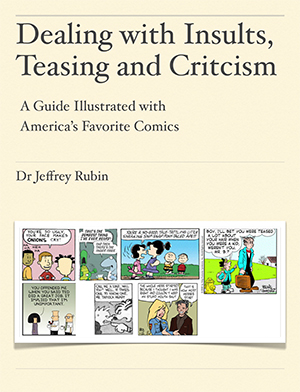
At 39-years of age, Ron had been a respected employee in a department store for nearly ten years. If he had made it to ten full years, he would have qualified for some extra benefits. Upper management chose to replace him with someone new a week before the ten years were up. Discovering that landing a new job was leading to one rejection after another, Ron fell into an anguishing depression.
Observing him having sleepless nights and losing weight, Ron’s wife urged him to see a mental health professional.“You’ve been paying for mental health coverage on your health policy for over fifteen years. You might as well take advantage of it and see if a professional can help you through this.”
Ron resisted, but when he received yet another terribly anxiety producing employment rejection, tears streamed down like two little waterfalls.At his first appointment with Dr. Sigmund, a cigar smoking psychologist, Ron discovered that to access mental health services with his health policy, he would have to be labeled as a person with a mental disorder. “I don’t want that kind of nonsense in my medical record,” he told Dr. Sigmund. “I’m not mentally ill! I’m just going through some tough times right now and I can use some professional help getting through this.”
“After a long drag on his cigar, Dr. Sigmund sadly explained, “I have to place on the insurance form a mental disorder diagnosis or I can’t see you.”Thoughts began to race through Ron’s head. Sometimes, on a job application form it asks if I had ever been treated for a mental disorder. If I answer truthfully, that could end up costing me the job. If I lie and someone broke into the insurance records system and released them to the public, I could be convicted of fraud. I was thinking of some day going into politics. If anyone ever got wind of the fact that I was given a so called mental disorder diagnosis, that could be the end of that.“Listen, Doctor, I’ve been paying for this mental health coverage for years and no one ever told me I had to be given a stigmatizing label to access services. That’s not fair.”
“You feel it’s unfair,” said Dr. Freud. He then paused, frowned, and said, “I’m sorry, but that’s how the system works. And, after all, these are real disorders, based on sound science.In fact we have recently learned that these disorders are properly viewed as genetic diseases. The evidence is pretty plain. We have learned that these types of conditions run in families, and genetic research has even identified the actual genes that are involved.”
Upon hearing this, Ron chose to walk out of the doctor’s office feeling more miserable than when he arrived.
- “I have to place on the insurance form a mental disorder diagnosis or I can’t see you.”
- “these [mental disorders] are real disorders, based on sound science.”
- “these disorders are properly viewed as genetic diseases.”
Dr. Sigmund’s First Two Statements
 First, Dr. Sigmund declares that “Without a mental disorder diagnosis, which I must place on the insurance form, I can’t see you.” This is pretty often true. In the United States, if you want to take advantage of your mental health insurance coverage, insurers require a mental disorder diagnosis [see HERE]. Some mental health service providers will see paying customers without the necessity of labeling if the customer pays the entire cost for the services. Paying for services that are not at least partly covered by insurance typically are too costly for the average Joe or Jill.
 In my opinion, it is not sound science that came up with these types of labels, but rather, a business model that serves the pharmaceutical industry and psychiatry. Psychologists have gone along with the plan for practical reasons. Additionally, some actually are convinced that the labeling system is indeed based on principles of science. For a full critique of their position, see HERE.
The Third Statement by Dr. Sigmund
 In the parable, Dr. Sigmund declares that “these disorders are properly viewed as genetic diseases.” Is this a fair statement? The simple answer is no. To reasonably arrive at this answer, we’ll have to spend some time going step by step through some basic ideas.
Dr. Sigmund provides two general statements as a defense for his declaration–“We have learned that these types of conditions run in families, and genetic research has even identified the actual genes that are involved.”
When psychologists say that a certain set of characteristics that is classifiable as a mental disorder runs in the family, it doesn’t mean that if someone in the family has that set of characteristics, everyone in the family will have the same set of characteristics.  Even identical twins won’t always have the same set of these types of characteristics despite the fact that a pair of identical twins have the same set of genes.
What psychologists typically mean by saying a set of characteristics run in the family, is that there is evidence that there is an increased probability that if one member of the family has the set, other family members are more likely to also have that set. Should this type of evidence lead us to conclude that such a set indicates the presence of a genetic disease?
 To understand why the answer is no, we have to first understand that all species have a great number of characteristics, and each of their characteristics vary to some extent between different members of their species. For example, human beings have a typical height, they can run at a typical speed, etc. The average height of male humans is about 5 feet, 9 inches. Some, men are, however, somewhat taller, others are somewhat shorter, and some are quite a bit taller or quite a bit shorter. Similarly, some men can run at the average speed for men, while others can run at various rates that are different from average.
 If someone is above average in height, this does not mean he or she will be above average in running speed. Each of our numerous characteristics can be either within the average range, above average, or below, and because someone is below average in some set of characteristics does not mean that he or she will not have some characteristics that are average or even above average. And these differences are a great boom to the human race. If everyone was brilliant in academics and also had a strong genetic desire to be a professor at Ivy League universities, who would build the roads, drive our trucks, grow our crops, serve in law enforcement, cut our hair, tend to the sick, serve as fire fighters, staff stores, serve us in restaurants, etc.? People with different interests and talents enhance our own lives.
Now, clearly some human characteristics do run in the family. How tall you become is one such characteristic. Nevertheless, even if both of your parents are taller than average, you may still end up shorter than average.
 If you do end up shorter than average this does not mean you have a genetic disease, even if we can demonstrate that taller people tend to have some advantages over people who are shorter. Saying that people who are shorter than average have a dysfunction would be stigmatizing while clouding the fact that we cannot determine a person’s overall functioning based on just one set of characteristics. Being shorter, when combined with the rest of a person’s characteristics, can lead to him or her being more useful in a variety of ways.
 Let’s move on now from discussing a person’s height to a more complex set of characteristics–athletic performance. There is some evidence that athletic performance might be a set of characteristics that, to some degree, runs in the family. Deliberate practice seems to be a much greater predictor of skill in a particular sport, but let’s say for argument sake that at least to some extent there is indeed some inheritability to this set of characteristics. If a physical education teacher sees a child performing below average in athletic achievement, even if we are completely confident that this characteristic runs in the family, does this mean that this child has a genetic disease?
We could, if we wanted, label the child as having a “Muscle Deficit Disorder,” and claim that he or she rightfully has a genetic disease which is treatable with steroids. That would not, in my opinion, be in the child’s best interest. Admittedly that is just my value judgment. But I also contend that if we wanted to label the child as having a “Muscle Deficit Disorder,” that too would be a decision based on a value judgment, rather than one based on being consistent with principles of science.
 Rather than pathologizing below average athletic skills, I’ve seen physical education teachers who encourage such children to participate in some after school programs that develop skills in sports that can be practiced non-competitively, such as running, bicycling, and golf. Some of these children take to such programs willingly and end up staying in fine physical shape the rest of their lives. If they don’t, they suffer the consequences and all of us end up paying higher health premiums because they are at an increased risk of getting sick. At the same time, their other sets of characteristics, when combined with their couch potato ways, may offer them and the rest of us some valued fruits.
Just because some people have a different group of genes that might increase the likelihood that a certain set of characteristics will be expressed does not mean these people have a disease.  I know that some psychologists say, it is only the sets of characteristics that can be linked in some way to a “dysfunction” that are properly labeled as a disease. But the dysfunctional descriptor is so vague that it can be applied to the vast majority of people, and, perhaps, everyone.
Let’s say we can identify a set of genes that increase the chances that someone will enlist in the military. Now, let’s say we find that joining the military places these people at greater risk of harm, and even death. Would the finding of this type of connection require us to say that this means all who join the military have a dysfunction and therefore they also have a genetic disease? How about people who have become addicted to smoking, like old Dr. Sigmund? At one point, most Americans were smoking. Smoking can be labeled a dysfunctional characteristic. If it tends to run in the family, would that justify our declaring that all of this majority had a genetic disease?
 How about becoming a psychiatrist? This may run in the family. If we find that becoming a psychiatrist increases the likelihood of committing suicide, which some data suggests, are all of them to be viewed as having a genetic disease, or would it be clearer, and more scientific, to say their set of characteristics is a “risk factor” for some negative outcome? I believe the latter is more scientific.
How about just being a male? Being a male increases the risk of violence. Or how about being a woman? Being a woman increases a person’s risk of becoming depressed, which psychopathologists are eager to tell us is a dysfunction. Don’t these facts pretty much indict us all with regards to having a genetic disease?
Now let’s turn to the statement that genetic research has identified the actual genes that are involved in mental disorders. I have read this research carefully and came away convinced that we are not even close to making this claim. Evaluating the research is complicated, but I’ll just make two simple points about this that can help readers to better understand this issue.
First of all, if Dr. Sigmund’s statement was true, mental disorders would be diagnosed by doing a test of one’s genes. This is not how mental disorder diagnoses are made.  Instead, psychologists have a conversation with the person seeking mental health services.
Second, if genes determined whether or not someone had a particular set of characteristics that gets labeled a mental disorder, what happens to those genes when someone who was labeled as having a mental disorder recovers, which often occurs? Do the genes somehow float out of the person’s body, and rise up to heaven? Actually the genes in the body remain right where they were when the person was said to have a mental disorder.
 As I read the research on this issue, it became plain to see that genes can be likened to the buds of a beautiful flower. If they meet up with the right soil, sunlight, water, and care, they typically blossom into something beautiful. But even with a great deal of wonderful nourishment, sometimes they get tangled up with some surrounding weeds. Stigmatizing labels don’t help in such situations. Instead, some wise gardening can make a beautiful difference.
Some people will enjoy reading this blog by beginning with the first post and then moving forward to the next more recent one; then to the next one; and so on. This permits readers to catch up on some ideas that were presented earlier and to move through all of the ideas in a systematic fashion to develop their emotional intelligence. To begin at the very first post you can click HERE.


 Dr. Kandel’s credentials are pretty impressive–he’s a Nobel Prize laureate and professor of brain science at Columbia University. Therefore, if you are among those who believe a person’s credentials should determine who is right and who is wrong, you need not read any further. You must simply conclude that what is referred to as mental illnesses are indeed brain diseases because you would be hard pressed to find someone with better credentials disagreeing with Dr. Kandel.


 The argument that such labeling practices are not scientific, but, rather, value judgments, was intelligently made by William James when he defended the religious sentiment. He explained that pathologizing these sentiments as mental diseases was superficial medical talk. He called the reasoning doctors used to declare religious beliefs a type of mental illness, “medical materialism.”
 assumes as a convenient hypothesis that the dependence of mental states on bodily conditions must be thoroughgoing and complete. If we adopt the assumption, then of course what medical materialism insists on must be true in a general way, if not every detail…. But now, I ask you, how can such an existential account of facts of mental history decide in one way or another on their spiritual significance? According to the general postulate of psychology just referred to, there is not a single one of our states of mind, high or low, healthy or morbid, that has not some organic process as its condition. Scientific theories are organically conditioned just as much as religious emotions are; and if we only knew the facts intimately enough, we should doubtless see “the liver” determining the dicta of the sturdy atheist as decisively as it does those of the Methodist under conviction anxious about his soul. When it alters one way the blood that percolates it, we get the Methodist, when in another way, we get the atheist form of mind. So of all our raptures and our drynesses, our longings and pantings, our questions and beliefs. They are equally organically founded, be they religious or of non-religious content.
 All states of mind are related in extremely complex ways to neural functions. There is a crucial distinction to be made between a brain difference and a brain pathology. The significance of each state of mind must be tested, not by some neurological difference, but by the value of its fruits. When the term “pathological” is applied to an experience, rather than an identified physiological pathology, it wrongly implies a neutral science classification.


 In contrast to biological arguments,